Saarc Member Countries: Profiles, Capitals and Key Institutions
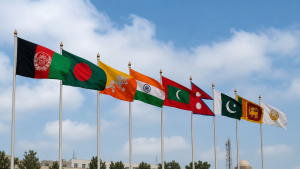
The South Asian Association for Regional Cooperation (SAARC) is a regional intergovernmental organization established to promote economic growth, social progress, and cultural development across South Asia. Formed on December 8, 1985, in Dhaka, bangladesh/">Bangladesh, the association covers eight member nations: Afghanistan, Bangladesh, Bhutan, India, Maldives, Nepal, Pakistan, and Sri Lanka. SAARC accounts for over 21% of the global population and around 3% of the world’s land area. The SAARC Secretariat operates from Kathmandu, Nepal, serving as the central administrative body coordinating multilateral agreements, regional institutions, and specialized centers across member states.

Profiles of SAARC Member States

Each SAARC member state contributes distinct socio-economic profiles, capital centers, and administrative structures to the regional grouping.

Afghanistan

Afghanistan joined SAARC as its eighth member during the 14th SAARC Summit held in New Delhi in April 2007. Located at the crossroads of Central and South Asia, it serves as a land bridge connecting SAARC states with Central Asian markets.

  • Capital: Kabul
  • Currency: Afghan afghani (AFN)
  • Year of SAARC Entry: 2007
  • Key Economic Drivers: Agriculture, mineral resources, transit trade
Bangladesh

Bangladesh played a central role in proposing the regional cooperation framework that led to the founding of SAARC. The initial diplomatic initiative was drafted by President Ziaur Rahman in 1980, culminating in the adoption of the SAARC Charter in Dhaka in 1985.

  • Capital: Dhaka
  • Currency: Bangladeshi taka (BDT)
  • Year of SAARC Entry: 1985 (Founding Member)
  • Key Economic Drivers: Ready-made garments (RMG), pharmaceuticals, agriculture
Bhutan

Bhutan is a landlocked Himalayan kingdom and a founding member of SAARC. It advocates for sustainable development and environmental conservation within the SAARC framework, hosting regional environmental initiatives.

  • Capital: Thimphu
  • Currency: Bhutanese ngultrum (BTN)
  • Year of SAARC Entry: 1985 (Founding Member)
  • Key Economic Drivers: Hydropower export, eco-tourism, agriculture
India

India is the largest member state in SAARC by land mass, population, and gross domestic product. It borders seven other South Asian nations, making its geographic positioning central to regional transport, trade, and energy integration.

  • Capital: New Delhi
  • Currency: Indian rupee (INR)
  • Year of SAARC Entry: 1985 (Founding Member)
  • Key Economic Drivers: Information technology, services, manufacturing, agriculture
Maldives

Maldives is an archipelagic island nation situated in the Indian Ocean. As a founding member, it focuses regional attention on climate change, maritime security, and sustainable coastal development within SAARC charters.

  • Capital: Malé
  • Currency: Maldivian rufiyaa (MVR)
  • Year of SAARC Entry: 1985 (Founding Member)
  • Key Economic Drivers: Tourism, marine fisheries, shipping
Nepal

Nepal hosts the permanent SAARC Secretariat in its capital city. As a landlocked nation positioned between India and China, Nepal relies heavily on SAARC transit agreements and regional trade frameworks.

  • Capital: Kathmandu
  • Currency: Nepalese rupee (NPR)
  • Year of SAARC Entry: 1985 (Founding Member)
  • Key Economic Drivers: Tourism, remittances, agriculture, hydropower potential
Pakistan

Pakistan is a founding member of SAARC and represents the second-largest economy within the grouping. It hosts regional meetings and participates in SAARC specialized bodies focused on trade, agriculture, and energy.

  • Capital: Islamabad
  • Currency: Pakistani rupee (PKR)
  • Year of SAARC Entry: 1985 (Founding Member)
  • Key Economic Drivers: Textiles, agriculture, leather goods
Sri Lanka

Sri Lanka is an island nation located south of the Indian peninsula. A founding member, Sri Lanka played a major role in drafting the SAARC Preferred Trading Arrangement (SAPTA) and the South Asian Free Trade Area (SAFTA) frameworks.

  • Capital: Sri Jayawardenepura Kotte (Legislative/Administrative); Colombo (Executive/Commercial)
  • Currency: Sri Lankan rupee (LKR)
  • Year of SAARC Entry: 1985 (Founding Member)
  • Key Economic Drivers: Tea, apparel, tourism, maritime transshipment

Overview of SAARC Member States

Member State Capital City National Currency Admission Year Primary Regional Role
Afghanistan Kabul Afghan afghani 2007 Central Asian trade bridge
Bangladesh Dhaka Bangladeshi taka 1985 Founding member and charter host
Bhutan Thimphu Bhutanese ngultrum 1985 Hydropower and environmental focus
India New Delhi Indian rupee 1985 Largest regional economy
Maldives Malé Maldivian rufiyaa 1985 Climate and maritime advocate
Nepal Kathmandu Nepalese rupee 1985 Host of SAARC Secretariat
Pakistan Islamabad Pakistani rupee 1985 Second-largest regional market
Sri Lanka Sri Jayawardenepura Kotte Sri Lankan rupee 1985 Trade agreement pioneer

Key SAARC Institutions and Specialized Bodies

SAARC operates through a network of specialized bodies, regional centers, and administrative organs designed to execute sectoral programs across South Asia.

Administrative Organs and Apex Bodies
  • SAARC Secretariat: Located in Kathmandu, Nepal, the Secretariat coordinates and monitors the implementation of SAARC activities, services meetings, and acts as the channel of communication between SAARC and other international organizations.
  • Secretary-General of SAARC: Appointed by the Council of Ministers from member states in alphabetical order for a non-renewable term of three years.
  • Council of Ministers: Comprises the Foreign Ministers of member states. It meets twice a year to formulate policy, review progress, and approve decisions made by lower committees.
  • Standing Committee: Comprises the Foreign Secretaries of member states. It monitors overall progress, approves projects, and mobilizes financial resources.
SAARC Specialized Bodies
Institution Name Location Primary Mandate
South Asian University (SAU) New Delhi, India Offers post-graduate and research programs to students across all member nations.
SAARC Development Fund (SDF) Thimphu, Bhutan Finances regional projects across social, economic, and infrastructure windows.
South Asian Regional Standards Organization (SARSO) Dhaka, Bangladesh Harmonizes national standards to promote intra-regional trade and industry standards.
SAARC Arbitration Council (SARCO) Islamabad, Pakistan Provides a legal forum for settlement of commercial, investment, and trade disputes.
SAARC Regional Centers

SAARC consolidated its regional centers in 2015 to streamline administrative expenses and improve operational performance.

  • SAARC Agriculture Centre (SAC): Located in Dhaka, Bangladesh. It focuses on agricultural research, technology transfer, and food security coordination.
  • SAARC Tuberculosis and HIV/AIDS Centre (STAC): Located in Kathmandu, Nepal. It coordinates regional health strategies against infectious diseases.
  • SAARC Energy Centre (SEC): Located in Islamabad, Pakistan. It works toward regional energy grid integration, renewable energy sharing, and power pool management.
  • SAARC Cultural Centre (SCC): Located in Colombo, Sri Lanka. It promotes regional cultural heritage, arts, and tourism cooperation.

SAARC Observer Countries

SAARC grants observer status to nine non-member nations and international blocs to foster international dialogue and development partnerships.

  • Australia
  • China
  • European Union
  • Iran
  • Japan
  • Mauritius
  • Myanmar
  • South Korea
  • United States of America

Key Facts for Quick Revision

  • SAARC was founded on December 8, 1985, following the adoption of the SAARC Charter in Dhaka, Bangladesh.
  • The SAARC Secretariat was inaugurated on January 16, 1987, in Kathmandu, Nepal.
  • Abul Ahsan from Bangladesh served as the first Secretary-General of SAARC from 1987 to 1989.
  • Afghanistan became the eighth member state during the 14th SAARC Summit in New Delhi in April 2007.
  • South Asian Free Trade Area (SAFTA) agreement was signed during the 12th SAARC Summit in Islamabad in January 2004, entering into force on January 1, 2006.
  • The SAARC Development Fund (SDF) headquarters opened in Thimphu, Bhutan, in April 2010.
  • South Asian University (SAU) was established under an inter-governmental agreement in 2007 and functions from New Delhi, India.
  • Decisions at all levels within SAARC require unanimity among member states.
  • Bilateral and contentious issues are excluded from SAARC deliberations according to Article X of the SAARC Charter.
  • The SAARC Food Bank was established during the 14th SAARC Summit to provide emergency food security to member states during natural disasters.
Originally written on November 27, 2015 and last modified on August 13, 2026.

Leave a Reply

Your email address will not be published. Required fields are marked *