Vulture Conservation and Reintroduction Programmes in India
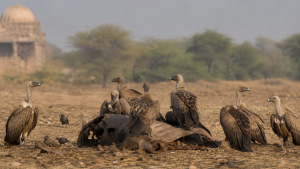
Vultures are among the most important scavengers in India’s ecosystems, helping dispose of animal carcasses and reduce the spread of disease. But their populations crashed sharply over the past few decades, leading to large-scale conservation, captive breeding and reintroduction efforts.
India has nine vulture species, spread across different IUCN threat categories. Their recovery is now closely linked to drug regulation, breeding centres, and carefully monitored releases into the wild.
Vulture Species in India and Conservation Status
India’s vulture diversity includes critically endangered, endangered, near-threatened and least concern species. These birds are ecologically vital because they consume livestock carcasses quickly and help prevent the spread of infectious diseases.
| Vulture Species | Scientific Name | IUCN Status |
| White-rumped Vulture | Gyps bengalensis | Critically Endangered |
| Slender-billed Vulture | Gyps tenuirostris | Critically Endangered |
| Long-billed Vulture | Gyps indicus | Critically Endangered |
| Red-headed Vulture | Sarcogyps calvus | Critically Endangered |
| Egyptian Vulture | Neophron percnopterus | Endangered |
| Himalayan Griffon | Gyps himalayensis | Near Threatened |
| Cinereous Vulture | Aegypius monachus | Near Threatened |
| Bearded Vulture | Gypaetus barbatus | Near Threatened |
| Eurasian Griffon | Gyps fulvus | Least Concern |
The Diclofenac Crisis and Veterinary Drug Regulations
The collapse of India’s vulture populations in the 1990s and 2000s was linked mainly to poisoning from veterinary Diclofenac. Vultures developed visceral gout and acute kidney failure after feeding on carcasses of cattle treated with the drug.
- Veterinary Diclofenac Ban (2006): India banned the veterinary use of Diclofenac to reduce mortality in scavenging birds.
- Human Vial Restrictions (2015): Human formulations of Diclofenac were restricted to single-dose vials to reduce illegal diversion for veterinary use.
- Expanded NSAID Bans (2023): Veterinary use of Aceclofenac, Ketoprofen and Nimesulide was also banned.
- Vulture-safe alternatives: Meloxicam and Tolfenamic Acid are the only approved and tested vulture-safe NSAIDs currently used for livestock treatment.
- Continued threats: The State of India’s Birds (SoIB) 2025 update noted that nationwide recovery is still uneven because of illegal use of human drug formulations on livestock, powerline collisions, electrocution and secondary poisoning from pesticide-laced carcasses.
Captive Breeding and Conservation Infrastructure
To prevent extinction, the Bombay Natural History Society (BNHS), along with the Ministry of Environment, Forest and Climate Change (MoEFCC) and state forest departments, created a captive-breeding network for vultures.
- Breeding output: The programme has bred more than 800 vultures in controlled conditions.
- Conservation centres: Nine Vulture Conservation Breeding Centres (VCBCs) are operational across India.
- Examples of VCBCs: Pinjore in Haryana, Rajabhatkhawa in West Bengal, Rani in Assam and Kerwa in Bhopal, Madhya Pradesh.
- Upcoming facility: A new conservation breeding centre at Muta in Ranchi, Jharkhand, is scheduled to become operational in 2026.
Rewilding Strategies and Release Protocols
Captive-bred vultures are not released directly into the wild. They are first acclimatized in protected conditions so that they can survive in natural habitats.
- Soft-release strategy: Birds spend at least three months in a pre-release aviary in the target landscape before release.
- Release zones: Tiger reserves such as Tadoba and Pench in Maharashtra are preferred because they offer protected landscapes and carcasses from wild prey.
- Low-risk habitat: These sites are generally considered relatively free from veterinary drug contamination.
- Tracking: Released vultures are fitted with solar-powered satellite transmitters and blue leg rings.
- Monitoring purpose: These tools help track movement, flight patterns and survival after release.
Key Prelims Takeaways
- India has nine vulture species: Four are Critically Endangered, one is Endangered, three are Near Threatened and one is Least Concern.
- Main cause of decline: Veterinary Diclofenac caused fatal kidney damage after vultures fed on treated carcasses.
- Diclofenac restrictions: Veterinary use was banned in 2006, while human formulations were later restricted to single-dose vials.
- Other banned NSAIDs: Aceclofenac, Ketoprofen and Nimesulide are also banned for veterinary use.
- Safe alternatives: Meloxicam and Tolfenamic Acid are the approved vulture-safe NSAIDs.
- Breeding leadership: BNHS leads the captive-breeding effort with MoEFCC and state forest departments.
- Release protocol: Soft release includes a minimum three-month acclimatization in a pre-release aviary, followed by tracking using satellite transmitters and leg rings.
| Related | |
|---|---|