James Webb Telescope studies rocky exoplanet LHS 3844 b
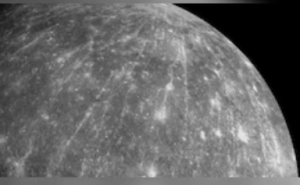
The James Webb Space Telescope (JWST) directly studied the rocky exoplanet LHS 3844 b, also called Kuaꞌkua, on 4 May 2026. LHS 3844 b is a super-Earth located about 49 to 50 light-years away and is around 30% larger than Earth.
James Webb Space Telescope
The James Webb Space Telescope is a space observatory developed by NASA, the European Space Agency, and the Canadian Space Agency. It operates in the infrared region and carries instruments such as the Mid-Infrared Instrument (MIRI), which studies heat and molecular signatures from distant objects.
LHS 3844 b as a rocky exoplanet
LHS 3844 b is a tidally locked exoplanet, which means one hemisphere permanently faces its host star. The planet reaches temperatures of about 1,340 degrees Fahrenheit, or 725 degrees Celsius, on the star-facing side. Observations from MIRI in 2023 and 2024 found that the planet is dark, hot, barren, and without an atmosphere.
Exoplanet geology and surface composition
Scientists analysed heat emitted from the surface of LHS 3844 b to study its geology. The surface appears to be basaltic or igneous mantle rock, similar to Mercury or the Moon, and not an Earth-like crust rich in silica and granite. This method belongs to the field of exoplanet geology, which studies the physical and geological properties of planets outside the Solar System.
Important Facts for Exams
- JWST is a space telescope that observes mainly in infrared wavelengths.
- LHS 3844 b is classified as a super-Earth, a type of exoplanet larger than Earth but smaller than ice giants.
- Tidal locking is common in close-in exoplanets and in the Moon’s rotation around Earth.
- Nature Astronomy is a peer-reviewed scientific journal that publishes astronomy and astrophysics research.
Exoplanet research
Exoplanets are planets that orbit stars outside the Solar System. Direct study of surface heat and composition is used to examine rocky worlds that do not transit in a way that allows atmospheric analysis.
| Related | |
|---|---|