Iran-Pakistan Gas Pipeline
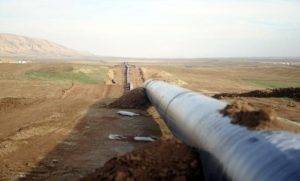
The Iran–Pakistan–India (IPI) pipeline, currently Iran-Pakistan Pipeline and frequently referred to as the “Peace Pipeline”, is a proposed 2,775-kilometre natural gas project designed to connect the South Pars gas field in Iran with the energy-starved markets of Pakistan and India. Conceptualised in the 1990s, the project was envisioned not only as a critical energy conduit but also as a diplomatic bridge that could foster regional stability through economic interdependence. Despite its immense potential to reshape the energy landscape of South Asia, the project has faced decades of delays, geopolitical opposition, and financial hurdles, leading to a significant shift in regional energy strategies.
Background and Historical Development
The origins of the IPI pipeline date back to the mid-1950s when the concept was first floated by Pakistani engineers, though it gained serious diplomatic momentum only in the late 1980s and early 1990s. In 1989, Rajendra K. Pachauri and Ali Shams Ardekani proposed a plan to the Iranian and Indian governments, which was met with initial enthusiasm. Formal discussions between Iran and Pakistan commenced in 1995, resulting in a preliminary agreement for a pipeline from the South Pars field—the world’s largest gas field shared between Iran and Qatar—to Karachi.
By 1999, India signed its first preliminary agreement to join the project, extending the route through Pakistan to the Indian border. The pipeline’s technical specifications were ambitious, featuring a 56-inch diameter and a projected capacity to transport approximately 60 million standard cubic metres per day (mmscmd) of natural gas to both India and Pakistan. The project was viewed as a cost-effective alternative to maritime Liquefied Natural Gas (LNG) shipments, promising to fuel the industrial and power sectors of the subcontinent at a fraction of the cost.
Technical Specifications and Planned Route
The proposed route of the IPI pipeline covers vast and geographically diverse terrain. It starts at Asalouyeh, Iran, stretching approximately 1,172 kilometres through Iranian territory, where it is known as Iran’s seventh cross-country gas pipeline. This section has been largely completed by the Iranian government at a cost of nearly $2.0 billion.
Upon crossing the border, the pipeline was designed to run 785 kilometres through Pakistan, passing through the provinces of Balochistan and Sindh. Within Pakistan, the infrastructure was planned to branch off to Karachi while the main line continued towards Multan. From Multan, the final leg of the project would extend to the Indian border, terminating near Delhi. The total estimated cost of the project has fluctuated over time, often cited between 7 billion and 10 billion, depending on the inclusion of secondary distribution networks and compression stations.
Geopolitical Challenges and External Pressures
The failure to operationalise the IPI pipeline is largely attributed to a complex web of geopolitical factors. Central to these is the opposition from the United States. Throughout the 2000s, Washington exerted significant pressure on both India and Pakistan to abandon the project, citing concerns over Iran’s nuclear programme. The U.S. government argued that the pipeline would provide Iran with a vital economic lifeline and strategic leverage, potentially undermining international sanctions.
India’s participation was further complicated by its pursuit of the Civil Nuclear Deal with the United States in 2008. Many analysts believe that the strategic importance of the nuclear agreement outweighed the benefits of the IPI pipeline, leading New Delhi to distance itself from the project. Additionally, the U.S. promoted the Turkmenistan–Afghanistan–Pakistan–India (TAPI) pipeline as a viable alternative, which enjoyed broader international institutional backing from the Asian Development Bank.
Security Concerns and Pricing Disagreements
Security has remained a primary obstacle for India, particularly regarding the section of the pipeline passing through Pakistan’s Balochistan province. This region has historically been prone to insurgent activity and sabotage, leading to fears in New Delhi that the gas supply could be used as a political tool or disrupted during periods of bilateral tension. The memory of the 1999 Kargil conflict and the 2008 Mumbai attacks significantly eroded the trust necessary for such a high-stakes, long-term energy partnership.
Economic disagreements also played a pivotal role in stalling negotiations. Key points of contention included:
- Gas Pricing Formula: India sought a price linked to international crude benchmarks to ensure long-term affordability, while Iran pushed for higher rates based on its own energy export models.
- Transit Fees: Pakistan demanded significant fees for the transit of gas across its territory. In 2007, Pakistan requested approximately 1.57 per million British thermal unit (mBtu), while India was only willing to pay roughly 0.55 per mBtu.
- Delivery Points: Disputes arose over where the legal ownership of the gas would transfer—at the Iran-Pakistan border or the Pakistan-India border—which had major implications for who would bear the risk of supply disruptions.
Current Status and Future Outlook
As of 2026, the IPI project remains in a state of flux, largely recast as a bilateral Iran-Pakistan (IP) pipeline. While Iran has fulfilled its obligation by completing its side of the infrastructure, Pakistan has faced repeated delays due to the threat of U.S. sanctions and a lack of external financing. In early 2024, the Pakistani government approved the construction of an initial 80-kilometre stretch from the Iranian border to Gwadar to avoid a potential $18 billion penalty for breach of contract, though progress remains slow.
India has effectively shifted its focus toward diversifying its energy basket through increased LNG imports, domestic production, and regional alternatives like TAPI. However, the recent energy crises in West Asia have occasionally revived academic and policy discussions regarding the IPI’s feasibility. Despite these discussions, the fundamental issues of regional security and international sanctions continue to render the full IPI project a dormant prospect for the foreseeable future. The project stands as a testament to how energy security is inextricably linked to the broader political and strategic stability of the South Asian region.
| Related | |
|---|---|