India’s AI Data Centre Expansion Faces Heat Challenge
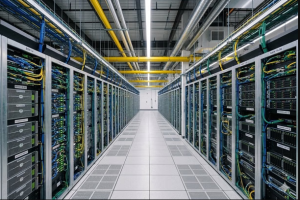
India’s data centre sector is facing higher thermal stress because extreme heat increases cooling demand, electricity use, and water consumption. Planned AI data centres in Tamil Nadu, Telangana, and Karnataka are among the global locations assessed for high operational disruption risk from extreme heat.
Data Centres and Thermal Management
A data centre is a facility that stores, processes, and distributes digital data through servers, storage systems, and networking equipment. AI data centres and high-performance computing facilities generate more heat than conventional server rooms because they use dense computing hardware and continuous workloads. Traditional air cooling is often insufficient in high-density AI environments, and liquid cooling is used for thermal management in such facilities. The India Data Center Liquid Cooling Market was valued at USD 166.69 million in 2024 and is projected to reach USD 958.74 million by 2032 at a CAGR of 24.58%.
Heat Stress and Operational Risk
Risk modelling by XDI placed planned data centres in Tamil Nadu, Telangana, and Karnataka among the top 30 states globally for operational disruption risk from extreme heat. The assessment covered 41 new data centres in India, of which 12% were classified as high-risk properties, with an estimated 269% increase in average damage risk from 2026 to 2100. By 2040, nearly 90% of India’s data centres could face prolonged heat stress. More than half of the centres currently operate in regions that record temperatures above 35°C for more than 90 days a year.
Bengaluru and the Data Centre Cluster
Bengaluru hosts 31 data centres and two more are under construction. The city’s expanding data centre cluster is linked with the urban heat island effect, noise, air pollution, and high water use. Urban heat island is a phenomenon in which built-up areas record higher temperatures than surrounding rural areas because of concrete surfaces, reduced vegetation, and waste heat from buildings and vehicles.
Policy and Industry Context
The Government of India launched the National Data Center Mission in April 2025 to promote 100 green-certified data centres. Green-certified data centres use energy-efficient systems, lower-emission power sources, and water-saving cooling technologies. India’s AI infrastructure plans include a 5GW AI infrastructure platform by 2035 and a joint venture with Google in Visakhapatnam. Large-scale AI facilities require land, electricity, and water for continuous operation.
Important Facts for Exams
- Data centres are classified as critical digital infrastructure in many countries because they support cloud services, banking, telecom, and government databases.
- Liquid cooling uses water or specialised fluids to remove heat directly from servers and chips.
- High-performance computing systems and AI model training generate more heat than standard enterprise servers.
- Urban heat island effect is a common topic in environment and urban geography questions.
Exam Pointers
Tamil Nadu, Telangana, and Karnataka are among the states linked with high modelled disruption risk for planned data centres. The National Data Center Mission targets 100 green-certified data centres in India.
| Related | |
|---|---|