Scientists Discover Virus That Kills Drug-Resistant Bacteria
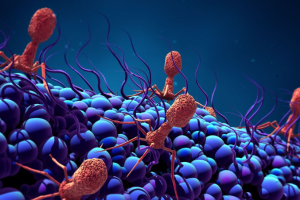
Scientists have identified a virus that can infect and kill drug-resistant bacteria. Such viruses are known as bacteriophages, or phages, and they target specific bacterial cells rather than human cells.
Bacteriophages
Bacteriophages are viruses that infect bacteria and replicate inside them. They were first discovered in the early 20th century and have been studied as alternatives to antibiotics in bacterial infections.
Drug Resistance in Bacteria
Drug-resistant bacteria survive treatment with one or more antibiotics. This condition is linked to antimicrobial resistance, a global public health concern that affects common infections such as pneumonia, urinary tract infections, and wound infections.
Medical Use of Phages
Phage therapy uses bacteriophages to attack specific bacterial strains. Each phage usually acts on a narrow range of bacteria, and this specificity is a key feature in laboratory and clinical research.
Important Facts for Exams
- Bacteriophages are the most abundant biological entities on Earth and are found in soil, water, and the human body.
- Antibiotics act on bacteria, while bacteriophages infect bacteria as viruses.
- Antimicrobial resistance is recognised by the World Health Organization as a major global health issue.
- Phage therapy has been studied in countries such as Georgia, Poland, and the United States.
Antibiotic resistance is caused by genetic changes in bacteria and by the overuse or misuse of antibiotics. Bacteriophages can be classified by their life cycles as lytic or lysogenic phages.
| Related | |
|---|---|