Indian Navy Deploys P-8I for RIMPAC 2026
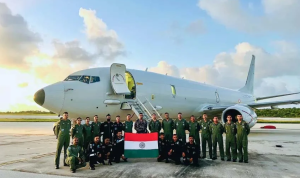
The Indian Navy has deployed a P-8I long-range maritime reconnaissance and anti-submarine warfare aircraft to Hawaii for the Rim of the Pacific (RIMPAC) 2026 exercise. RIMPAC 2026 is the 30th edition of the biennial naval exercise and is being held at Joint Base Pearl Harbor-Hickam from June 24, 2026, to July 31, 2026.
RIMPAC Exercise
RIMPAC stands for Rim of the Pacific and is a multinational naval exercise hosted by the US Pacific Fleet. The 2026 edition involves about 30 to 31 nations, around 30 to 40 surface ships, five submarines, over 140 to 206 aircraft, and about 25,000 to 30,000 personnel.
P-8I Aircraft
The P-8I is a maritime patrol aircraft built by Boeing for the Indian Navy. It is used for maritime surveillance, anti-submarine warfare, and coordinated operations with partner navies. The aircraft is part of the P-8 Poseidon family, which is used by several navies for long-range sea patrol missions.
India’s Participation in RIMPAC
India first participated in RIMPAC in 2014 and has taken part in every edition since then. The Indian Navy’s participation includes naval drills in the Indo-Pacific region and interaction with multiple maritime forces.
Important Facts for Exams
- RIMPAC is the world’s largest international maritime exercise and is held in the Pacific Ocean region.
- Joint Base Pearl Harbor-Hickam is located in Hawaii, United States.
- The P-8I is based on the Boeing P-8 Poseidon platform.
- RIMPAC 2026 includes new entrants such as Poland, Spain, Guatemala, Greece, and Fiji.
Command Structure and Theme
RIMPAC 2026 is commanded by Vice Admiral Jeff Jablon of the US Navy. The exercise command structure also includes a Chilean commodore as deputy commander, a Japanese rear admiral as vice commander, a South Korean rear admiral leading the maritime component, and a Canadian brigadier general heading the air component.
Theme and Strategic Context
The theme of RIMPAC 2026 is “Partners: Integrated and Prepared”. The exercise focuses on collective readiness, international partnerships, and a free and open Indo-Pacific.
| Related | |
|---|---|