Indian Electricity Markets, Power Exchanges and Trading Mechanisms
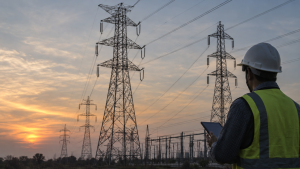
India’s electricity market combines regulated grid operations with competitive trading through power exchanges and long-term contracts. Its framework supports price discovery, access to electricity and coordination between generators, distributors and buyers across state and national boundaries.
Structure and Regulation of India’s Power Sector
India’s power sector is largely unbundled: generation, transmission and distribution are treated as separate functions. Electricity is on the Concurrent List of the Seventh Schedule to the Constitution, so both Parliament and state legislatures can make laws on the subject. The Electricity Act, 2003 is the sector’s principal law. It liberalised generation, provided for open access and established the framework for electricity regulatory commissions. The Central Electricity Authority (CEA), a statutory body under the Ministry of Power, advises the Union government on electricity generation, transmission, distribution and planning. Electricity markets must also operate within the technical requirements of the grid, making regulation and system coordination important alongside commercial trading.
- Central Electricity Regulatory Commission (CERC): Established under the Electricity Act, 2003, it regulates tariffs of generating companies owned or controlled by the Central Government, inter-state transmission and electricity trading. It also specifies grid standards and terms and conditions for inter-state open access.
- State Electricity Regulatory Commissions (SERCs): These commissions regulate electricity within their respective states, including tariffs for intra-state generation, transmission and distribution. They also have a role in fostering competition.
The division between central and state regulation reflects the structure of the sector: inter-state trade and transmission involve national-level oversight, while intra-state electricity functions fall within the relevant state framework. The Electricity Act’s open-access provisions and the development of trading platforms have widened the mechanisms through which electricity can be bought and sold.
Power Exchanges and Price Discovery
Power exchanges are electronic platforms that allow buyers and sellers to trade electricity transparently in specified market segments. They help match short-term requirements and surpluses, with prices and traded volumes determined through the relevant market mechanism. Exchanges complement, rather than replace, long-term supply arrangements such as power purchase agreements.
- Indian Energy Exchange (IEX): Incorporated in 2007, IEX began operations in 2008 and offers several electricity trading products.
- Power Exchange India Limited (PXIL): Jointly promoted by the National Stock Exchange (NSE) and National Commodity & Derivatives Exchange Limited (NCDEX), PXIL also provides an electricity trading platform.
Exchange-based price discovery gives participants a route to meet immediate or short-duration needs. Buyers and sellers can use different products according to delivery timing and contract duration. This flexibility is useful for utilities managing changing demand or supply, but market trades remain subject to applicable regulatory and grid arrangements.
Electricity Trading Mechanisms
Power exchanges offer distinct segments for different delivery periods and trading requirements. The main distinction is when electricity is delivered and how far ahead participants arrange the trade.
- Day-Ahead Market (DAM): Electricity is traded for delivery on the following day. IEX uses a double-sided closed auction with uniform pricing. Buyers and sellers submit bids, and the matching process discovers the traded volume and price.
- Real-Time Market (RTM): Introduced in June 2020, RTM enables trading closer to the time of delivery. Bids are placed for 30-minute time blocks, supporting immediate balancing needs and portfolio management by utilities.
- Term-Ahead Market (TAM): This segment includes Intraday, Daily, Weekly and Monthly contracts. It allows participants to manage short-term power requirements or sell surpluses over these periods.
- Green Term-Ahead Market (GTAM): Launched in 2020, GTAM facilitates trading in renewable electricity, including solar, non-solar, hydro and other renewable sources. Its products include Intraday and Day-Ahead Contingency contracts.
- Cross-Border Electricity Trade (CBET): This enables electricity trading between India and neighbouring countries. It supports regional energy cooperation and can help address demand-supply imbalances across borders.
The segments serve different time horizons: DAM schedules next-day delivery, RTM addresses very short-notice needs, and TAM offers contracts across several short-term durations. GTAM is focused on renewable electricity, while CBET concerns trade between national systems.
Open Access, Contracts and Grid Management
Market transactions depend on both commercial arrangements and the ability to transmit electricity safely through the grid. Open access enables eligible buyers to choose a supplier, while load despatch centres coordinate the physical operation of the electricity system.
- Open access: It allows large consumers and distribution licensees to purchase electricity directly from a generator or trader rather than relying solely on the local distribution company. Applicable charges remain payable.
- Power Purchase Agreements (PPAs): These are long-term contracts between generators and distribution companies or large consumers, typically lasting 5 to 25 years. They provide revenue certainty for generators and supply security for buyers.
- National Load Despatch Centre (NLDC): Operated by Power System Operation Corporation Limited (POSOCO), it ensures integrated operation of the national grid.
- Regional Load Despatch Centres (RLDCs): They manage regional grid operations.
- State Load Despatch Centres (SLDCs): They manage intra-state grid operations.
Open access and exchange trading broaden procurement choices, but they do not remove the need for transmission access, applicable charges or coordinated grid operation. The hierarchy of NLDC, RLDCs and SLDCs links national, regional and state-level system management. This coordination is essential when electricity schedules and actual supply must be managed across interconnected networks.
Key Prelims Takeaways
- Constitutional position: Electricity is on the Concurrent List.
- Principal law: The Electricity Act, 2003 liberalised generation, provided for open access and established regulatory commissions.
- Regulators: CERC oversees specified central, inter-state and trading matters; SERCs regulate state-level electricity functions.
- Exchanges: IEX and PXIL provide platforms for electricity trading.
- Market segments: DAM, RTM, TAM and GTAM serve different delivery periods or types of electricity.
- Grid hierarchy: NLDC, RLDCs and SLDCs manage national, regional and state grid operations.
Recent Context
From November 17, 2026, to July 31, 2027, CEA approved NEA imports of up to 350 MW through IEX’s DAM and RTM for up to 17 hours daily. Imports are barred during Indian peak hours; 300 MW and 50 MW are allocated to specified 132 kV routes.
| Related | |
|---|---|