Important Facts about ASEAN and Its Community Pillars
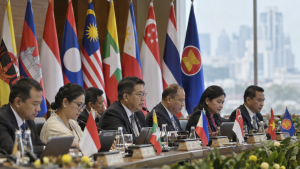
ASEAN is a regional organization that promotes cooperation on economic growth, social progress, cultural development, peace and stability. Its work is organized through three mutually supporting community pillars, guided by principles including consensus and respect for national sovereignty.
Formation and Evolution of ASEAN
ASEAN was established on August 8, 1967, in Bangkok, Thailand, with the signing of the ASEAN Declaration, also known as the Bangkok Declaration. Its five founding members were Indonesia, Malaysia, the Philippines, Singapore and Thailand. The organization’s headquarters is in Jakarta, Indonesia. Membership expanded with Brunei Darussalam in 1984, Vietnam in 1995, Laos and Myanmar in 1997, and Cambodia in 1999. Timor-Leste became the 11th member in October 2025. ASEAN’s original aims included accelerating economic growth, social progress and cultural development, while promoting regional peace.
ASEAN Community Pillars
Established on December 31, 2015, the ASEAN Community is structured around three interconnected pillars. Together, they seek to support a cohesive, peaceful and prosperous Southeast Asia.
- ASEAN Political-Security Community (APSC): The APSC seeks peaceful relations among member states and with the wider world. It promotes a rules-based community with shared values and norms, and works towards a cohesive, stable and resilient region. Its priorities include conflict prevention and resolution, as well as post-conflict peace-building. The Treaty of Amity and Cooperation in Southeast Asia (TAC) and the 1971 Zone of Peace, Freedom and Neutrality (ZOPFAN) Declaration are important instruments.
- ASEAN Economic Community (AEC): The AEC aims to create a single market and production base, supporting the free flow of goods, services, investment and skilled labour, alongside a freer flow of capital. It seeks to improve regional competitiveness, attract foreign investment and promote equitable development. Its work also covers human resources, infrastructure connectivity, tariff reduction and integration with the global economy.
- ASEAN Socio-Cultural Community (ASCC): The ASCC promotes a people-oriented and socially responsible community, with a shared identity and solidarity among ASEAN peoples. Its objectives include improving quality of life, strengthening social welfare and protection, and promoting environmental sustainability. It also supports human development, resilience to social and economic vulnerabilities and disasters, and efforts to bridge development gaps.
ASEAN Charter and Operating Principles
Adopted in November 2007 and entering into force on December 15, 2008, the ASEAN Charter formally established ASEAN as an inter-governmental organization with legal personality. It provides the organization’s legal and institutional framework and codifies its norms, rules and values.
- Sovereign equality: Members respect one another’s independence, sovereignty, equality, territorial integrity and national identity.
- Non-interference: Members do not interfere in one another’s internal affairs.
- Renunciation of force: Members renounce aggression and the threat or use of force.
- Consensus: Decision-making is based on consensus, making consultation and cooperation central to regional institution-building.
- Peaceful dispute settlement: Disputes are to be settled peacefully.
- Rule of law and rights: ASEAN principles include good governance, the rule of law, and respect for human rights and fundamental freedoms.
Respect for sovereignty and consensus help sustain cooperation among diverse member states. At the same time, consensus-based decision-making can make collective action dependent on agreement among members. ASEAN cannot compel a member state to change its domestic laws.
External Relations and India-ASEAN Cooperation
ASEAN engages external partners through dialogue and regional forums. Its Dialogue Partners include Australia, Canada, China, the European Union, India, Japan, New Zealand, the Republic of Korea, Russia, the United States and the United Kingdom.
- ASEAN Plus Three (APT): This forum brings ASEAN members together with China, Japan and the Republic of Korea.
- East Asia Summit (EAS): Established in 2005, the leaders-led strategic forum comprises 19 participating countries: all 11 ASEAN members, including Timor-Leste, and eight partners: Australia, China, India, Japan, New Zealand, the Republic of Korea, Russia and the United States. India is a founding member.
- India-ASEAN partnership: India’s engagement is guided by its Act East Policy. The relationship became a Comprehensive Strategic Partnership (CSP) in 2022.
- Plan of Action: The ASEAN-India Plan of Action (POA) 2026–2030 was adopted in July 2025 and began implementation in 2026. It guides cooperation in areas including digital, defence, maritime and economic sectors.
- Maritime cooperation: 2026 is being observed as the ASEAN-India Year of Maritime Cooperation, with the aim of strengthening cooperation on maritime safety, security and economic matters.
Key Prelims Takeaways
- Founded: August 8, 1967, in Bangkok; the founding document was the Bangkok Declaration.
- Membership: 11 states, including Timor-Leste, which joined in October 2025; headquarters are in Jakarta.
- Community pillars: APSC, AEC and ASCC; the ASEAN Community was established on December 31, 2015.
- Charter: Adopted in November 2007; in force from December 15, 2008, establishing ASEAN’s legal personality.
- Operating principles: Consensus, respect for sovereignty, non-interference and peaceful settlement of disputes.
- India ties: Comprehensive Strategic Partnership since 2022; the POA 2026–2030 and Year of Maritime Cooperation began in 2026.
Recent Context
The Philippines holds ASEAN’s 2026 chairmanship under the theme “Navigating Our Future, Together,” with priorities including peace and security, prosperity and people empowerment. A Quad leaders’ meeting was scheduled for November 17 in Manila, the first since 2024 and the first planned outside a Quad country.
| Related | |
|---|---|