Important Provisions of the Protection of Plant Varieties and Farmers’ Rights Act in India
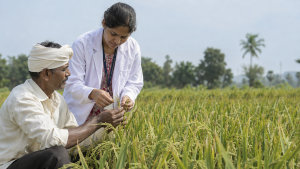
The Protection of Plant Varieties and Farmers’ Rights Act, 2001 (PPV&FR Act) establishes a system to protect plant varieties while recognising the contributions of breeders and farmers. It seeks to support agricultural innovation and conserve plant genetic resources, balancing intellectual property protection with farmers’ rights.
Purpose and Legislative Framework
The Act was enacted in 2001 and came into force in 2005. It provides for the registration and protection of plant varieties and recognises rights arising from the development and conservation of genetic resources. Its framework reflects India’s obligations under the Agreement on Trade-Related Aspects of Intellectual Property Rights (TRIPS) and incorporates farmers’ rights associated with the International Treaty on Plant Genetic Resources for Food and Agriculture (ITPGRFA). The Act aims to encourage research and development of new varieties, support the availability of quality seeds and planting material, and protect the interests of breeders and farmers. It also establishes an authority to administer registration and related provisions. In this way, it links intellectual property regulation with agricultural innovation and the conservation of biodiversity.
Definitions and Registration of Varieties
A variety is a plant grouping within a single botanical taxon of the lowest known rank, defined by characteristics resulting from a genotype or combination of genotypes and distinguishable from other plant groupings. A breeder may be a person, group or legal entity that has bred, evolved or developed a variety. The definition of farmer includes people who cultivate crops, supervise cultivation, or conserve and preserve indigenous traditional varieties. The Act recognises new, extant and farmers’ varieties. A new variety must not have been common knowledge in India or elsewhere when its registration application is filed. An extant variety may be notified under the Seeds Act, 1966, be of common knowledge, or have a record of its existence. A farmers’ variety is traditionally developed and conserved by farmers in their fields. A variety seeking registration must satisfy the Novelty, Distinctiveness, Uniformity and Stability (NDUS) criteria:
- Novelty: Propagating or harvested material must not have been sold or disposed of with the breeder’s consent earlier than one year before filing in India, or four years abroad; the period is six years abroad for trees and vines.
- Distinctiveness: The variety must be clearly distinguishable from varieties whose existence is a matter of common knowledge.
- Uniformity: The variety must be sufficiently uniform in its essential characteristics.
- Stability: Its essential characteristics must remain unchanged after repeated propagation.
Rights of Breeders, Farmers and Researchers
Registration creates distinct heritable and assignable rights relating to the variety and its breeder-assigned name. The rights differ according to the role of breeders, farmers and researchers.
- Breeders: The registered breeder has the exclusive right to produce, sell, market, distribute, import or export the variety. Breeders may appoint agents or licensees and take civil action for infringement.
- Protection period: Protection lasts 18 years for trees and vines and 15 years for other crops. For extant varieties notified under the Seeds Act, 1966, it lasts 15 years from the date of notification.
- Farmers as breeders: A farmer who breeds or develops a new variety may seek registration and protection in the same manner as a breeder.
- Seed and produce rights: Farmers may save, use, sow, re-sow, exchange, share or sell their farm produce, including seed of a registered variety. They may not sell branded seed of a variety protected under the Act.
- Conservation and protection: Farmers and communities that conserve, improve and preserve landraces and wild relatives of economic plants may receive recognition and rewards. A farmer is protected from an infringement claim if they were unaware of the protected right.
- Compensation: Farmers may claim compensation if a registered variety fails to perform as promised by the breeder.
- Researchers: Researchers may use a registered variety for experiments or research and as an initial source of variation to develop another variety. Repeated use for developing another variety requires the breeder’s authorisation.
Protection of Plant Varieties and Farmers’ Rights Authority
The Protection of Plant Varieties and Farmers’ Rights Authority (PPVFRA), established under the Act and headquartered in New Delhi, implements its provisions. It registers varieties, maintains the National Register of Plant Varieties and advises the government on plant variety protection and farmers’ rights. It also facilitates the resolution of related disputes and confers awards recognising contributions to genetic resource conservation.
Benefit Sharing and the National Gene Fund
The Act provides for benefit sharing with farmers and communities that have contributed to developing a variety used by a breeder. The PPVFRA determines the amount of benefit sharing. This mechanism recognises that agricultural innovation may draw on genetic resources conserved and developed by farming communities. The National Gene Fund supports benefit-sharing payments, compensation to farmers and conservation efforts by farmers and communities. Its receipts include benefit-sharing amounts, annual fees from registered breeders and government grants. The Fund also meets expenses of the Authority.
Key Prelims Takeaways
- The PPV&FR Act was enacted in 2001 and came into force in 2005.
- Registration of a plant variety creates heritable and assignable rights relating to the variety and its breeder-assigned name.
- Registrable varieties must meet the NDUS criteria: Novelty, Distinctiveness, Uniformity and Stability.
- Protection lasts 18 years for trees and vines and 15 years for other crops; notified extant varieties receive 15 years from notification.
- Farmers may save, sow, re-sow, exchange or sell seed of a registered variety, but may not sell its branded seed.
- The PPVFRA administers registration and awards; the National Gene Fund supports benefit sharing and conservation.
Recent Context
On November 12, 2026, two farmers from Wayanad received Plant Genome Saviour Awards from P.K. Mishra, Principal Secretary to the Prime Minister. The awards recognised conservation of traditional and underutilised crop varieties and genetic resources, including contributions to preserving landraces and wild relatives.
| Related | |
|---|---|