Types and Functions of RBI-Authorised Dealers in Foreign Exchange
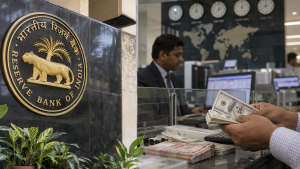
Authorised persons are entities permitted by the Reserve Bank of India (RBI) to deal in foreign exchange under the Foreign Exchange Management Act, 1999 (FEMA). Their permissions differ by category, shaping which transactions they may facilitate and how residents access foreign exchange.
Legal Framework
Section 10(1) of FEMA empowers the RBI to authorise persons to deal in foreign exchange or foreign securities. Authorised persons include authorised dealers and money changers. The RBI’s Foreign Exchange Department oversees authorisation and regulation, while the scope of each entity’s activities is governed by its licence and applicable RBI directions.
This framework supports orderly foreign exchange transactions and compliance with FEMA. A licence does not confer unrestricted authority: each category may undertake only the transactions permitted under its authorisation and the relevant regulations.
Categories of Authorised Dealers
The principal categories include Authorised Dealer Category-I (AD-I), Authorised Dealer Category-II (AD-II) and Full Fledged Money Changers (FFMCs). Their permissions reflect different levels and purposes of foreign exchange activity.
- AD-I: These entities are primarily banks. They may handle all permissible current-account and capital-account transactions, subject to FEMA and RBI directions. Their broad remit includes services connected with remittances, foreign currency accounts, export and import finance, and foreign investment.
- AD-II: These entities, which can include eligible non-banking financial companies (NBFCs), receive narrower, specified authorisations. Under the revised framework, they may undertake certain non-trade current-account transactions, excluding gifts and donations, and foreign trade transactions up to ₹25 lakh per transaction. Their permitted services can include remittances for medical treatment, education and family maintenance.
- FFMCs: These money changers mainly meet foreign exchange needs connected with travel. They may buy foreign exchange from residents and non-residents and sell it for private or business travel abroad, within the applicable permissions. They are not authorised to undertake capital-account transactions.
The categories therefore distinguish between broad banking authority, specified services by AD-II entities and travel-related currency exchange by FFMCs. The applicable licence and RBI directions determine the precise scope in each case.
Current- and Capital-Account Transactions
FEMA distinguishes transactions by whether they relate mainly to income and expenditure or affect assets and liabilities. This distinction is central to the permissions required for cross-border transactions.
- Current-account transactions: These generally relate to receipts and payments that do not alter the ownership of assets or liabilities. Examples include trade in goods and services, interest, dividends and remittances. They are generally permitted unless explicitly prohibited or restricted under regulations.
- Capital-account transactions: These affect the assets or liabilities of residents in India or non-residents in India. Examples include foreign direct investment, external commercial borrowings and portfolio investment. They require express permission or are permitted only as specified by regulations.
The distinction also affects which authorised person can process a transaction. AD-I entities have authority across permissible current- and capital-account transactions, while AD-II entities and FFMCs have more limited scopes. A transaction’s classification and the relevant regulatory conditions must therefore be considered together.
Liberalised Remittance Scheme
The Liberalised Remittance Scheme (LRS), under FEMA, enables resident individuals to remit funds abroad for permissible current- or capital-account transactions. The limit is USD 2,50,000 per individual in each financial year, from April 1 to March 31.
- Eligibility: The scheme is available to resident individuals, including minors and students.
- Permitted purposes: Remittances may cover private visits, gifts and donations, medical treatment, studies abroad, maintenance of close relatives abroad, business travel or conference attendance, and the purchase of immovable property or shares abroad, subject to applicable rules.
- Restrictions: The LRS does not permit transactions prohibited under FEMA regulations. Examples include margin trading and transactions specified as prohibited under Schedule I of the Foreign Exchange Management (Current Account Transactions) Rules, 2000.
The annual limit applies to the resident individual, not separately to each purpose. Transactions must remain within the scheme’s permitted scope and comply with the relevant current- or capital-account rules.
Regulatory Significance
Authorised dealers connect FEMA’s rules with the practical provision of foreign exchange services. Differentiated licences can widen access while retaining controls over transaction types and limits. The framework also raises issues relevant to financial sector regulation, foreign exchange access and institutional capacity.
- Financial sector regulation: Permissions must be matched to the entity’s authorised scope, with compliance maintained under FEMA and RBI directions.
- Foreign exchange access: AD-II authorisations can allow eligible non-banking entities to provide specified services, including certain remittances and small-value trade transactions.
- Institutional capacity: Wider participation makes clear authorisation boundaries and the ability to apply transaction rules important to effective oversight.
Key Prelims Takeaways
- FEMA Section 10(1): Empowers the RBI to authorise persons to deal in foreign exchange.
- AD-I: Primarily banks; handles all permissible current- and capital-account transactions.
- AD-II: May include eligible NBFCs; authority is limited to specified transactions.
- AD-II transaction scope: Certain non-trade current-account transactions, excluding gifts and donations, and trade transactions up to ₹25 lakh per transaction.
- FFMCs: Deal mainly in travel-related foreign exchange and cannot undertake capital-account transactions.
- FEMA distinction: Current-account transactions are generally permitted unless prohibited; capital-account transactions require express permission or specific regulatory provision.
- LRS: Resident individuals, including minors and students, may remit up to USD 2,50,000 per financial year for permitted transactions.
Recent Context
The Foreign Exchange Management (Authorised Persons) Regulations, 2026 took effect on May 6, 2026, allowing eligible non-banking entities, including RBI-registered NBFCs, to receive AD-II licences. On November 13, 2026, the RBI granted Mufin Green Finance Limited an AD-II licence for specified foreign exchange activities. It remains valid unless revoked by the RBI or surrendered by the company.
| Related | |
|---|---|