Important Cricket Formats and Playing Rules
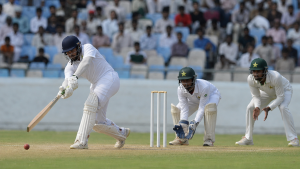
Cricket is governed by a clear set of international formats, laws, and match conditions. For Prelims revision, the key focus is on the ICC’s role, major formats, and the rules that shape limited-overs and Test cricket.
Evolution and Administrative Structure of the ICC
The International Cricket Council (ICC) is the global governing body for cricket. It administers the game, organises major world tournaments, and sets international playing conditions.
- Founded: 1909, as the Imperial Cricket Conference.
- Renamed: International Cricket Conference in 1965.
- Current name: International Cricket Council since 1989.
- Headquarters: Dubai, United Arab Emirates, since 2005.
- Membership: 108 members — 12 Full Members and 96 Associate Members.
- Chairman: Jay Shah, who assumed office on December 1, 2024.
Primary Formats of International Cricket
International cricket is played in three standard formats. Each has distinct duration, tactical demands, and playing conditions.
| Format | Duration | Overs per Innings | Key Feature |
| Test Cricket | Up to 5 days | Unlimited, with a maximum of 90 overs per day | Played in white clothing with a red or pink ball; each side gets two innings. |
| One Day International (ODI) | 1 day | 50 overs | Played with a white ball; fielding restrictions are divided into three powerplays. |
| Twenty20 International (T20I) | About 3 hours | 20 overs | Fast-paced format with a six-over powerplay at the start of the innings. |
Key Playing Rules and Operational Systems
The Marylebone Cricket Club (MCC) frames the Laws of Cricket, while the ICC sets the Playing Conditions for international matches.
- Decision Review System (DRS): A technology-based review system used to assist on-field decision-making.
- Hawk-Eye: Used for ball tracking in reviews.
- UltraEdge: Used to detect sound edges in dismissal reviews.
- Hot Spot: Infrared imaging used in certain decision reviews.
- Duckworth-Lewis-Stern (DLS) Method: Used to revise targets in interrupted limited-overs matches by accounting for wickets and overs remaining.
- Super Over: A tie-breaker in limited-overs cricket in which each team plays one extra over of six balls.
- Free Hit: In limited-overs cricket, the next delivery after a foot-fault no-ball is a free hit, from which most standard dismissals do not apply.
Major ICC Tournaments and Governance Rules
The ICC conducts major global tournaments across formats to determine world champions.
- ICC Cricket World Cup: The premier ODI world championship.
- ICC Men’s and Women’s T20 World Cups: The premier global championships in the T20 format.
- ICC World Test Championship (WTC): A two-year cycle in which the top nine Test-playing nations compete through bilateral series to reach the final.
- Host selection: Major events are awarded through ICC evaluation criteria that include political stability, governance, security, and cricket infrastructure.
Key Prelims Takeaways
- ICC: The global governing body for cricket, founded in 1909.
- MCC: The official custodian of the Laws of Cricket; it is not the ICC.
- Pitch length: A standard cricket pitch is 22 yards, or 20.12 metres.
- First Test match: Played in 1877 between Australia and England at the Melbourne Cricket Ground.
- First Men’s ODI World Cup: Held in England in 1975.
- First Women’s Cricket World Cup: Held in 1973.
- Bowling limits: In T20Is, a bowler can bowl a maximum of 4 overs; in ODIs, the limit is 10 overs.
Recent Context
The ICC has named India as the host of the inaugural Women’s Champions Trophy in 2027. The event will feature six teams in a T20I round-robin format followed by a final, with Sri Lanka remaining qualified despite being replaced as host because of unresolved governance issues in Sri Lanka Cricket.
The selection was made after the ICC evaluated Bangladesh, India, and South Africa under its host criteria. Qualification was finalised through the official ICC Women’s T20I Team Rankings based on the July 6, 2026 cut-off date.
| Related | |
|---|---|