Indian Army Introduces New Uniform Code
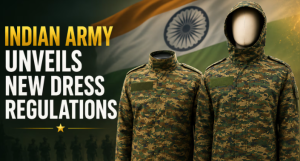
The Indian Army introduced a new uniform code through the 174-page Army Uniforms-2026 Pamphlet in June 2026. The manual is the first comprehensive update to the Army’s dress regulations in eight years and covers formal attire, winter working dress, ceremonial wear, grooming standards, and women officers’ clothing options.
Army Uniform Regulations
The Indian Army’s dress code is governed by service regulations that specify uniforms for formal, ceremonial, mess, and working occasions. The 2026 pamphlet replaces older dress instructions and removes several colonial-era terms from official usage, including “Royal”.
Formal and Ceremonial Dress
The indigenous Bandi jacket has been introduced as formal civil attire for Indian Army officers. It is worn over a full-sleeved shirt with formal trousers and closed footwear. The ceremonial sword carriage has been made optional for Reviewing Officers during parades, while swords remain authorised for parade commanders, contingent commanders, and designated personnel during major ceremonial events such as Republic Day.
Winter Working Dress and Mess Dress
A new winter working dress with the Battle Jacket has been introduced for all ranks. It will gradually replace the jersey-based winter uniform known as Dress 3A, and the full transition is expected by June 2029. Pouch belts have been removed from Mess Dress Nos. 5 and 6, although they remain authorised for certain arms and services up to the rank of colonel during regimental and corps functions.
Important Facts for Exams
- The Indian Army released the 174-page Army Uniforms-2026 Pamphlet in June 2026.
- The update is the first comprehensive revision of Army dress regulations in eight years.
- The Battle Jacket will replace the jersey-based winter uniform, Dress 3A, by June 2029.
- Republic Day is one of the major ceremonial occasions where designated personnel may carry swords.
Grooming and Women Officers’ Dress
The new manual prohibits radical hairstyles, unauthorised beards, visible electronic gadgets, tattoos, and body piercings, with specific exemptions for Sikh soldiers. For women officers, the permitted formal clothing includes sober-coloured sarees or kurta-salwar sets with ankle-length straight pants and a dupatta, while sleeveless kurtas and palazzos are not permitted.
| Related | |
|---|---|