India Expands QR Codes on Critical Medicines
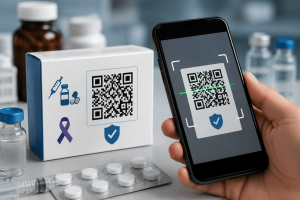
The Union Health Ministry notified amendments to the Drugs Rules, 1945, on 25 June 2026 to extend QR-code based traceability to vaccines, anti-cancer medicines, antimicrobials, narcotic drugs and psychotropic drugs. The revised framework places these medicines under Schedule H2 of the Drugs Rules and requires manufacturers to print or affix QR codes on primary packaging, or on secondary packaging when space is insufficient.
QR-Code Traceability in Medicines
QR-code traceability is a product identification system that links a medicine pack to machine-readable data. The code can store a unique identification code, generic name, brand name, manufacturer details, batch number, manufacturing date, expiry date and manufacturing licence number.
Medicines Covered Under the Expanded Rule
The expanded mandate covers all vaccines, all anti-cancer medicines, all antimicrobials including antibiotics, and narcotic and psychotropic drugs. Earlier, QR-code based identification was mandatory only for the top 300 pharmaceutical brands in India.
Implementation Timeline and Compliance
Manufacturers of vaccines, anti-cancer medicines, narcotic drugs and psychotropic drugs must comply from 1 July 2027. The QR-code requirement for antimicrobials, including antibiotics, will apply from 1 July 2028.
Important Facts for Exams
- Drugs Rules, 1945, is a subordinate legislation framework under India’s drug regulatory system.
- Schedule H2 is associated with prescription medicines that require specific labelling and traceability provisions.
- Anti-Microbial Resistance, or AMR, refers to the ability of microbes to resist medicines used against them.
- QR codes are two-dimensional barcodes that can store more data than a standard one-dimensional barcode.
Regulatory and Public Health Context
The traceability system is intended for use by consumers, pharmacists, distributors and regulators for verification of medicine packs. The inclusion of antimicrobials links the measure with monitoring of fake or poor-quality antibiotic products in India.
| Related | |
|---|---|