ICMR to Set Up India’s First High-Altitude Medicine Centre
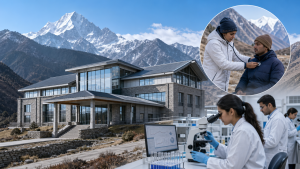
The Indian Council of Medical Research is establishing India’s first dedicated centre for high-altitude medicine and public health research in Himachal Pradesh. The ICMR Centre for High Altitude Medicine and Public Health Research will come up at Keylong in the Lahaul and Spiti district and will upgrade the existing ICMR field station into a multidisciplinary research hub.
Location and Institutional Framework
Keylong is the headquarters of Lahaul and Spiti district in Himachal Pradesh and lies at high altitude in the western Himalayas. The new centre will function as a research, innovation, and capacity-building facility under the Indian Council of Medical Research, which is India’s apex body for biomedical research.
Research Areas in High-Altitude Medicine
The centre will study altitude physiology, acclimatisation, mountain medicine, climate-sensitive diseases, infectious diseases, non-communicable diseases, maternal and child health, nutrition, mental health, occupational health, and disaster medicine. High-altitude medicine deals with the health effects of low oxygen levels, cold climate, and environmental stress on human physiology.
Technology and Public Health Applications
The facility will use digital health platforms, telemedicine, drone-based delivery of medicines and diagnostics, and real-time disease surveillance. These systems are relevant for remote mountain regions where road connectivity, emergency transport, and specialist access remain limited for long periods of the year.
Collaborating Institutions
The centre will work with the Armed Forces Medical Services, the Defence Research and Development Organisation, the Himachal Pradesh Government, and academic institutions. Such collaboration links civilian health research with defence medicine, mountain logistics, and field-based scientific studies.
Important Facts for Exams
- The Indian Council of Medical Research was established in 1911 as the Indian Research Fund Association and later renamed in 1949.
- High-altitude regions are generally classified as areas above 2,500 metres above sea level.
- Acute mountain sickness, high-altitude pulmonary oedema, and high-altitude cerebral oedema are major altitude-related medical conditions.
- Lahaul and Spiti is one of the least densely populated districts in Himachal Pradesh and remains geographically isolated during winter months.
Strategic and Field Research Value
The centre will provide year-round access to high-altitude and tribal populations for long-term studies on environmental determinants of health. Keylong’s location in a border district also makes it suitable for field research on mountain health, emergency response, and cold-region medicine.
| Related | |
|---|---|