Global Disease Surveillance and Outbreak Response Mechanisms
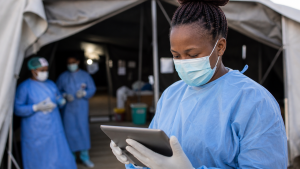
Disease surveillance provides the evidence needed to identify health threats early, while international rules and response networks help countries assess and contain risks that may cross borders. Effective action depends on reliable national systems, timely information-sharing and coordinated response capacity.
Disease Surveillance
Disease surveillance is the continuous, systematic collection, analysis and interpretation of health-related data for public health action. It helps detect potential outbreaks, investigate reported communicable diseases and monitor their spread, enabling timely prevention and control measures.
- Passive surveillance: Health facilities, laboratories and healthcare providers routinely report cases. It is the most common method for monitoring vaccine-preventable diseases.
- Active surveillance: Public health authorities proactively seek cases through systematic contact with healthcare providers, hospitals or the public. It is generally more resource-intensive and used in specific situations.
Surveillance data can measure disease occurrence and trends in risk behaviour, and help assess the performance of control programmes. The choice of approach depends on the public health situation and the information required.
International Health Regulations (2005)
The International Health Regulations (IHR) (2005) are a legally binding framework for 196 States Parties, including the 194 Member States of the World Health Organization (WHO). Their purpose is to prevent the international spread of disease while avoiding unnecessary interference with international traffic and trade. The IHR require countries to develop and maintain core capacities to prevent, detect and respond to public health threats. These capacities include:
- Detect: Identify public health risks and emergencies.
- Assess: Evaluate the significance and potential impact of an event.
- Notify and report: Share information on relevant public health events.
- Respond: Implement appropriate public health measures.
Points of entry (PoE) are also important for limiting international disease spread. Effective implementation relies on national coordination and accountability, as well as the ability to share information and act promptly.
Global Surveillance and Response Networks
WHO has the primary mandate to monitor and respond to global public health threats. Its global surveillance system operates continuously, 24 hours a day, 365 days a year. After an event is verified, WHO assesses its risk and may issue alerts. The Global Outbreak Alert and Response Network (GOARN), established by WHO in 2000, is a technical partnership of more than 300 institutions and networks. It draws on expertise and resources beyond the United Nations to support rapid identification, confirmation and response to public health emergencies of international importance.
- Early detection: Support the rapid identification of epidemics through international surveillance.
- Response mobilisation: Bring together experts, resources and logistical support for health threats.
- Coordination: Connect the efforts of governments, international organisations and non-governmental organisations.
- Capacity building: Strengthen local health infrastructure and human capacity through training.
A Public Health Emergency of International Concern (PHEIC) is a formal WHO declaration under the IHR. It refers to an extraordinary event that poses a public health risk to other states through international disease spread and may require a coordinated international response. Events that are serious, sudden, unusual or unexpected, with implications beyond the affected state, may warrant such action. A PHEIC is not limited to infectious disease: emergencies involving chemical or radioactive materials may also qualify.
National Response Capacity
National public health agencies, such as Centers for Disease Control and Prevention (CDCs), work with state and local partners to detect, respond to and contain outbreaks. They help build emergency response capacity, train rapid response teams and strengthen Emergency Operations Centers.
- Incident management: An incident management system (IMS) may be activated to provide a standard structure and chain of command.
- Contact tracing: National authorities identify and monitor exposed people to help prevent further transmission.
- Risk communication: Public health agencies disseminate accurate information during outbreaks.
- Coordination: National systems work with local partners and international organisations as needed.
Ebola Virus Disease: Response Priorities
Ebola virus disease (EVD) is a severe illness caused by viruses in the genus Orthoebolavirus, within the family Filoviridae. Bundibugyo virus is one of the viruses that causes EVD. The incubation period is 2–21 days.
- Transmission: Infection occurs through direct contact with the blood or other body fluids of an infected person, or with contaminated objects and materials.
- When transmission can occur: People can transmit the virus only after symptoms begin.
- Response measures: Rapid detection and isolation of cases, contact tracing and monitoring of exposed people are central to outbreak control.
- Infection prevention: Infection prevention and control measures are essential in healthcare settings and communities.
Response agencies may activate an IMS and work with WHO and other partners. The case illustrates how surveillance, national response capacity and international cooperation combine to support containment.
Key Prelims Takeaways
- Surveillance: Continuous, systematic health-data collection, analysis and interpretation for public health action.
- Methods: Passive surveillance relies on routine reporting; active surveillance proactively searches for cases.
- IHR (2005): A legally binding framework for 196 States Parties to prevent international disease spread.
- Core capacities: Detect, assess, notify and report, and respond to public health threats.
- GOARN: WHO-established partnership launched in 2000, comprising more than 300 institutions and networks.
- PHEIC: A WHO declaration under the IHR for an extraordinary event posing an international public health risk.
Recent Context
Nigeria confirmed its first imported case of Ebola Bundibugyo virus disease in the Federal Capital Territory on 20 October 2026; the patient was in isolation and receiving medical care as of 21 October. Nigeria identified 44 contacts, activated its IMS through NCDC with WHO support, and was the fifth country to detect the virus in the outbreak that began in the Democratic Republic of Congo on 15 May 2026.
| Related | |
|---|---|