CURAJ Develops Lead Detection Water Monitoring System
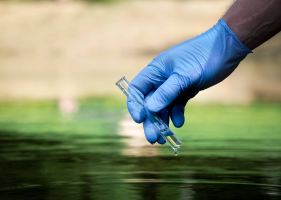
Researchers at the Central University of Rajasthan (CURAJ) in Jaipur developed a sensor on 22 June 2026 to detect minute amounts of toxic lead ions in drinking water. The device tests water directly without additional chemicals, buffers, or reagents, and it is designed for low-cost and user-friendly operation.
Lead Contamination in Water
Lead is a toxic heavy metal that can enter drinking water through pipes, fittings, and other plumbing materials. Lead contamination often remains unnoticed because it does not change the colour of water. Lead accumulation in the human body can affect the nervous system, and children are a vulnerable group because lead exposure can interfere with brain development.
Sensor Design and Testing
The project was led by Pankaj Gupta, Assistant Professor in the Chemistry Department at CURAJ, in collaboration with the Finnish nanotechnology company CANATU. The sensor uses electrodes that have been tested in tap water and in the Ganges and Brahmaputra river waters. The testing covered a temperature range of 5°C to 45°C. The sensor is described as a stable, self-sustaining electrical testing device that is compatible with industrial-scale mass production.
Applications in Water Quality Monitoring
The technology is intended for use in home drinking water distribution systems, municipal water delivery stations, and water treatment plants. Such systems are used for monitoring potable water quality at the point of supply and treatment. Prof. Anand Bhalerao, Vice-Chancellor of CURAJ, is associated with the university’s research and innovation activities in Jaipur, Rajasthan.
Important Facts for Exams
- Lead is a heavy metal and a toxic pollutant in drinking water.
- Water contaminated with lead may remain visually clear and colourless.
- The Ganges and Brahmaputra are major river systems of India used in scientific testing of water-related technologies.
- Nanotechnology companies such as CANATU work on materials and devices at the nanoscale.
| Related | |
|---|---|