Border Roads Organisation and Major Border Roads in India
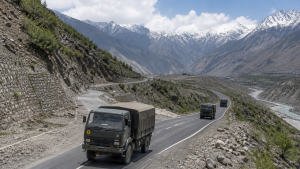
The Border Roads Organisation (BRO) develops and maintains strategic road infrastructure in India’s border regions and friendly neighbouring countries. Its work supports military mobility, connects remote communities and strengthens national security. Major corridors include routes to Ladakh and roads in strategically important border states.
Establishment and Mandate
The BRO was established on May 7, 1960, and operates under the Ministry of Defence. Its mandate is to construct and maintain roads, bridges and related infrastructure in border areas, including regions with difficult terrain, high altitudes and severe weather. The organisation’s work has both strategic and developmental significance. Border roads enable the movement of personnel and supplies and support access to remote locations. They also connect border communities with wider economic activity and public services. Reliable access in difficult terrain can contribute to disaster response capacity, where the condition of roads and bridges affects the movement of people and essential supplies.
Organisation and Operations
The BRO is an inter-ministerial organisation. Its personnel include members of the Indian Army’s Corps of Engineers, the General Reserve Engineer Force (GREF) and civilian staff. It undertakes projects in coordination with central and state government agencies, and also carries out road infrastructure projects in friendly foreign countries. Its engineering work includes road construction, bridge building and tunnelling in challenging environments. These tasks require infrastructure suited to high-altitude conditions and difficult weather. The organisation’s role is therefore not limited to creating new routes; maintaining existing links is also important to continued access in border regions.
Major Border Road Networks
BRO-supported routes serve strategic and civilian connectivity across the Himalayas and other border regions. Important corridors include:
- Srinagar–Leh Highway (NH 1D): Connects Srinagar in Jammu and Kashmir with Leh in Ladakh and crosses the high mountain pass of Zoji La. It is an important route for both military and civilian movement.
- Manali–Leh Highway (NH 3): Provides an alternative road link to Ladakh from Himachal Pradesh. Its route crosses Rohtang, Baralacha La, Lachulung La and Tanglang La, and serves military and tourist traffic.
- Nimmu–Padum–Darcha Road: Provides another corridor to Ladakh through the remote Zanskar Valley, linking Nimmu in Ladakh with Darcha in Himachal Pradesh.
- Chardham Mahamarg Vikas Pariyojana: In Uttarakhand, this project improves connectivity to Yamunotri, Gangotri, Kedarnath and Badrinath. The BRO is involved in constructing and upgrading sections.
- Trans-Arunachal Highway: Aims to strengthen connectivity within Arunachal Pradesh, a strategically important border state. The BRO is developing sections of the highway.
Together, these routes illustrate how border infrastructure serves military logistics while also improving links for people living in remote areas. The Srinagar–Leh and Manali–Leh highways are established approaches to Ladakh; the Nimmu–Padum–Darcha Road adds a route through Zanskar.
Nimmu–Padum–Darcha Road and Shinku La Tunnel
The 298-kilometre Nimmu–Padum–Darcha (NPD) Road was completed in March 2024 by the BRO. It connects Nimmu in Ladakh to Darcha in Himachal Pradesh via Zanskar Valley and supplements the Srinagar–Leh and Manali–Leh highways. The additional corridor is significant for access to Ladakh, while its all-weather status depends on completion of the tunnel at Shinku La. As of September 2026, the Shinkun La crossing remains seasonal because the Shinkun La Tunnel is under construction. Completion of the tunnel, projected for 2028–2029, is expected to make the NPD route an all-weather road. The distinction between the road’s completion in March 2024 and the later tunnel completion is important: the road exists, but the crossing remains seasonal until the tunnel is completed.
Engineering Challenges and Strategic Significance
The BRO works in terrain exposed to landslides, avalanches, seismic activity and extreme weather. Such conditions create challenges for both construction and the continued usability of roads. Engineering approaches mentioned for these environments include:
- Soil stabilisation: Geo-textiles are used to help stabilise soil.
- Bridge construction: Pre-fabricated bridges are among the techniques used to address difficult construction conditions.
- Tunnelling: Modern tunnelling methods are applied in challenging terrain; the Shinku La Tunnel is central to making the NPD route all-weather.
- Environmental considerations: Infrastructure development must take account of fragile ecosystems.
- Energy efficiency: The New Passenger Terminal Building at Kushok Bakula Rimpochee Airport in Leh uses geothermal energy.
The strategic value of border roads lies in the access they provide to sensitive and remote areas. Their condition can affect troop movement, logistics and civilian connectivity. Improved connectivity also supports disaster response capacity by helping reach communities in difficult terrain. These benefits must be considered alongside the engineering and environmental constraints of construction in fragile, high-altitude regions.
Key Prelims Takeaways
- The BRO was established on May 7, 1960, and operates under the Ministry of Defence.
- It develops and maintains road networks in India’s border areas and friendly neighbouring countries.
- The 298-kilometre Nimmu–Padum–Darcha Road was completed in March 2024 and offers an alternative corridor to Ladakh through Zanskar Valley.
- The NPD route supplements the Srinagar–Leh and Manali–Leh highways; its Shinkun La crossing remains seasonal until the tunnel is completed.
- The Shinku La Tunnel is projected for completion in 2028–2029 and is expected to make the NPD route all-weather.
- Ladakh became a Union Territory on October 31, 2019.
Recent Context
On October 15, 2026, Prime Minister Narendra Modi virtually inaugurated and dedicated five Ladakh projects worth about ₹3,350 crore. These included the Leh airport terminal and the BRO-built Nimmu–Padum–Darcha Road, alongside projects for power, heritage conservation and water security.
| Related | |
|---|---|