Endemic Wildlife of the Western Ghats
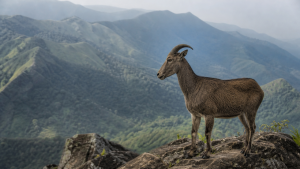
The Western Ghats are a major centre of biodiversity and endemism, with many species found nowhere else. Their varied habitats support distinctive plants and animals, while conservation must address endangered species protection, habitat fragmentation and sustainable development.
The Western Ghats: Geography and Biodiversity
The Western Ghats run parallel to India’s western coast for about 1,600 km, from Gujarat to Kerala and Tamil Nadu, crossing six states: Gujarat, Maharashtra, Goa, Karnataka, Kerala and Tamil Nadu. Older than the Himalayas, the range covers about 140,000 square km. Its western slopes intercept monsoon clouds, contributing to high rainfall and influencing regional climate. UNESCO inscribed 39 properties of the Western Ghats as a World Heritage Site in 2012. The region is also one of the world’s eight “hottest hotspots” of biological diversity. Its geological history, geographic isolation and relatively stable climatic conditions have helped create distinct evolutionary lineages. The Western Ghats has more than 7,400 flowering plant species. Endemism is especially high among several animal groups:
- Amphibians: About 65–80% of the 179 recorded species are endemic.
- Reptiles: More than 60% of an estimated 157–227 species are endemic.
- Freshwater fish: About 41–53% of 288–290 species are endemic.
Endemic Flora
The region is a significant centre of plant diversity, including species and genera found nowhere else.
- Endemic trees: More than half of the 650 tree species recorded in the Western Ghats are endemic.
- Plant diversity: The region is a centre of diversity for economically important plants such as mango, banana, black pepper and nutmeg.
- Distinctive species: The palm Bentinckia condapanna is endemic to the region. The Kurinji flower, Strobilanthes kunthiana, blooms once every 12 years.
- Endemic genus: Hubbardia, a monotypic grass genus, is native to the Western Ghats.
Endemic Fauna
Amphibians and reptiles are among the region’s most distinctive animal groups. Several species are closely associated with its forests, streams and other specialised habitats.
- Purple Frog: The Indian purple frog, or pignose frog (Nasikabatrachus sahyadrensis), is endemic to the Western Ghats and belongs to the family Nasikabatrachidae. It spends most of the year underground and emerges during the monsoon for a brief breeding period.
- Other amphibians: The Malabar gliding frog (Rhacophorus malabaricus) and torrent frogs of the genus Micrixalus are notable examples.
- Endemic reptiles: Around 70% of Uropeltid snakes and 65% of lizards in the region are reported to be endemic.
- Olive-toned snakes: The non-venomous olive keelback (Atretium schistosum) is an aquatic snake of southern India, including Karnataka. The non-venomous olive forest snake (Rhabdops olivaceus) has also been recorded in Karnataka’s Western Ghats; the two species differ in taxonomy and habitat association.
- Other snakes: The Northern Western Ghats vine snake (Ahaetulla borealis) is endemic to the region, while the Malabar pit viper (Trimeresurus malabaricus) is another endemic snake.
The Western Ghats also provide habitat for distinctive mammals, birds and freshwater fish.
- Mammals: The lion-tailed macaque (Macaca silenus), locally called wanderoo, is an endangered Old World monkey endemic to the region. It favours undisturbed, old-growth tropical evergreen forests. Other notable mammals include the Nilgiri tahr (Nilgiritragus hylocrius), Malabar civet (Viverra civettina), Nilgiri langur (Semnopithecus johnii) and Nilgiri marten (Martes gwatkinsii).
- Birds: More than 500 bird species occur in the Western Ghats. Endemic examples include the Nilgiri flycatcher and broad-tailed grassbird (Schoenicola platyura).
- Fish: The region’s freshwater ecosystems have high endemism. The genus Koima includes two loach species; the blind catfish Horaglanis krishnai is found in wells in Kerala. The Malabar mahseer (Tor malabaricus) is another notable fish.
Conservation and Protected Areas
Deforestation, mining and unplanned development put pressure on habitats and wildlife. Protecting connected habitats is important for endangered species and for limiting the effects of habitat fragmentation. Development in this ecologically sensitive region must also take account of its biodiversity. The Western Ghats World Heritage serial site comprises 39 properties grouped into seven clusters. Important protected areas include Silent Valley National Park and Periyar Tiger Reserve in Kerala; Anamalai Tiger Reserve in Tamil Nadu; and Bhadra Wildlife Sanctuary and Biligiri Rangaswamy Temple (BRT) Tiger Reserve in Karnataka. The BRT Tiger Reserve, in Karnataka’s Chamarajanagar district, was declared a tiger reserve in 2011. It lies where the Eastern and Western Ghats meet, forming a transition zone between the two hill systems. Two committees assessed the region’s ecology and proposed conservation measures:
- Western Ghats Ecology Expert Panel (WGEEP): Chaired by Madhav Gadgil in 2010, it examined ecological protection and the identification of Ecologically Sensitive Zones.
- High-Level Working Group: Chaired by K. Kasturirangan in 2012, it also considered conservation and the demarcation of ecologically sensitive areas, using a different approach from WGEEP.
Key Prelims Takeaways
- The Western Ghats extend about 1,600 km across six states and were inscribed as a UNESCO World Heritage Site in 2012.
- They are one of the world’s eight “hottest hotspots” of biological diversity.
- Endemism is particularly high among Western Ghats amphibians, reptiles and freshwater fish.
- The Purple Frog (Nasikabatrachus sahyadrensis) and lion-tailed macaque (Macaca silenus) are endemic to the region.
- The BRT Tiger Reserve lies in the transition zone where the Eastern and Western Ghats meet.
- The Gadgil (2010) and Kasturirangan (2012) groups examined Western Ghats conservation and ecologically sensitive areas.
Recent Context
A rare olive-green snake was reported from B.R. Hills, Karnataka, on October 9, 2026. Its species, precise sighting location and encounter circumstances have not been established. Olive coloration occurs in more than one snake species in Karnataka, so identification requires diagnostic features, not colour alone.
| Related | |
|---|---|