Important Indigenous Cattle Breeds of India
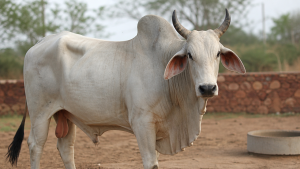
India’s indigenous cattle breeds are an important genetic resource for agriculture, dairy development and rural livelihoods. Their value lies in adaptability to local climates, resistance to diseases and suitability for low-input farming systems. For Prelims, the key areas are breed classification, notable examples, conservation schemes and recent assisted reproductive technology applications.
Classification of Indian Cattle Breeds
Indian indigenous cattle are broadly grouped by utility into three categories: dairy, draught and dual-purpose. This classification is useful for understanding their economic role and breeding priorities. The National Bureau of Animal Genetic Resources (NBAGR) is the nodal agency for identification, characterization and conservation of livestock and poultry genetic resources in India. It also maintains the official register of recognized breeds.
- Dairy breeds are valued mainly for milk yield and milk quality.
- Draught breeds are preferred for ploughing, carting and other farm work.
- Dual-purpose breeds provide both milk and draught power.
These breeds are especially important in regions where mechanisation is limited and farming depends on locally adapted animals. Their endurance, feed efficiency and disease tolerance make them suitable for climate-stressed and resource-poor environments.
Important Dairy Breeds
Dairy breeds are selected mainly for milk production, heat tolerance and adaptation to local conditions. Some of the most important indigenous dairy breeds are:
- Sahiwal: Originating from Punjab and Rajasthan, it is known for high milk yield, heat tolerance and disease resistance. Its milk has high butterfat content, making it a prized dairy breed.
- Gir: Native to the Gir forests of Gujarat, this breed is identified by its dome-shaped forehead and long, pendulous ears. It is one of India’s best-known milk breeds and is also found in parts of Maharashtra and Rajasthan.
- Red Sindhi: Recognised by its red coat colour, this breed is hardy, adaptable and gives moderate to good milk yield. It is found in Sindh region and several parts of India.
- Rathi: Mainly found in the arid regions of Rajasthan, it is a resilient breed suited to harsh conditions. Though considered dual-purpose, it is widely valued for dairy traits in dry areas.
These breeds matter for dairy productivity because they are better adapted to Indian heat, variable fodder availability and local disease pressure than many exotic breeds.
Important Draught Breeds
Draught breeds are known for physical strength, stamina and endurance. They are widely used in agriculture and transport, especially in regions where animal power still supports farming operations.
- Hallikar: Native to Karnataka, it is known for powerful build, speed and endurance. It is regarded as one of the classic draught breeds of southern India.
- Amritmahal: Also from Karnataka, this breed is prized for strength, speed and working ability. It has long been associated with farm labour and transport.
- Nagori: Found in Rajasthan, it is valued for draught power, speed and suitability for heavy pulling.
- Kangayam: Native to Tamil Nadu, it is compact, strong and highly suitable for heavy farm work and transport.
In exam questions, draught breeds are usually identified through their association with hardiness, speed and work capacity rather than milk yield.
Important Dual-Purpose Breeds
Dual-purpose breeds are important in mixed farming systems because they provide both milk and draught support. They are often preferred by small and marginal farmers for their versatility.
- Haryana: Originating from Haryana and eastern Punjab, this large-sized breed is known for both good milk yield and strong draught qualities.
- Kankrej: Native to Gujarat, it is a heavy-set breed known for fast pace, stamina and useful milking ability.
- Ongole: From Andhra Pradesh, it is a large and powerful breed with strong draught ability and reasonable milk production.
- Tharparkar: Found in the Thar Desert region of Rajasthan, this breed is hardy and well adapted to arid conditions. It provides both milk and draught power.
- Badri: An indigenous cattle breed from Uttarakhand, it is adapted to hill terrain and harsh climate. It is valued for disease resistance, robust health and moderate milk production in low-input systems.
Dual-purpose cattle are especially relevant for rural livelihoods because they help households manage both farm labour and milk needs from the same animal resource.
Conservation Efforts and Technologies
India has strengthened conservation of indigenous bovines through schemes, breeding programmes and reproductive technologies. These efforts are important for protecting native germplasm and improving productivity without losing breed identity.
- Rashtriya Gokul Mission (RGM): Launched in December 2014, it aims to conserve and develop indigenous bovine breeds in a focused and scientific manner.
- Gokul Grams: Created under RGM for indigenous breed development and conservation.
- Disease-free high genetic merit bulls: Distributed to improve breeding quality.
- Advanced reproductive technologies: Promoted for faster multiplication of superior animals.
- National Programme for Bovine Breeding (NPBB): Focuses on improving bovine productivity through artificial insemination and natural service.
- Gopal Ratna Awards: Instituted under RGM to recognise farmers and institutions contributing to indigenous breed conservation and dairy development.
Assisted reproductive technologies are increasingly used in livestock improvement programmes. They help multiply selected germplasm faster than conventional breeding.
- Artificial Insemination (AI): Uses semen from elite bulls for genetic improvement.
- Embryo Transfer Technology (ETT): Transfers embryos from a donor cow to a recipient cow.
- OPU-IVF: In Ovum Pick-Up and In Vitro Fertilisation, oocytes are collected from donor females, fertilised in the laboratory and the embryo is transferred to a surrogate mother.
- Sex-sorted semen: Used to increase the probability of offspring of a desired sex.
Such technologies are relevant not only for productivity improvement but also for conservation of threatened native breeds in difficult ecosystems.
Key Prelims Takeaways
- NBAGR: The nodal agency for identification, characterisation and conservation of livestock genetic resources in India.
- Breed classification: Indigenous cattle are broadly divided into dairy, draught and dual-purpose breeds.
- Dairy breeds: Sahiwal, Gir, Red Sindhi and Rathi are important examples.
- Draught breeds: Hallikar, Amritmahal, Nagori and Kangayam are known for work power and endurance.
- Dual-purpose breeds: Haryana, Kankrej, Ongole, Tharparkar and Badri are notable examples.
- Rashtriya Gokul Mission: Launched in December 2014 for indigenous bovine conservation and development.
- ARTs in cattle: AI, ETT, OPU-IVF and sex-sorted semen support faster multiplication of superior animals.
Recent Context
A healthy Badri female calf was born on September 11, 2026, at G.B. Pant University of Agriculture and Technology, Pantnagar, through OPU-IVF technology. The embryo was developed in the laboratory and transferred into a Sahiwal cow as a surrogate mother. The work is part of a research programme with ICAR-NDRI, Karnal, focused on conserving native bovine genetic resources.
| Related | |
|---|---|