
India’s Energy Security: Strategic Petroleum Reserves and Policy
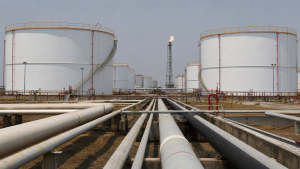
India depends heavily on imported crude oil and natural gas, which exposes the economy to global price shocks, shipping disruptions and geopolitical tensions. To reduce this vulnerability, the government has created Strategic Petroleum Reserves (SPR) as an emergency crude buffer managed through a dedicated institutional and policy framework.
Strategic Petroleum Reserves: Purpose and Structure
- Emergency buffer: SPRs are designed to release crude oil during supply crises, war-like disruptions or blockages in trade routes.
- Implementing agency: The system is governed by Indian Strategic Petroleum Reserves Limited (ISPRL), which works under the Ministry of Petroleum and Natural Gas (MoPNG).
- Storage technology: India uses unlined underground rock caverns, where natural groundwater pressure helps retain crude safely without leakage.
- Lower risk and cost: Rock cavern storage offers lower maintenance, better safety against air strikes and no surface evaporation compared to above-ground tanks.
- Overall role: These reserves work alongside the storage capacity maintained by state-owned oil marketing companies.
Phase I: Existing Strategic Storage Facilities
- Total capacity: Phase I of the SPR programme has been completed with 5.33 million metric tonnes (MMT) of storage, equal to about 9.5 days of crude oil requirement.
- Visakhapatnam, Andhra Pradesh: Capacity of 1.33 MMT, with 1.0 MMT allocated to ISPRL and 0.33 MMT leased to Hindustan Petroleum Corporation Limited (HPCL).
- Mangaluru, Karnataka: Capacity of 1.5 MMT, divided into two compartments for commercial lease storage by foreign national oil companies.
- Padur, Karnataka: The largest Phase I facility with 2.5 MMT capacity, divided into four underground caverns.
- Commercial use: Some space in Phase I is leased commercially, helping reduce the cost of maintaining the reserves.
Phase II Expansion and PPP Model
- Cabinet approval: Phase II of the SPR programme was approved by the Union Cabinet in July 2021.
- Additional capacity: Phase II adds 6.5 MMT of underground storage.
- Chandikhol, Odisha: Planned storage capacity of 4.0 MMT in underground rock caverns.
- Padur Phase II, Karnataka: Planned storage capacity of 2.5 MMT adjacent to the existing Phase I site.
- DBFOT model: Phase II follows a Design, Build, Finance, Operate and Transfer (DBFOT) public-private partnership framework.
- Commercial flexibility: Private concessionaires may trade crude commercially, but must release stocks to the government during emergencies.
Policy and Administrative Framework
- ISPRL status: ISPRL was established in 2004 as a Special Purpose Vehicle (SPV) under the Oil Industry Development Board (OIDB).
- Wholly owned subsidiary: It functions as a wholly owned subsidiary of OIDB.
- Commercialization policy: In 2021, the government allowed ISPRL to commercialize up to 30% of stored crude to Indian companies and re-export up to 20% to regional markets.
- Emergency release authority: The Empowered Committee under MoPNG has sole authority to order crude releases during global supply shocks or armed conflicts.
- Strategic balance: The policy framework combines commercial use of reserves with direct government control during crises.
Broader Energy Security Measures
- HELP: The Hydrocarbon Exploration and Licensing Policy replaced NELP in 2016.
- HELP features: It introduced a Uniform Licensing System, Open Acreage Licensing Policy (OALP) and a Revenue Sharing Contract model.
- OALP: Exploration companies can submit expressions of interest for any unallocated oil block twice a year.
- Gas grid expansion: The National Gas Grid initiative aims to expand the pipeline network to 33,500 km.
- Gas share target: The initiative seeks to raise natural gas in the primary energy mix from 6% to 15%.
- Ethanol blending: The Ethanol Blended Petrol (EBP) Programme has mandated a 20% ethanol blending target (E20) for petrol across India.
Key Prelims Takeaways
- SPR objective: It is an emergency crude oil buffer to protect India from supply disruptions and geopolitical shocks.
- Phase I capacity: 5.33 MMT, equal to around 9.5 days of crude oil requirement.
- Phase II capacity: 6.5 MMT, with sites at Chandikhol and Padur.
- Implementing agency: ISPRL operates the programme under MoPNG.
- Storage method: India uses unlined underground rock caverns for SPR storage.
- Coverage: Phase I reserves provide 9.5 days of crude cover, while oil marketing companies hold an additional 64 days, taking total crude cover to nearly 74 days.
- Commercial links: ADNOC was the first foreign entity to store crude in India’s Mangaluru strategic reserve under a commercial lease.
Current General Studies comprises current-affairs-based, General Studies-rich study material on policies, laws, institutions, economy, science, environment, governance, international relations, and other varied but important topics for UPSC and State PSC Prelims examinations.
Fortnightly PDF compilations: Available here
Originally written on
May 11, 2026
and last modified on
September 6, 2026.
| Related | |
|---|---|



Kailash
May 3, 2018 at 10:57 pmIts Iraq now