Functions of Reserve Bank of India
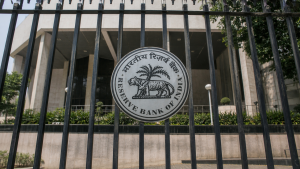
The Reserve Bank of India (RBI) is India’s central bank and the country’s principal monetary and banking authority. Established under the Reserve Bank of India Act, 1934, and nationalized in 1949, it manages currency, monetary policy, banking regulation, foreign exchange, and financial stability.
For Prelims revision, the RBI is important because many of its powers flow from specific legal provisions, and its role extends from issuing notes to supervising banks, government borrowing, and payment systems.
Monetary Authority and Currency Management
- Monetary policy: The RBI acts as the monetary authority through the six-member Monetary Policy Committee (MPC), constituted under Section 45ZB of the RBI Act, 1934.
- Inflation and growth balance: The MPC meets at least four times a year to decide policy rates and maintain price stability while ensuring adequate credit flow to the economy.
- Exclusive note issue: Under Section 22 of the RBI Act, 1934, the RBI has the sole authority to issue currency notes in India.
- Governor’s signature: RBI currency notes bear the signature of the Governor.
- Central Board: The Central Board of Directors governs the affairs of the RBI.
- Current leadership: The RBI is currently headed by Sanjay Malhotra, the 26th Governor of the RBI.
- Deputy Governors: The executive management also includes Swaminathan Janakiraman, Dr. Poonam Gupta, Shirish Chandra Murmu, and Rohit Jain.
Regulation and Supervision of the Financial System
- Banking supervision: The RBI regulates and supervises commercial banks, cooperative banks, and non-banking financial companies (NBFCs) under the Banking Regulation Act, 1949.
- Prudential oversight: It issues guidelines on capital adequacy, asset quality, liquidity, and other supervisory standards for regulated entities.
- Cooperative bank oversight: The RBI can exercise supervisory powers over multi-state cooperative banks under the relevant provisions of banking law.
- Board supersession: Section 36AAA of the Banking Regulation Act, 1949, deals with supersession of the board of a multi-state cooperative bank.
- Ombudsman mechanism: The Reserve Bank – Integrated Ombudsman Scheme, 2026, provides a centralized grievance redressal framework for complaints against regulated financial entities.
- Legal basis: The scheme operates under the Banking Regulation Act, 1949, the RBI Act, 1934, and the Payment and Settlement Systems Act, 2007.
- Depositor protection: Recent banking law changes allow depositors to nominate up to four persons for accounts and lockers.
Debt, Foreign Exchange, and Government Banking
- Foreign exchange management: Under FEMA, 1999, the RBI manages foreign exchange reserves and regulates the foreign exchange market to support external trade and payments.
- External stability: It plays a key role in maintaining orderly conditions in the forex market and in safeguarding external monetary stability.
- Government banker: The RBI acts as the banker to the Central and State Governments.
- Public debt management: It manages public debt, issues government bonds, and assists in government borrowing programmes.
- Ways and Means Advances: The RBI provides temporary Ways and Means Advances to help governments meet short-term cash mismatches.
- Banker to banks: It serves as the banker to other banks and maintains their statutory reserves.
- Liquidity support: In times of systemic stress, the RBI can provide liquidity through lending facilities and other monetary operations.
Payment Systems and Liquidity Control
- Payment system regulator: Under the Payment and Settlement Systems Act, 2007, the RBI regulates and supervises all payment and settlement systems in India.
- Digital and retail payments: Its supervision covers electronic, retail, and broader payment networks.
- Liquidity tools: The RBI uses direct and indirect instruments to control liquidity and inflation in the economy.
- CRR: Under the Cash Reserve Ratio, commercial banks must keep a specified percentage of Net Demand and Time Liabilities (NDTL) with the RBI.
- SLR: Under the Statutory Liquidity Ratio, banks must maintain a prescribed share of their liabilities in liquid government assets.
Key Monetary Policy Rates
| Monetary Policy Tool / Marker | Value / Rate (September 2026) |
| Policy Repo Rate | 5.25% |
| Standing Deposit Facility (SDF) Rate | 5.00% |
| Marginal Standing Facility (MSF) Rate | 5.50% |
| Bank Rate | 5.50% |
| Fixed Reverse Repo Rate | 3.35% |
| Cash Reserve Ratio (CRR) | 3.00% |
| Statutory Liquidity Ratio (SLR) | 18.00% |
Key Prelims Takeaways
- Statutory origin: The RBI was established under the Reserve Bank of India Act, 1934, and nationalized on January 1, 1949.
- Monetary policy body: The MPC has six members, with three RBI officials and three external members appointed by the Central Government.
- Inflation target: The MPC has a statutory mandate to target inflation while supporting growth.
- Note issuance: The RBI alone can issue currency notes under Section 22 of the RBI Act, 1934.
- Government currency: The Government of India issues one-rupee notes and coins under the Coinage Act.
- Supervisory powers: Section 36AAA of the Banking Regulation Act, 1949, is relevant for supersession of boards of multi-state cooperative banks.
- Customer redressal: The Integrated Ombudsman Scheme provides a centralized complaint mechanism for banking and payment-related grievances.
Current General Studies comprises current-affairs-based, General Studies-rich study material on policies, laws, institutions, economy, science, environment, governance, international relations, and other varied but important topics for UPSC and State PSC Prelims examinations.
Fortnightly PDF compilations: Available here
Originally written on
April 16, 2026
and last modified on
September 5, 2026.
| Related | |
|---|---|