Indian Telecom Policies, Laws and Regulations
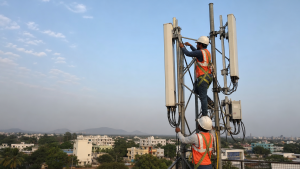
The Indian telecommunications sector is shaped by a mix of statutes, policy frameworks, spectrum rules and regulatory oversight. For Prelims, the key focus areas are the Telecommunications Act, 2023, licensing reforms, spectrum allocation, broadband expansion and security-related compliance.
Legislative Foundations
The Telecommunications Act, 2023 is the central law governing the sector. It replaces the Indian Telegraph Act, 1885 and the Indian Wireless Telegraphy Act, 1933. The Act has been partially in force since June 26, 2024.
- Authorisation framework: The sector is moving away from the older Unified Licence system towards an authorisation regime under the new framework.
- Service categories: The authorisation model divides services into Principal, Captive and Miscellaneous categories.
- Broadcasting rules: Draft rules for television, radio and associated services have also been issued to define parameters for broadcasting providers.
- Digital Bharat Nidhi: Under the 2023 Act, the Universal Service Obligation Fund (USOF) has been renamed and reorganised as the Digital Bharat Nidhi.
National Policies and Network Expansion
Telecom policy now places strong emphasis on investment, broadband access and next-generation technologies. National missions and draft policies seek to expand infrastructure and improve digital connectivity across local bodies and remote areas.
- Draft National Telecom Policy 2025: This draft replaces the National Digital Communications Policy 2018.
- Growth target: It aims to double the telecom sector’s contribution to GDP.
- Investment target: The policy seeks annual infrastructure investment of ₹1,00,000 crore by 2030.
- National Broadband Mission 2.0: Launched on January 17, 2025, it is the main mechanism for accelerating high-speed broadband deployment.
- TDIP Scheme: Revised guidelines issued in April 2026 provide an outlay of over ₹203 crore for 2026–2031.
- Technology focus: The TDIP Scheme supports local academic and industrial research in 5G-Advanced and 6G technologies.
Spectrum Management and Satellite Communication
Spectrum allocation remains one of the most important regulatory functions in telecom. It covers both terrestrial mobile networks and satellite-based communication systems.
- National Frequency Allocation Plan 2025: Effective from December 30, 2025, the NFAP-2025 governs electromagnetic spectrum allocation.
- IMT band: It identifies the 6425–7125 MHz band for International Mobile Telecommunications (IMT) services.
- Satellite bands: The Ka, Q and V bands are allocated for satellite systems.
- Satellite assignment method: Satellite spectrum is to be assigned administratively, rather than through auctions.
- Assignment term: The initial term is five years, with an option for a two-year extension.
- Usage charges: The Digital Communications Commission (DCC) is considering satellite spectrum usage charges at 5% of Adjusted Gross Revenue (AGR).
- Rural concession: The proposal includes a 1 percentage point concession for rural services.
Exam fact: NFAP-2025 reserves the 6425–7125 MHz band for IMT and the Ka, Q and V bands for satellite systems.
Data Localization and Mobile Security
Telecom regulation also includes strict security and data-handling requirements. These are designed to protect consumer information, network integrity and device-level assurance.
- Data storage: Rules framed under the Telecommunications Act, 2023, require authorised telecom entities to store consumer data, network transaction logs and routing information within India.
- NCCS guidelines: The National Centre for Communication Security (NCCS) issued draft Indian Telecom Security Assurance Requirements (ITSAR) for mobile devices in January 2026.
- Testing process: The draft ITSAR requires a strict two-level testing process for consumer and enterprise mobile devices.
Institutional Framework
The telecom ecosystem is managed through a combination of the Department of Telecommunications, regulatory bodies and sectoral commissions. These institutions handle licensing, spectrum, security and policy implementation.
- Department of Telecommunications (DoT): Implements telecom policy and issues operational rules.
- Telecom Regulatory Authority of India (TRAI): Regulates tariffs, recommendations and sectoral standards.
- Digital Communications Commission (DCC): Examines matters related to spectrum usage and sector decisions.
- NCCS: Works on communication security and telecom assurance standards.
Key Prelims Takeaways
- Telecommunications Act, 2023: It replaces the Indian Telegraph Act, 1885, and the Indian Wireless Telegraphy Act, 1933.
- Partial enforcement: The Act has been partially in force since June 26, 2024.
- Licensing reform: The sector is shifting from the Unified Licence system to an authorisation regime.
- Digital Bharat Nidhi: The USOF has been renamed and reorganised under the 2023 Act.
- NTP-2025: The draft policy aims to double telecom’s GDP contribution and attract ₹1,00,000 crore annual infrastructure investment by 2030.
- NFAP-2025: The 6425–7125 MHz band is for IMT, while Ka, Q and V bands are for satellite systems.
- Satellite spectrum: It is assigned administratively, with an initial five-year term and a possible two-year extension.
| Related | |
|---|---|