Indian Railways Train Numbering System
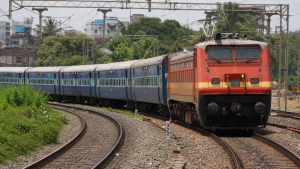
Indian Railways uses a five-digit train numbering system to identify services by category, direction and operating pattern. Introduced to simplify administration and passenger information, it is especially useful on a network that runs thousands of trains across multiple zones. For Prelims, the first digit is the key to the basic classification.
Five-Digit Train Numbering System
Indian Railways introduced the five-digit numbering system on December 20, 2010, replacing the earlier four-digit format. The change was meant to handle the growing number of train services and improve operational efficiency across the national network. The system also supports better digital governance, as each train can be quickly identified in timetables, reservation systems and public information platforms. The structure is designed to be practical rather than purely decorative. The first digit shows the broad category of the train, while the remaining digits help distinguish the route, zone, division or the specific service within that category. This makes the numbering system useful for administration, scheduling and passenger communication.
What the First Digit Indicates
The first digit is the most important part of the train number because it gives the broad service class. This is the quickest way to understand whether a train is a long-distance express, suburban service or a special train.
- 0: Special trains, including holiday specials, summer specials and other temporary services.
- 1 and 2: Long-distance Mail/Express trains. These are regular intercity and interstate services.
- 3: Kolkata suburban trains.
- 4: Metropolitan suburban trains outside Kolkata and Mumbai, including services in major urban regions such as Chennai, New Delhi and Secunderabad.
- 5: Passenger trains, generally slower services that stop at most stations.
- 6: MEMU and DEMU services.
- 7: DHMU and railcar services.
- 8: Reserve category, kept for future use or special services.
- 9: Mumbai suburban trains.
This classification helps separate dense suburban operations from long-distance services and special-purpose trains. It is a simple but effective administrative tool, especially in a system as large and diverse as Indian Railways.
Second Digit and the Remaining Digits
After the first digit, the other four digits provide additional detail. Their exact meaning can vary by category, but they mainly help in internal identification and route management.
- Second digit: For Mail/Express trains beginning with 1 or 2, this often indicates the railway zone or maintenance zone. However, this is not always strictly followed, particularly for trains crossing multiple zones.
- Last three digits: These usually act as serial numbers to distinguish one train from another within a category and zone.
- Route identity: Together, the digits help identify the train’s specific service, route or division.
- Uniqueness: The system ensures that each train has a distinct number within the Indian Railways framework.
The numbering pattern is therefore both administrative and operational. It allows railway officials to track services more efficiently, while passengers can also recognise the broad type of train at a glance.
Direction of Travel and Train Pairs
A train on a fixed route is usually assigned a pair of numbers for the two directions of travel. This is a common feature of the numbering system and helps distinguish the outward and return journeys.
- Odd numbers: The “up” journey is generally assigned an odd number.
- Even numbers: The return or “down” journey is generally assigned an even number.
- Paired services: A train may keep the same first few digits, with only the last digit or two changing between the two directions.
- Example: If one direction is numbered 12345, the return service may be numbered 12346.
This convention reduces confusion in timetable reading and helps differentiate the two directions of the same service. For exam purposes, the odd-even pattern is one of the most useful facts to remember.
Amrit Bharat Express and Train Number 19427/19428
Amrit Bharat Express is a category of long-distance passenger train designed to offer affordable travel over long routes. These trains are generally non-air-conditioned and provide a combination of sleeper and unreserved accommodation. They are meant for routes exceeding 800 km or journeys lasting more than ten hours.
- Lower fares: The service is intended to be more affordable than many reserved air-conditioned options.
- Long-distance design: It is aimed at connecting distant regions through regular rail service.
- Passenger focus: The coach composition is meant to suit budget travel over extended distances.
- Service type: It falls under the long-distance Mail/Express category.
The proposed Bhuj-Barauni Amrit Bharat Express carries train numbers 19427/19428. Here, the leading 1 shows that it belongs to the Mail/Express category. The service is planned as a direct rail link between western and eastern India, connecting Bhuj in Gujarat with Barauni in Bihar.
- Route length: 2,532 km.
- States covered: Gujarat, Rajasthan, Uttar Pradesh and Bihar.
- Proposed frequency: Bhuj-Barauni on Mondays, Wednesdays and Saturdays; Barauni-Bhuj on Tuesdays, Thursdays and Saturdays.
- Major stoppages: Samakhiali, Ahmedabad, Ratlam, Kota, Sawai Madhopur, Bharatpur, Mathura, Bareilly, Gorakhpur, Siwan, Chhapra, Hajipur, Muzaffarpur and Samastipur.
Key Prelims Takeaways
- Introduced on: December 20, 2010.
- Purpose: To streamline train identification and improve operational efficiency.
- First digit 0: Special trains.
- First digits 1 and 2: Mail/Express trains.
- First digit 3: Kolkata suburban trains; 4: other metropolitan suburban trains; 9: Mumbai suburban trains.
- First digit 5: Passenger trains; 6: MEMU/DEMU; 7: DHMU/railcar services; 8: reserve category.
- Direction rule: Odd numbers usually indicate the up journey and even numbers the return journey.
- Amrit Bharat Express: A non-AC long-distance train with sleeper and unreserved coaches.
- Key route criteria: Usually for journeys longer than 800 km or lasting over ten hours.
- 19427/19428: The leading 1 places the Bhuj-Barauni service in the Mail/Express category.
Recent Context
Indian Railways has approved the Bhuj-Barauni Amrit Bharat Express, numbered 19427/19428, though the commencement date will be announced separately. The proposed service is a useful current example of the five-digit system in action, with its leading digit showing the Mail/Express category and its route linking western and eastern India.
| Related | |
|---|---|