Important Nuclear Deterrence and Submarine Systems
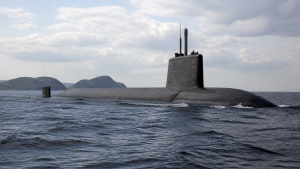
Nuclear deterrence depends on surviving a first strike and retaliating with a credible second strike. In the nuclear triad, the sea-based leg is the most survivable, making ballistic missile submarines central to maritime deterrence.
Understanding Nuclear Deterrence and the Sea-Based Leg
Nuclear deterrence relies on the capability to survive an enemy’s initial nuclear strike and deliver a retaliatory strike. This strategy is managed through a three-pronged delivery system known as the nuclear triad. The triad consists of land-based ballistic missiles, strategic bombers, and nuclear-powered submarines.
Among these three legs, the sea-based leg is widely considered the most survivable. Unlike static land silos or tracked bombers, submarines operating deep in the ocean are virtually untraceable. This makes them the ultimate platform for securing a credible second-strike capability.
For countries following a declared No First Use (NFU) policy, ballistic missile submarines are crucial for assured retaliation.
Classification of Modern Submarines
Naval fleets categorize submarines based on propulsion systems and mission profiles. Submarines generally fall into three distinct categories.
Diesel-Electric Attack Submarines (SSK)
- Propulsion: These vessels run on electric batteries while submerged and use diesel engines on the surface or via a snorkel to recharge.
- Endurance: They can stay submerged for a few days before needing air. With Air-Independent Propulsion (AIP), underwater endurance extends to about two weeks.
- Mission: SSKs are silent and ideal for coastal defense, anti-submarine warfare, and laying mines in shallow waters.
- Examples: Kalvari-class (Scorpene), Shishumar-class (Type 209), Kilo-class.
Nuclear-Powered Attack Submarines (SSN)
- Propulsion: Powered by an onboard nuclear reactor, these vessels do not require atmospheric air for engine operations.
- Endurance: Submerged endurance is limited only by crew provisions and food supplies, often lasting up to 90 days.
- Mission: They are designed to hunt enemy submarines and surface ships, escort carrier battle groups, and launch land-attack cruise missiles.
- Examples: US Virginia-class, Russian Akula-class, UK Astute-class.
Ballistic Missile Submarines (SSBN)
- Propulsion: These are large, nuclear-powered vessels.
- Endurance: Like SSNs, their endurance is limited only by food and crew stamina.
- Mission: SSBNs carry strategic, nuclear-tipped Submarine-Launched Ballistic Missiles (SLBMs). Their primary function is strategic deterrence rather than tactical combat, while remaining hidden on patrol.
- Examples: India’s Arihant-class, US Ohio-class, Russia’s Borei-class.
| Submarine Type | Propulsion System | Key Weapons | Submerged Endurance | Primary Strategic Role |
| SSK (Diesel-Electric) | Diesel engines + electric batteries (AIP optional) | Torpedoes, anti-ship missiles | 2 to 14 days | Coastal defense, intelligence gathering, littoral operations |
| SSN (Nuclear Attack) | Nuclear reactor | Torpedoes, land-attack/anti-ship cruise missiles | Unlimited (limited by food, around 90 days) | Hunter-killer missions, fleet escort, sea denial |
| SSBN (Nuclear Ballistic) | Nuclear reactor | Submarine-Launched Ballistic Missiles (SLBMs) with nuclear warheads | Unlimited (limited by food, around 90 days) | Strategic deterrence, assured second-strike capability |
India’s Sea-Based Deterrence: The Arihant-Class and Beyond
India’s nuclear triad was established with the induction of its indigenously built ballistic missile submarines, developed under the secretive Advanced Technology Vessel (ATV) project.
The Arihant-Class Submarines
India operates a class of compact SSBNs designed to maintain a continuous at-sea deterrent.
- INS Arihant (S2): Commissioned in August 2016, this is India’s first indigenous nuclear-powered submarine. It runs on an 83 MW pressurized light-water reactor using enriched uranium.
- INS Arighaat (S3): Commissioned on August 29, 2024, at Visakhapatnam. It features technological upgrades over the lead ship, including improved sonar, noise reduction, and propulsion efficiency.
- INS Aridhaman (S4): Larger than its predecessors, it carries more launch tubes and offers enhanced quietness.
- S4*: The fourth hull of the class is undergoing sea trials and represents the final planned unit of the transition phase.
Next-Generation S5-Class SSBNs
- Displacement: Approximately 13,500 tonnes, which is nearly twice the size of the Arihant-class.
- Propulsion: Powered by a 190 MW compact light-water reactor developed by the Bhabha Atomic Research Centre (BARC).
- Armament: Equipped with 12 to 16 vertical launch tubes capable of carrying long-range intercontinental ballistic missiles with Multiple Independently Targetable Reentry Vehicle (MIRV) technology.
Project 77: Indigenous Nuclear Attack Submarines (SSNs)
Formerly known as Project 75 Alpha, Project 77 is India’s program to build six indigenous SSNs.
- Government Approval: In October 2024, the Cabinet Committee on Security cleared the construction of the first two indigenous SSNs.
- Specifications: The design features a displacement of approximately 10,000 tonnes, powered by a 190 MW reactor.
- VLS Capacity: The submarines will feature a 24-cell Vertical Launch System (VLS) designed to launch BrahMos-ER, Nirbhay, or future hypersonic cruise missiles.
Global Ballistic Missile Submarine (SSBN) Programs
Several countries operate SSBN fleets to maintain strategic nuclear deterrence.
United States
- Current Fleet: The US Navy operates 14 Ohio-class SSBNs. Each submarine can carry 20 Trident II D5 ballistic missiles.
- Future Program: The Columbia-class is under construction to replace the aging Ohio-class, with the first delivery expected in the early 2030s.
Russia
- Current Fleet: Russia operates Borei-class (Project 955/A) and Delta IV-class submarines.
- Strategic Arsenal: The Borei-class carries 16 Bulava (RSM-56) ballistic missiles, designed to bypass advanced missile defense systems.
China
- Current Fleet: The People’s Liberation Army Navy operates Type 094 (Jin-class) SSBNs.
- Missiles: These submarines carry the JL-2 and the newer, long-range JL-3 SLBMs, which can target the continental United States from protected bastions in the South China Sea.
- Future Fleet: China is developing the Type 096 next-generation quiet SSBN.
United Kingdom
- Current Fleet: The Royal Navy operates four Vanguard-class SSBNs, maintaining a Continuous At-Sea Deterrent (CASD) policy.
- Future Program: The Dreadnought-class is being developed to replace the Vanguard fleet by the 2030s, continuing to use US-supplied Trident II D5 missiles.
France
- Current Fleet: The French Navy operates four Triomphant-class SSBNs armed with M51 ballistic missiles.
- Future Program: France has commenced development of the third-generation nuclear ballistic submarine program, known as SNLE 3G, scheduled to enter service starting in 2035.
India’s Submarine-Launched Ballistic Missiles (K-Missile Family)
Developed by the Defence Research and Development Organisation (DRDO), the K-missile family forms the primary strike package of India’s SSBNs. The “K” series is named after former President Dr. APJ Abdul Kalam.
K-15 (Sagarika)
- Range: Approximately 750 kilometers.
- Deployment: Integrated onto INS Arihant and INS Arighaat. Each submarine can carry up to 12 K-15 missiles in its four launch tubes.
- Role: Serves as a short-to-medium-range tactical deterrence system.
K-4
- Range: Approximately 3,500 kilometers.
- Capabilities: It is a two-stage solid-fueled missile with high accuracy, capable of circular maneuvers to evade anti-ballistic missile defenses.
- Deployment: INS Aridhaman and subsequent SSBNs are designed to carry up to four K-4 missiles, establishing a true intermediate-range deterrent.
K-5 and K-6 (Under Development)
- K-5: A planned submarine-launched solid-fuel missile with an expected range of 5,000 to 6,000 kilometers.
- K-6: A planned intercontinental-range SLBM with a projected range of 8,000 to 9,000 kilometers, intended to carry MIRV warheads for the S5-class submarines.
| Missile Name | Country | Propulsion Type | Operational Range (approx.) | Warhead Capacity / Type |
| Trident II D5 | USA / UK | Three-stage solid fuel | 12,000 km | Up to 8-14 MIRVs (W76/W88) |
| Bulava (RSM-56) | Russia | Three-stage solid fuel | 8,300 to 9,000 km | 6 to 10 MIRVs |
| JL-3 (Ju Lang-3) | China | Three-stage solid fuel | 12,000 km | Multiple warheads (MIRV) |
| M51 | France | Three-stage solid fuel | 8,000 to 10,000 km | 6 to 10 TN 75 / TNO MIRVs |
| K-4 | India | Two-stage solid fuel | 3,500 km | Single warhead (nuclear) |
| K-15 (Sagarika) | India | Two-stage solid fuel | 750 km | Single warhead (nuclear) |
Recent Context
China completed dredging and land reclamation at Antelope Reef in the Paracel Islands in August 2026, creating a larger artificial platform with port-like features. Analysts see it as part of a broader South China Sea military buildup with possible support value for maritime deterrence.
Rare Facts for Prelims
- Arihant meaning: The name “Arihant” is often linked to the concept of destroying enemies, and the class is central to India’s second-strike posture.
- SSBN vs SSN: SSBNs are built for deterrence and missile launch, while SSNs are optimized for hunting other submarines and ships.
- CASD concept: Continuous At-Sea Deterrent means at least one SSBN is always on patrol to ensure retaliation capability.
- Missile basing advantage: Submerged submarines are harder to detect than fixed silos, making them the most survivable leg of the triad.
- MIRV significance: Multiple Independently Targetable Reentry Vehicles allow one missile to strike several targets, increasing penetration against missile defenses.
- Bastion strategy: Some navies keep SSBNs in heavily defended near-home waters or enclosed seas to increase survivability.
| Related | |
|---|---|