Major Biochar Uses and Applications in Agriculture
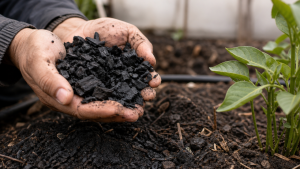
Biochar is a carbon-rich material made by heating organic biomass in low-oxygen conditions. In agriculture, it is used to improve soil health, manage waste biomass, and store carbon for long periods.
Physical and Chemical Properties
High Porosity and Surface Area
Biochar contains a dense network of micropores, mesopores, and macropores. This structure gives it a very high surface area and provides habitat for beneficial soil microbes.
Alkaline pH
Most biochar materials are alkaline, with a pH ranging from 7.5 to 10.5. This makes it useful for reducing soil acidity.
High Cation Exchange Capacity
Biochar has negatively charged surfaces that attract and hold plant nutrients. This helps reduce nutrient loss through leaching.
High Stable Carbon Content
Biochar contains about 70% to 90% fixed carbon. Unlike raw organic matter, this carbon resists biological decay for a long time.
Major Applications in Soil Health
Amending Soil Acidity
Acidic soils limit plant growth and reduce nutrient availability. Biochar acts like a natural liming agent by raising soil pH and improving the availability of nutrients such as phosphorus and calcium.
Enhancing Soil Structure
Biochar reduces the bulk density of heavy clay soils, improving aggregation, infiltration, and aeration. In sandy soils, it helps bind loose particles and reduces wind and water erosion.
Promoting Soil Microorganisms
The porous structure protects beneficial microbes such as mycorrhizal fungi and nitrogen-fixing bacteria from dry conditions and predators, supporting a healthier soil ecosystem.
Water and Nutrient Management
Increasing Soil Water Retention
Biochar works like a sponge in the root zone. It stores water in its pores and releases it slowly, reducing irrigation needs and helping crops during drought.
Improving Fertilizer Efficiency
Biochar adsorbs nutrients such as nitrate and ammonium, keeping them near plant roots and releasing them gradually. This reduces fertilizer wastage and lowers input costs.
Climate Change Mitigation
Permanent Carbon Sequestration
When crop residues decompose naturally, they release carbon dioxide into the atmosphere. Pyrolysis locks this carbon into a stable solid form, helping sequester carbon in soil for centuries.
Lowering Greenhouse Gas Emissions
Biochar can reduce nitrous oxide (N2O) emissions from agricultural soils by influencing soil moisture and oxygen levels.
Environmental Remediation
Heavy Metal Immobilization
Biochar binds heavy metals such as lead, cadmium, copper, and arsenic through adsorption and precipitation. This reduces the risk of these toxins entering crops.
Adsorption of Pesticides and Pollutants
Biochar can also bind pesticides and organic pollutants, limiting groundwater contamination and supporting safer breakdown by soil microbes.
Livestock and Composting Uses
Animal Feed Additive
Small amounts of biochar, usually 1% to 2%, are added to livestock feed. It may improve digestion, bind toxins in the gut, and reduce methane emissions from animal digestion.
Compost Accelerator
Mixing biochar with compost can speed up decomposition, trap volatile ammonia, reduce odor, and prevent nutrient loss. The result is a nutrient-rich compost-biochar blend.
Historical Context: Terra Preta
Amazonian Dark Earths
Terra Preta refers to highly fertile dark soils found in the Amazon basin. Ancient pre-Columbian populations created these soils by mixing charcoal, bones, and organic waste into poor tropical soil.
This long-lasting fertility is one of the strongest historical proofs of biochar’s stability in soil.
Production Technology Comparison
| Process Parameter | Slow Pyrolysis | Fast Pyrolysis | Gasification |
| Process Temperature | 300°C to 500°C | 500°C to 1000°C | Above 800°C |
| Heating Rate | Very slow (minutes) | Very rapid (seconds) | Moderate to rapid |
| Primary Product Yield | Biochar (35% to 50%) | Bio-oil (60% to 75%) | Syngas (65% to 85%) |
| Carbon Stability | Very high | Moderate | Low |
| Surface Area of Char | Moderate | High | Very high |
Implementation Challenges
High Production and Delivery Costs
Pyrolysis plants require significant initial investment, and transporting lightweight biomass can raise costs further, especially for small farmers.
Quality Variability
Biochar quality depends on the feedstock and production temperature. The absence of uniform standards makes outcomes less predictable.
Respiratory Health Risks
Handling dry biochar can create airborne dust that may affect workers’ respiratory health and cause material loss in windy conditions.
Recent Context
ICAR–CCARI, Goa, is working with Core CarbonX Solutions Pvt. Ltd. on a biochar-based voluntary carbon market project. Portable CIAE units are being used to convert plantation and farm residues into biochar for carbon-credit generation.
Rare Facts for Prelims
- Biochar is not the same as ordinary charcoal: it is specifically produced for soil application and long-term carbon storage.
- Surface area can be extremely high: some biochars can exceed 300 square metres per gram.
- Its pores act as micro-habitats: they can shelter microbes from drying and predation.
- Biochar can be made from sewage sludge: not only from crop residues or wood waste.
- Terra Preta soils are centuries old: yet they still remain highly fertile due to biochar-like additions.
- Biochar can reduce nutrient leaching: this makes fertilizers more efficient in many field conditions.
| Related | |
|---|---|