Major State Renaming Cases in India
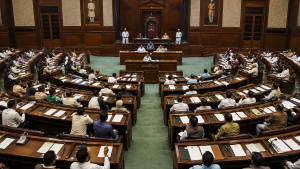
The renaming of Indian states is governed by Article 3 of the Constitution and requires Parliament’s approval. Over the years, several states and Union Territories have changed their names to reflect linguistic identity, cultural sentiment, and administrative clarity.
Constitutional Provisions for Renaming States
- Article 3 power: Parliament has the exclusive authority to form new states, alter state boundaries, and change the name of any existing state.
- State Assembly resolution: The process usually begins with the concerned State Legislative Assembly, which passes a resolution and sends it to the Union Ministry of Home Affairs.
- Central clearance: The Ministry of Home Affairs obtains No Objection Certificates from departments and agencies such as the Ministry of Railways, Department of Posts, Survey of India, and the Registrar General of India.
- Presidential referral: A Bill to alter a state’s name can be introduced in either House of Parliament only on the President’s recommendation. The President then refers it to the concerned State Legislature for its views.
- Time-bound views: The State Legislature must give its opinion within the time limit fixed by the President. Parliament is not bound by the legislature’s views.
- Simple majority: Under Article 4, such a Bill needs only a simple majority in both Houses of Parliament. It is not treated as a constitutional amendment under Article 368.
- Schedules amended: A successful renaming changes the First Schedule and, where required, the Fourth Schedule of the Constitution.
Historical Evolution of State Renamings
Since 1950, several states and Union Territories have been renamed for reasons linked to language, regional identity, and historical preference.
| S. No. | Old Name | New Name | Year of Change | Legislation / Order |
| 1 | United Provinces | Uttar Pradesh | 1950 | United Provinces (Alteration of Name) Order, 1950 |
| 2 | Madras | Tamil Nadu | 1969 | Madras State (Alteration of Name) Act, 1968 |
| 3 | Mysore | Karnataka | 1973 | Mysore State (Alteration of Name) Act, 1973 |
| 4 | Laccadive, Minicoy, and Amindivi Islands | Lakshadweep | 1973 | Laccadive, Minicoy, and Amindivi Islands (Alteration of Name) Act, 1973 |
| 5 | Pondicherry | Puducherry | 2006 | Pondicherry (Alteration of Name) Act, 2006 |
| 6 | Uttaranchal | Uttarakhand | 2007 | Uttaranchal (Alteration of Name) Act, 2006 |
| 7 | Orissa | Odisha | 2011 | Orissa (Alteration of Name) Act, 2011 |
| 8 | Kerala | Keralam | 2026 | The Kerala (Alteration of Name) Act, 2026 |
Detailed Overview of Major Renaming Cases
United Provinces to Uttar Pradesh (1950)
- First renaming after Independence: United Provinces was the first state to be renamed in independent India.
- Official order: The Governor-General of India signed the United Provinces (Alteration of Name) Order, 1950, on January 24, 1950.
- Reason: The colonial name was replaced with the native name Uttar Pradesh.
Madras to Tamil Nadu (1969)
- Linguistic identity: The renaming reflected the demand to recognize the Tamil language and identity.
- Activist protest: Sankaralinga Nadar, a Gandhian activist, undertook a 76-day hunger strike in 1956 and died during the protest.
- Law passed: Parliament enacted the Madras State (Alteration of Name) Act, 1968.
- Effective date: The name Tamil Nadu came into effect on January 14, 1969.
Mysore to Karnataka (1973)
- Post-reorganisation issue: The 1956 linguistic reorganisation unified Kannada-speaking areas into Mysore State.
- Regional concern: The name Mysore was associated mainly with the former princely state, causing discontent in other Kannada-speaking regions.
- New identity: The Mysore State (Alteration of Name) Act, 1973, renamed the state Karnataka on November 1, 1973.
- Etymology: Karnataka is derived from Karunadu, meaning elevated land.
Laccadive, Minicoy, and Amindivi Islands to Lakshadweep (1973)
- Unified identity: The Union Territory earlier had three separate regional names.
- Law passed: Parliament enacted the Laccadive, Minicoy, and Amindivi Islands (Alteration of Name) Act, 1973.
- Meaning: Lakshadweep means “a hundred thousand islands” in Sanskrit.
- Effective date: The new name became official on November 1, 1973.
Uttaranchal to Uttarakhand (2007)
- Statehood history: The state was carved out of Uttar Pradesh in November 2000 and was initially named Uttaranchal.
- Popular preference: Many local groups preferred Uttarakhand, the name used during the statehood movement.
- Law passed: Parliament enacted the Uttaranchal (Alteration of Name) Act, 2006.
- Effective date: Uttarakhand became the official name on January 1, 2007.
Orissa to Odisha (2011)
- Spelling correction: The change corrected the colonial-era anglicized spelling of the state’s name.
- Language update: The Constitution (113th Amendment) Act, 2011, changed the spelling of the language from Oriya to Odia in the Eighth Schedule.
- Law passed: Parliament enacted the Orissa (Alteration of Name) Act, 2011.
- Effective date: The change came into force on November 1, 2011.
Kerala to Keralam (2026)
- Assembly resolution: The Kerala Legislative Assembly passed a unanimous resolution in June 2024 to modify the name.
- Native usage: Keralam is the Malayalam form, aligned with the state’s native linguistic usage.
- Union approval: The Union Cabinet approved the proposal on February 24, 2026.
- Bill introduced: Union Minister of State for Home Nityanand Rai introduced the Kerala (Alteration of Name) Bill, 2026, in the Lok Sabha on August 10, 2026.
- Parliamentary passage: The Lok Sabha passed the Bill on August 11, 2026, and the Rajya Sabha on August 12, 2026.
- Assent and law: President Droupadi Murmu gave assent on August 14, 2026, making it The Kerala (Alteration of Name) Act, 2026.
- Commencement: The Union Home Ministry issued a gazette notification on August 25, 2026, as the official commencement date.
- Constitutional effect: The change altered Kerala’s entry in the First Schedule of the Constitution.
Pending and Proposed State Renaming Cases
West Bengal to Bangla
- Proposal approved: In August 2016, the West Bengal Legislative Assembly approved a resolution to rename the state as Bangla in English, Hindi, and Bengali.
- Reason: The proposal aimed to place the state higher in the alphabetical list of states for quicker administrative processing at national forums.
- Status: The proposal remains under consideration by the Union Ministry of Home Affairs.
Recent Context
- Kerala renaming: Kerala was officially renamed Keralam from August 25, 2026, after the commencement of the 2026 Act.
- Legislative route: The renaming followed Article 3 procedure and did not require a constitutional amendment under Article 368.
- Parliamentary sequence: The proposal received Cabinet approval, Assembly views, and passage in both Houses before presidential assent.
Rare Facts for Prelims
- Article 3 vs Article 368: State renaming is done by ordinary law under Article 3, not by a constitutional amendment.
- President’s role: The President must seek the State Legislature’s views, but Parliament can still proceed even if the opinion is adverse.
- Schedules affected: A state renaming usually changes the First Schedule; the Fourth Schedule is altered when Rajya Sabha seat allocation details are involved.
- Orissa to Odisha: This was one of the few renamings that also corrected the official spelling of the associated language in the Constitution.
- Lakshadweep meaning: The name is Sanskrit-based and literally refers to a large number of islands.
- Identity politics link: State renamings in India often reflect regional identity and linguistic assertion rather than administrative necessity alone.
Current General Studies comprises current-affairs-based, General Studies-rich study material on policies, laws, institutions, economy, science, environment, governance, international relations, and other varied but important topics for UPSC and State PSC Prelims examinations.
Fortnightly PDF compilations: Available here
Originally written on
August 26, 2026
and last modified on
August 26, 2026.
| Related | |
|---|---|