Centre–State Financial Relations and Fiscal Federalism
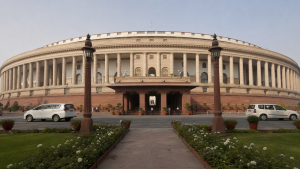
India’s fiscal federalism rests on a constitutional balance between the Union and the States in taxation, grants, and borrowing. Articles 268 to 293 create the legal framework for sharing resources, ensuring macroeconomic stability, and preserving regional equity.
Constitutional Framework of Fiscal Relations
The Constitution lays down both the sharing of tax revenues and the limits on borrowing powers. The Finance Commission acts as the principal constitutional body for recommending tax devolution and grants-in-aid between the Centre and the States.
- Article 270: Provides for the distribution of the net proceeds of central taxes between the Union and the States.
- Article 271: Allows the Union to levy surcharges and cesses for Union purposes; these do not form part of the divisible pool and are not shared with the States.
- Article 280: Mandates the President to constitute a Finance Commission every five years, or earlier if necessary, to recommend vertical and horizontal devolution of tax proceeds and principles for grants-in-aid under Article 275.
- Article 293: Governs borrowing by States. Under Article 293(3), a State must obtain the Centre’s consent for new borrowing if any part of a loan from the Centre or its predecessor government remains unpaid.
- Article 131: Gives the Supreme Court original jurisdiction in disputes between the Union and one or more States.
16th Finance Commission Architecture
The 16th Finance Commission, chaired by Dr. Arvind Panagariya, covers the award period 2026–27 to 2030–31. It retained the overall vertical devolution at 41% and revised the horizontal distribution criteria among States.
- Vertical devolution: The share of States in the net proceeds of central taxes remains 41%, the same as in the 15th Finance Commission.
- Rationalisation of grants: Post-Devolution Revenue Deficit Grants, sector-specific grants, and state-specific grants were discontinued.
- Finance Commission grants for 2026–27: The Centre approved ₹1.4 lakh crore for Rural Local Body Grants, Urban Local Body Grants, and Disaster Management Grants.
- Horizontal devolution update: A new performance-related metric was added, while the earlier tax effort criterion was discontinued.
| Criterion | Weight | Status |
| Income Distance | 42.5% | Retained |
| Population (2011 Census) | 17.5% | Retained |
| Demographic Performance | 10.0% | Retained |
| Area | 10.0% | Retained |
| Forest | 10.0% | Retained; replaces Forest & Ecology |
| Contribution to GDP | 10.0% | Newly introduced |
| Tax and Fiscal Efforts | Discontinued | Earlier weight was 2.5% |
Cesses, Surcharges, and the Divisible Pool
A recurring issue in Centre-State fiscal relations is the growing use of cesses and surcharges, which reduce the pool of taxes shared with States. Since these levies are outside the divisible pool, they narrow the effective revenue base available for devolution.
- Article 271: Empowers the Union to raise resources through surcharges and cesses for Union purposes without sharing them with States.
- Fiscal concern: Larger reliance on such levies can erode the shareable tax base and intensify Centre-State tensions.
- 16th Finance Commission approach: It proposed a broader restructuring logic in which States accept a lower share of a larger divisible pool if more levies are merged into shareable taxes.
Major Recent Legislative Developments
- Health Security and National Security Cess Bill, 2025: Passed in December 2025, it imposes a cess on the production of sin goods such as tobacco and pan masala.
- Purpose of the cess: Revenue is intended for public health and national security.
- Fiscal significance: The levy replaces the GST Compensation Cess and remains outside the net divisible pool.
- VB-G RAM G Act, 2025: Repealed and replaced the Mahatma Gandhi National Rural Employment Guarantee Act, 2005.
- Employment guarantee: Raises guaranteed rural wage employment from 100 to 125 days per household per fiscal year.
- Funding model: Shifts the programme from a demand-driven arrangement to a normative, centrally sponsored scheme with fixed annual cost-sharing between the Centre and States.
Borrowing Powers and Article 293 Disputes
Borrowing by States is constitutionally regulated, but the Centre also exercises control through fiscal responsibility norms. This has led to disputes over how state borrowing limits are calculated and what liabilities should be counted within them.
- Net Borrowing Ceiling (NBC): Under Section 4 of the FRBM Act, 2003, as amended in 2018, the Centre imposes a borrowing cap on States, generally fixed at 3% of projected Gross State Domestic Product (GSDP).
- Kerala’s challenge: The State of Kerala filed an original suit in the Supreme Court under Article 131, questioning the Centre’s authority to impose the NBC.
- Core dispute: The case questions whether debts of state-owned entities, such as the Kerala Infrastructure Investment Fund Board, and Public Account liabilities should be included within the 3% GSDP borrowing limit.
- Supreme Court action: The Court did not grant an interim injunction but referred the constitutional questions on Article 293 and fiscal autonomy to a Constitution Bench.
- Kerala borrowing limit: For the first nine months of 2025–26, the Union Finance Ministry set Kerala’s open market borrowing limit at ₹29,529 crore, including a ₹4,000 crore ad hoc arrangement.
Key Prelims Takeaways
- Article 270: Deals with distribution of the net proceeds of central taxes between the Union and the States.
- Article 271: Permits cesses and surcharges for Union purposes; these are outside the divisible pool.
- Article 280: Requires a Finance Commission every five years to recommend tax devolution and grants-in-aid.
- Article 293(3): A State needs Central consent for borrowing if any Central loan remains unpaid.
- Article 131: Gives the Supreme Court original jurisdiction in Centre-State disputes.
- 16th Finance Commission: Retained vertical devolution at 41% for 2026–27 to 2030–31.
- Horizontal formula: Introduced “Contribution to GDP” at 10% and discontinued “Tax and Fiscal Efforts.”
- Grants: Post-Devolution Revenue Deficit Grants, sector-specific grants, and state-specific grants were discontinued.
- VB-G RAM G Act, 2025: Replaces MGNREGA and increases guaranteed rural employment to 125 days.
- FRBM borrowing cap: States are typically limited to 3% of projected GSDP under the NBC framework.
| Related | |
|---|---|