Indian Railway Passenger Services Regulation
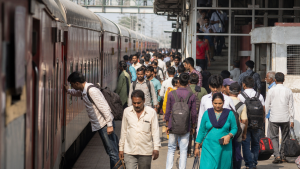
The passenger services framework of Indian Railways is being reshaped through legal and administrative changes aimed at quicker dispute resolution, cleaner ticketing systems, and more orderly passenger conduct. The focus is on replacing minor criminal proceedings with civil penalties while improving transparency in fare, refund, and booking rules.
Decriminalisation under Jan Vishwas Act, 2026
The Jan Vishwas (Amendment of Provisions) Act, 2026, notified on June 19, 2026 through Notification No. S.O. 3255(E) and implemented from July 1, 2026, modified the penal framework of the Railways Act, 1989. It decriminalised several minor passenger offences and shifted them to civil and administrative penalties.
- Objective: Minor, non-hazardous passenger offences are moved away from criminal prosecution to reduce the burden on courts.
- Penalty model: Lesser offences are now handled through administrative civil penalties instead of magistrate-imposed criminal fines.
- Escalator clause: Railway-related civil penalty amounts will rise by 10% every three years to offset inflation.
- Compliance focus: The reform aims to reduce harassment of daily commuters and create a structured penalty regime.
Revised Penalty Structure for Passenger Offences
Penalty provisions under the amended Railways Act, 1989 have been rationalised for common passenger violations.
- Ticketless travel: Under Sections 137, 138 and 142, the minimum penalty for ticketless travel has been doubled from ₹250 to ₹500, apart from the fare for the distance travelled.
- Unauthorised entry into women’s coaches: Men entering or remaining in reserved seats, berths or coaches for women face a civil penalty of ₹2,500 and immediate removal. Non-payment can lead to court-imposed fines up to ₹5,000.
- Transgender exemption: Transgender persons are exempt from proceedings under the women’s coach reservation provisions.
- Unauthorised hawking and begging: Begging, unlicensed vending and unauthorised hawking within trains or railway premises attract a ₹2,000 civil penalty. Repeat offenders may face imprisonment up to one year.
- Refusing to vacate berths: Under Section 155, refusal to vacate a reserved berth carries an administrative civil penalty of up to ₹1,000.
- Rooftop and engine travel: Travelling on roofs, steps or engines under Section 156 attracts a civil penalty of up to ₹2,000, replacing the earlier limit of ₹500.
Key Ticketing and Fare Rules
Passenger ticketing is governed by fixed booking windows, age-based fare rules and reservation norms.
- Advance reservation period: The booking window for passenger train tickets is 60 days, down from 120 days, effective from November 1, 2024.
- Children below 5 years: Travel free without a seat allocation.
- Children aged 5 to 11 years: Half fare applies if no berth is taken; full fare applies if a berth is booked.
- Children aged 12 and above: Full adult fare is applicable.
- Senior citizen concessions: These remain suspended across all coach classes since 2020, though priority lower-berth allocation is retained for eligible elderly passengers.
The “52 Reforms in 52 Weeks” Initiative
Launched on February 14, 2026 by the Ministry of Railways, this initiative introduces 52 structural and procedural reforms during 2026. Several measures directly affect passenger services, claims handling and refund systems.
- General-class cleaning: Cleaning standards in general-class coaches are being upgraded to first-class hygiene levels, with dedicated cleaning staff deployed at intervals of 1 to 1.5 hours across 80 designated long-distance trains.
- RailTech Policy: A single-window portal has been created for startup and innovator solutions, with Railway funding up to 50% of development costs, doubled prototype grants and scale-up grants expanded by over three times.
- e-RCT system: All 23 benches of the Railway Claims Tribunal are to be fully digitised within 12 months, with 24/7 e-filing, online hearings, centralised digital records and paperless real-time case tracking.
- Ticketing integrity: About 3 crore fake IRCTC accounts are being removed, Aadhaar OTP validation has been introduced for new profiles, refunds are being automated, and counter ticket cancellations are allowed at any station nationwide.
- Boarding station changes: Passengers can change their boarding station up to 30 minutes before scheduled departure, replacing the earlier limit linked to chart preparation.
Cancellation Timeline
| Cancellation Time Before Scheduled Departure | Applicable Fee / Deduction |
| More than 72 hours | Minimum flat cancellation fee |
| Between 72 and 24 hours | 25% fare deduction |
| Between 24 and 8 hours | 50% fare deduction |
| Within 8 hours | No refund allowed |
Key Prelims Takeaways
- Nodal authority: Ministry of Railways, operating under the Railways Act, 1989.
- Jan Vishwas notification: S.O. 3255(E), issued on June 19, 2026.
- Implementation date: July 1, 2026.
- Penalty escalation: Civil penalty rates increase by 10% every three years.
- Advance reservation period: 60 days.
- Women’s coach provision: Penalty of ₹2,500 for unauthorised entry or remaining in reserved space.
- Refund and cancellation: Cancellation deductions now follow a fixed time-based structure.
| Related | |
|---|---|