Key Indian Agricultural Research Institutions
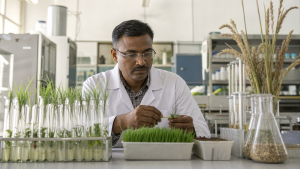
India’s agricultural research system is among the largest in the world and plays a central role in food security, crop improvement, animal husbandry, and extension services. At the core of this system is ICAR, supported by a network of national institutes and agricultural universities across diverse agro-climatic regions.
Indian Council of Agricultural Research (ICAR)
- Establishment: ICAR was originally set up as the Imperial Council of Agricultural Research on July 16, 1929, under the Societies Registration Act, 1860, following the recommendations of the Royal Commission on Agriculture. After Independence, it was renamed the Indian Council of Agricultural Research.
- Administrative framework: It is an autonomous body registered as a society and functions under the Department of Agricultural Research and Education (DARE), Ministry of Agriculture and Farmers’ Welfare.
- Leadership: The Union Minister of Agriculture and Farmers’ Welfare is the ex-officio President of ICAR. Currently, Shivraj Singh Chouhan holds this position.
- Executive head: The Secretary of DARE serves as the ex-officio Director General of ICAR. Dr. Mangi Lal Jat assumed this charge on April 21, 2025.
- Mandate: ICAR is the apex national body responsible for planning, conducting, and coordinating agricultural research, education, and extension across India.
- Network: It oversees 113 research institutes and works in collaboration with 74 agricultural universities.
Major National Agricultural Institutes
| Institute | Location | Present Director / VC |
| ICAR-Indian Agricultural Research Institute (IARI) | New Delhi | Dr. Ch. Srinivasa Rao (Director & VC) |
| ICAR-National Dairy Research Institute (NDRI) | Karnal, Haryana | Dr. Dheer Singh (Director) |
| ICAR-Indian Veterinary Research Institute (IVRI) | Izatnagar, Uttar Pradesh | Dr. Raghavendra Bhatta (Director) |
| ICAR-National Rice Research Institute (NRRI) | Cuttack, Odisha | Dr. G.A.K. Kumar (Director) |
| ICAR-Central Arid Zone Research Institute (CAZRI) | Jodhpur, Rajasthan | Dr. H. S. Jat (Director) |
- IARI (Pusa Institute): Established in Pusa, Bihar, in 1905, it was shifted to New Delhi in 1936 after a major earthquake. It has Deemed University status and played a key role in the Green Revolution through high-yielding cereal crop varieties.
- NDRI: Located in Karnal, Haryana, it received Deemed University status in 1989. It is the premier national centre for dairy education and research, focusing on genetic improvement of cattle and dairy processing technologies.
- IVRI: Founded on December 9, 1889, as the Imperial Bacteriological Laboratory in Pune, it moved to Mukteswar in 1893 and later expanded to Izatnagar (Bareilly, Uttar Pradesh) in 1913. It was conferred Deemed University status in 1983 and specializes in animal health, diagnostics, and vaccine production.
- NRRI: Established on April 23, 1946, as the Central Rice Research Institute (CRRI) in Cuttack, it came under ICAR in 1966 and was renamed NRRI in 2015.
- CAZRI: Established in 1959 on the recommendations of UNESCO expert Prof. C.S. Christian, it grew out of the Desert Afforestation Research Station founded in 1952. Headquartered in Jodhpur, it focuses on dryland agriculture and desertification.
Administrative Framework: Role of DARE
- Government interface: Established in 1973 under the Ministry of Agriculture and Farmers’ Welfare, DARE provides the administrative link between the Central Government and ICAR.
- Budgetary channel: DARE acts as the financial conduit for ICAR and supports research operations, infrastructure, and institutional grants.
- International collaborations: It handles India’s agricultural research and education linkages with bodies such as FAO, CGIAR, and CABI.
- Academic supervision: DARE also manages postgraduate educational standards in agricultural universities.
- Bilateral coordination: It coordinates technical assistance agreements with foreign countries.
Key Prelims Takeaways
- ICAR apex role: ICAR is the principal national body for agricultural research, education, and extension in India.
- DARE linkage: ICAR functions under DARE, which serves as the executive and administrative bridge with the Union Government.
- Institutional spread: ICAR’s network includes 113 research institutes and 74 agricultural universities.
- IARI significance: IARI is closely associated with the Green Revolution and is a major centre for crop improvement.
- Dairy research: NDRI is the leading institute for dairy education, cattle improvement, and dairy technologies.
- Animal health: IVRI is a key institute for veterinary research, diagnostics, and vaccine production.
- Dryland focus: CAZRI specialises in arid-zone agriculture, desertification control, and dryland farming systems.
- Rice research: NRRI is one of the main national centres for rice research and varietal development.
Current General Studies comprises current-affairs-based, General Studies-rich study material on policies, laws, institutions, economy, science, environment, governance, international relations, and other varied but important topics for UPSC and State PSC Prelims examinations.
Fortnightly PDF compilations: Available here
Originally written on
February 5, 2026
and last modified on
September 4, 2026.
| Related | |
|---|---|