Usutu Virus Detected in Scotland for First Time
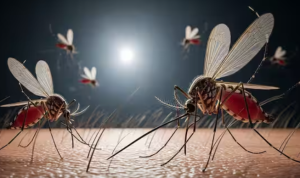
Usutu virus (USUV), a mosquito-borne flavivirus, was identified in blackbirds in Scotland for the first time in summer 2025. Public announcements on the detection were made on 1 April 2026, after the virus was confirmed on the Isle of Arran.
Usutu Virus and Its Classification
Usutu virus belongs to the genus Flavivirus and is transmitted mainly by mosquitoes. The virus was first identified in Africa and has been recorded in several European countries. It primarily infects wild birds, especially blackbirds, and it can also infect humans in rare cases.
Detection in Scotland
Local residents on the Isle of Arran reported blackbirds with neurological signs and dead birds. The Animal and Plant Health Agency’s national passive wild avian surveillance programme confirmed USUV RNA in two blackbirds by reverse transcription-PCR. The samples were examined through collaboration between APHA’s Vector-Borne Disease Group, SRUC Veterinary Services, and the Mosquito Scotland research programme at the University of Glasgow.
Genetic Lineage and Spread
Phylogenetic analysis placed the Scottish samples in the Usutu virus Africa 3.2 lineage. This lineage information is used in virology to trace relatedness among virus strains and to study geographic spread. The finding is consistent with expansion from existing UK detections rather than a separate introduction.
Bird Health and Surveillance
Usutu virus has caused blackbird population declines in parts of Europe. It has circulated in south-east England for six years, where mosquito-borne transmission has been documented in wild birds. Passive surveillance of dead or sick birds is a standard method used in avian disease monitoring in the United Kingdom.
Public Health Context
The risk to public health remains very low, and no human cases have been reported in the United Kingdom to date. Usutu virus rarely causes symptomatic disease in humans, although human infection has been recorded in parts of Europe.
Important Facts for Exams
- Usutu virus is a mosquito-borne flavivirus that mainly affects wild birds.
- Blackbirds are among the most affected bird species in Usutu virus outbreaks.
- Reverse transcription-PCR is a laboratory method used to detect viral RNA.
- Phylogenetic analysis is used to identify virus lineages and track spread.
Surveillance in the United Kingdom
APHA conducts national passive wild avian surveillance for bird diseases in the United Kingdom. Mosquito-borne virus monitoring in birds and insects is used to detect circulation of pathogens such as Usutu virus and West Nile virus.
| Related | |
|---|---|