US Plans Space Nuclear Reactors by 2030
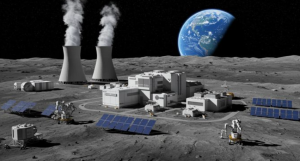
The United States has announced an ambitious plan to deploy nuclear reactors in space orbit by 2028 and on the Moon by 2030. The move follows the successful splashdown of the Artemis-2 mission and reflects Washington’s broader goal of strengthening its leadership in space exploration, commerce, and defence. The initiative is part of a new policy memorandum titled “National Initiative for American Space Nuclear Power”, issued by the White House on April 14, 2026.
Space Nuclear Power Initiative
The memorandum states that the US aims to lead the world in developing and deploying space nuclear power systems. It focuses on using nuclear reactors to support long-term missions in Earth orbit, on the lunar surface, and eventually for human missions to Mars. The plan also seeks stronger partnerships between government agencies and private companies to accelerate development and reduce costs.
Nasa’s Lunar Reactor Programme
NASA has been directed to begin, within 30 days, a programme to develop a mid-power space reactor. This reactor will include a lunar fission surface power version ready for launch by 2030. NASA will work with multiple private vendors to build these systems. The reactor is expected to provide reliable power for lunar bases and long-duration operations where solar power may not be sufficient.
Power Capacity and Future Mars Missions
The proposed mid-power reactors are designed to generate 20 kilowatts of electricity for at least three years in orbit and five years on the Moon. This is crucial as the US plans permanent human settlement on the lunar surface. The policy also highlights nuclear electric propulsion and fission surface power as key technologies. These systems could later support nuclear thermal propulsion for crewed missions to Mars in the 2030s.
Important Facts for Exams
- Artemis programme is NASA’s mission to return humans to the Moon and establish a long-term lunar presence.
- Fission surface power uses nuclear fission to generate electricity in space where sunlight is limited.
- Nuclear thermal propulsion can reduce travel time for future crewed missions to Mars.
- The US Department of Energy supports reactor development, testing, transport, and launch safety.
Strategic Competition with China
The initiative is also seen as part of the growing space competition between the United States and China. The White House memorandum calls for parallel design competitions between NASA and the Department of Defence to develop low- and mid-power reactors quickly. It also prepares the ground for high-power reactors in the next decade. Close coordination among agencies is expected to reduce technical risks and ensure faster deployment of advanced nuclear systems in space.
| Related | |
|---|---|