UAE Exits OPEC Amid Iran War Oil Shock
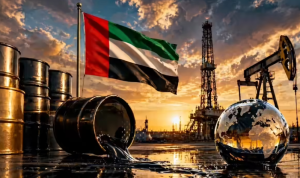
The United Arab Emirates has announced that it will leave OPEC and OPEC+ from May 1, 2026, marking a major shift in global energy politics. The decision comes during a period of severe instability in oil markets caused by the US-Israel war on Iran and disruptions in the Strait of Hormuz. As one of the world’s major oil producers, the UAE’s withdrawal is expected to affect both oil prices and the internal balance of the oil-exporting alliance.
Why the UAE Chose to Leave
The UAE government stated that the decision reflects its long-term strategic and economic vision. It said the country now wants to prioritise national interests and adapt to its evolving energy profile. UAE Energy Minister Suhail Mohamed al-Mazrouei described it as a policy decision based on current and future production goals rather than consultation with other member states.
The UAE has often sought greater production flexibility, which was limited under OPEC’s quota-based system. With rising production capacity and ambitions for expansion, remaining under strict output controls was becoming less attractive.
Impact on OPEC and OPEC+
The exit is a major setback for OPEC, which has traditionally tried to present a united front despite internal disagreements. The UAE contributes nearly 4.8 million barrels per day in production capacity, making it one of the group’s most important members.
Its departure weakens OPEC’s ability to control supply and stabilise prices. Saudi Arabia is now expected to carry a larger burden in maintaining market balance. Analysts believe this could reduce the cartel’s influence, especially as the United States continues to expand crude oil production outside the OPEC framework.
Strait of Hormuz and Regional Tensions
The timing is significant because Gulf oil producers are already struggling with export routes through the Strait of Hormuz. This narrow waterway handles nearly one-fifth of global crude oil and liquefied natural gas supplies.
Threats to shipping during the Iran conflict have increased transport risks and energy costs worldwide. The UAE’s decision also reflects wider regional tensions, including growing competition with Saudi Arabia over economic interests and influence in areas such as the Red Sea and Yemen.
Important Facts for Exams
- OPEC was founded in 1960 and is headquartered in Vienna, Austria.
- The Strait of Hormuz lies between Iran and Oman and is a major global oil chokepoint.
- The UAE joined OPEC first through Abu Dhabi in 1967 and later as a sovereign state in 1971.
- OPEC+ includes OPEC members along with major producers like Russia for wider output coordination.
Global Market and Political Reactions
The move may increase uncertainty in global oil markets already affected by war and supply disruptions. US President Donald Trump has repeatedly criticised OPEC for keeping oil prices high and has linked Gulf security support with energy pricing policies.
Energy analysts argue that low-cost producers like the UAE now prefer maximising output rather than waiting within quota systems. With global oil demand nearing its peak, producer strategies are changing rapidly. The UAE’s exit signals that national energy priorities may now outweigh collective cartel discipline.
| Related | |
|---|---|