Types of Para Sports and Athlete Classification
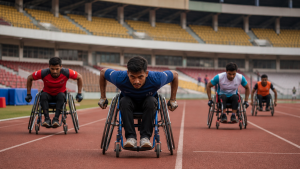
Para sports adapt competitive disciplines for athletes with physical, visual or intellectual impairments. Classification determines eligibility and groups athletes according to how an impairment affects performance in a particular sport. This helps make competition fair while keeping sporting skill, training and strategy central to results.
Understanding Para Sports
Para sports include disciplines such as Para archery, Para athletics, Para swimming, Para table tennis, wheelchair basketball and Para powerlifting. Their rules and competition formats are adapted to the demands of each sport and the athletes competing in it. The International Paralympic Committee (IPC) is the global governing body for the Paralympic Movement. International sport federations manage rules and classification systems for their respective disciplines. The system therefore combines shared principles with sport-specific standards. Disability inclusion in sport involves more than eligibility: athletes also need access to sporting facilities and opportunities to train and compete. Clear classification standards support fair competition by limiting the effect of impairment on results, rather than excluding athletes from participation.
- Range of disciplines: Para sports span individual and team events, including athletics, swimming and wheelchair basketball.
- Sport-specific rules: Requirements and classification methods reflect the demands of each discipline.
- Governing structure: The IPC provides global oversight, while international sport federations administer individual sports.
Principles of Athlete Classification
Classification has two main functions: establishing who is eligible to compete in Para sport and assigning eligible athletes to sport-specific classes. The purpose is to group competitors with comparable functional impacts, so that impairment is not the principal determinant of the outcome. Classification is sport-specific. An athlete may receive different classifications in different sports because an impairment can affect the movements and skills required in each discipline differently. A class is therefore not a general measure of an athlete’s sporting ability; it relates to performance in a particular sport. Systems have evolved from medically based approaches towards functional assessment and are moving towards evidence-based models. This evolution reflects the need for consistent standards that assess how an eligible impairment affects the activity being contested. Classification rules and processes help establish a common basis for competition, but must be applied within each sport’s framework.
- Eligibility: Classification first determines whether an athlete meets the sport’s criteria.
- Grouping: Eligible athletes are placed in classes according to impairment-related functional impact.
- Sport-specific assessment: An athlete’s class may differ between sports.
- Fairness objective: The system seeks to minimise the impact of impairment on performance and keep skill, training and strategy decisive.
Eligible Impairments
The IPC recognises ten eligible impairment types, grouped broadly as physical, visual and intellectual impairments. Physical impairments include impaired muscle power, impaired passive range of movement, limb deficiency, leg-length difference, short stature, hypertonia, ataxia and athetosis. Examples include spinal cord injury, spina bifida, arthrogryposis, amputation and dysmelia. Visual impairment ranges from partial vision to total blindness. Intellectual impairment involves significant limitations in intellectual functioning and adaptive behaviour. Eligibility depends on the criteria established for the relevant sport; the presence of an impairment alone does not determine an athlete’s class.
Classification in Specific Sports
The same broad impairment categories are applied differently across sports, according to the physical and technical requirements of each discipline.
Para Athletics
Para athletics codes combine a letter and a number. “T” identifies track events and “F” identifies field events; the number indicates the relevant impairment class and level of functional impact. The codes help distinguish classes within the sport.
- T/F11–13: Athletes with visual impairments; class 11 is for blind athletes, while class 13 covers athletes with minimal vision.
- T/F20: Athletes with intellectual impairments.
- T/F31–38: Athletes with athetosis, ataxia or hypertonia; lower numbers indicate a more severe impact.
- T/F40–47: Athletes with limb deficiencies, impaired muscle power or leg-length difference who compete standing.
- T/F51–57: Athletes with impaired muscle power, limb deficiency or leg-length difference who compete seated, including in wheelchair racing and seated throws.
Para Powerlifting
Para powerlifting is a strength sport in which athletes compete in the bench press. Under strict competition rules, each athlete lowers a barbell to the chest and presses it upwards. Unlike many Para sports, classification is based on sex and bodyweight category rather than impairment type.
- Competition categories: Athletes compete by sex and bodyweight, with categories including 65kg, 72kg and 80kg.
- Attempts: Athletes typically receive three attempts.
- Result: The best successful lift determines the result.
Institutions and Para Games
The IPC was established in 1989 and organises the Paralympic Games, held every four years, typically after the Olympic Games. The Paralympic Games are the major multi-sport event for athletes with disabilities and include a range of Para sports. In Asia, the Asian Paralympic Committee (APC) is affiliated with the IPC and is associated with the Asian Para Games. The APC was established on October 30, 2002. The Asian Para Games are held on a four-year cycle; the first edition took place in Guangzhou, China, in 2010.
Key Prelims Takeaways
- Classification establishes eligibility and assigns athletes to sport-specific classes.
- Its aim is to minimise impairment’s impact on performance and promote fair competition.
- Eligible impairments broadly include physical, visual and intellectual impairments.
- Para athletics uses “T” for track and “F” for field, followed by class numbers.
- Para powerlifting features the bench press and groups athletes by sex and bodyweight, not impairment type.
- The APC was established on October 30, 2002; the first Asian Para Games were held in Guangzhou in 2010.
Recent Context
At the 2026 Asian Para Games in Nagoya, Japan, on October 20, Ashok Kumar Malik won silver in the men’s 65kg Para powerlifting event with a 192kg lift. China’s Zou Yi won gold with 216kg; Malik earned India’s first powerlifting medal at these Games.
| Related | |
|---|---|