Supreme Court Seeks Stand on Pre-Primary Education Rights
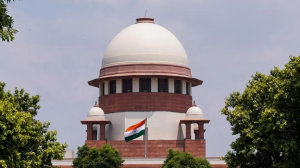
The Supreme Court on April 14, 2026, asked the Centre and State governments to clarify their position on providing free and compulsory education at the pre-primary level. The direction came while hearing a Public Interest Litigation seeking effective implementation of provisions under the National Education Policy (NEP) 2020 and inclusion of early childhood education within the ambit of the Right to Education.
Push to expand scope of Article 21A
The petition urged the Court to recognise pre-primary education as part of the fundamental right to education guaranteed under Article 21A of the Constitution. Currently, Article 21A ensures free and compulsory education for children aged 6 to 14 years. The plea argued that early childhood education is a critical foundation and should receive equal constitutional protection.
Concerns over gaps in government schooling
The petitioner highlighted that over 60 per cent of rural children and nearly 30 per cent of urban children depend on government schools. However, issues such as shortage of trained teachers, inadequate infrastructure, and limited access to digital tools are affecting learning outcomes at the foundational stage. These challenges disproportionately impact children from marginalised sections.
Demand for monitoring and accountability
The plea sought the creation of an independent monitoring authority or a court-supervised oversight committee. It proposed inclusion of education experts and representatives from NCERT to ensure proper implementation of pre-primary education policies and to address systemic deficiencies in government-run institutions.
Important Facts for Exams
- Article 21A provides free and compulsory education to children aged 6–14 years.
- National Education Policy 2020 emphasises Early Childhood Care and Education (ECCE) for ages 3–6.
- The Right to Education Act, 2009 operationalises Article 21A but does not currently cover pre-primary education.
- NCERT plays a key role in curriculum development and academic guidance in India.
Judicial focus on early childhood learning
The Supreme Court’s notice signals growing judicial attention towards strengthening foundational education in India. By seeking responses from governments, the Court has opened the debate on whether early childhood education should be treated as a fundamental right, potentially reshaping the framework of school education policy in the country.
| Related | |
|---|---|