Supreme Court Declares Footpath Walking a Fundamental Right
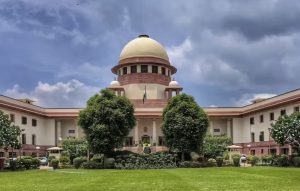
The Supreme Court of India declared the freedom to walk on demarcated and well-maintained footpaths a fundamental right on 19 June 2026. The ruling linked this right with Article 19(1)(d), Article 19(1)(a), Article 19(1)(b), Article 19(1)(c), and Article 21 of the Constitution of India.
Constitutional Basis
Article 19(1)(d) guarantees the right to move freely throughout the territory of India. Article 21 protects life and personal liberty, and the judgment treated safe pedestrian movement as part of these constitutional protections. The bench stated that the movement of motorised vehicles cannot override the right of pedestrians to use footpaths that are demarcated and maintained.
Bench and Case Context
Justice P.S. Narasimha authored the judgment, and Justice A.S. Chandurkar was the companion judge on the bench. The ruling arose from a motor accident compensation case involving the death of a five-year-old boy who was crushed by a truck while walking to school with his father.
Duty Bearers for Footpaths
The judgment placed the duty to demarcate, construct, maintain, and safeguard footpaths on urban development authorities, municipal corporations, municipalities, and panchayats. The Court stated that if a road exists, an enforceable duty also exists to provide a demarcated and maintained footpath for walkers.
Important Facts for Exams
- Article 19(1)(d) deals with the right to move freely throughout the territory of India.
- Article 21 covers the right to life and personal liberty under the Constitution of India.
- Municipal corporations and municipalities are local self-government institutions under the urban local body framework.
- The Law Commission of India is a statutory body that examines legal reforms and law-making issues.
Remedies and Legal Framework
The Court stated that citizens can seek constitutional and legal remedies if their right to walk on demarcated footpaths is violated. It also urged the government and the Law Commission of India to consider a statutory framework that identifies duty bearers, provides remedies, and creates a full-time regulator.
| Related | |
|---|---|