
Plastic Waste Converted into Hydrogen Fuel Using Sunlight
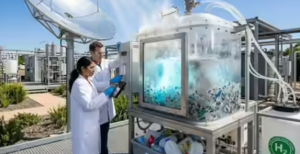
Plastic waste conversion into hydrogen fuel uses solar-driven photoreforming, a process in which light-sensitive photocatalysts break down polymers at low temperatures to produce hydrogen and industrial chemicals. Research in 2026 included systems that used plastic waste, solar power, and corrosive battery acid to generate clean fuel and chemical by-products.
Photoreforming of Plastics
Photoreforming is a photocatalytic process that uses sunlight or artificial light to drive chemical reactions on organic materials. In plastic photoreforming, polymers such as polyethylene and polypropylene are converted into hydrogen, syngas, acetic acid, and hydrocarbon products. The process operates at ambient temperature and pressure in some laboratory systems. It differs from conventional water splitting because plastics are easier to oxidise than water, which can reduce the energy requirement for hydrogen generation.
Research Developments in 2026
A University of Cambridge team developed a robust photocatalyst that operated for more than 260 hours in laboratory tests without performance loss. The system used acid from old car batteries and converted hard-to-recycle plastic waste into hydrogen and industrial chemicals. A University of Adelaide study published in Chem Catalysis on 28 April 2026 examined solar-powered systems for converting plastic waste into hydrogen, syngas, and other chemicals. Another University of Adelaide process used a non-toxic, metal-free carbon catalyst on polyethylene and polypropylene to produce hydrogen and liquid fuels.
Plastic Waste and Circular Upcycling
Global plastic production exceeds 400 million tonnes a year, and less than 10% to 18% of plastic waste is recycled. Hard-to-recycle plastics include mixed polymers, contaminated packaging, and single-use plastic products. Circular upcycling refers to converting waste materials into higher-value products within a reuse-based system. In this case, plastic waste becomes a feedstock for clean hydrogen and industrial chemicals.
Important Facts for Exams
- Photocatalysis is a light-driven chemical process that uses a catalyst to accelerate reactions.
- Hydrogen is used as a fuel and as an industrial feedstock in refining and ammonia production.
- Polyethylene and polypropylene are among the most widely used plastics in packaging and consumer goods.
- Chem Catalysis is a peer-reviewed journal that publishes research in catalysis and chemical conversion.
Industrial and Scientific Context
Hydrogen produced from waste plastics can be classified as a clean fuel when the process uses renewable energy inputs. Syngas is a mixture of hydrogen and carbon monoxide and is used in chemical synthesis and fuel production.
| Related | |
|---|---|


