NSE Launches Nifty500 Ahimsa Index
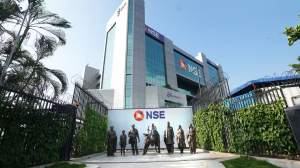
NSE Indices Limited, a subsidiary of the National Stock Exchange, launched the Nifty500 Ahimsa Index on 10 July 2026. The index tracks companies from the Nifty 500 universe that follow Ahimsa, or non-violence, in business practices and exclude firms involved in activities that harm animals.
Nifty500 Ahimsa Index: Basic Features
The Nifty500 Ahimsa Index has a base date of 1 April 2016 and a base value of 1000. It is a thematic index, which means it is designed around a specific investment theme rather than the broad market. The index uses free-float market capitalisation for stock weights. Free-float market capitalisation refers to the market value of shares available for public trading, excluding promoter and locked-in holdings.
Ahimsa Investment Movement Framework
The index was developed with the Ahimsagain Foundation using the Ahimsa Investment Movement framework. Under this framework, companies are placed in Green, Orange, and Red bands on the basis of their business activities and animal-related impact. Companies in the Orange and Red bands are excluded from the index. The screening framework is linked to business practices that avoid harm to animals and supports a values-based selection process.
Index Reconstitution and Use
The Nifty500 Ahimsa Index will be reconstituted semi-annually. Semi-annual reconstitution means the index constituents are reviewed and updated twice a year. The index is intended to act as a benchmark for asset managers. It can also support passive investment products such as Exchange Traded Funds and index funds.
Important Facts for Exams
- NSE Indices Limited is a subsidiary of the National Stock Exchange.
- The Nifty500 Ahimsa Index has a base value of 1000.
- The index base date is 1 April 2016.
- Free-float market capitalisation is used for stock weighting in the index.
Related Static GK Points
The Nifty 500 is a broad market index that represents 500 companies listed in India. Thematic indices are often used to create sector-based or principle-based investment products. Exchange Traded Funds are listed on stock exchanges and trade like shares during market hours. Index funds aim to replicate the performance of a chosen index by holding similar securities in similar proportions.
| Related | |
|---|---|