National Museums and Cultural Institutions
The preservation of India’s tangible and intangible cultural heritage is governed under a structured framework of constitutional provisions, statutory laws, and dedicated administrative bodies. For UPSC aspirants, understanding this institutional setup is critical for both Prelims (Static GK) and Mains (GS Paper I – Art and Culture).
Constitutional Mandates
- Article 49 (Directive Principles of State Policy): Obligates the State to protect every monument or place or object of artistic or historic interest, declared by or under law made by Parliament to be of national importance, from spoliation, disfigurement, destruction, removal, disposal or export.
- Article 51A(f) (Fundamental Duties): Enjoins upon every citizen of India the duty to value and preserve the rich heritage of our composite culture.
Primary Legislative Framework
- The Antiquities and Art Treasures Act, 1972: Regulates the export trade in antiquities and art treasures, prevents smuggling and fraudulent dealings, and provides for the compulsory acquisition of antiquities and art treasures for preservation in public places.
- The Museum Authority of India (Proposed Framework): Operates under the Ministry of Culture to standardize museum management, digitize artifacts via the “Jatanka” software, and ensure structural security across central repositories.
Apex Central Museums of India
The Ministry of Culture administratively controls the primary national repositories that house archaeological, numismatic, epigraphical, and anthropological treasures.
National Museum, New Delhi
- Establishment: Inceptioned on August 15, 1949, in the durbar hall of the Rashtrapati Bhawan; later shifted to its permanent site at Janpath in 1960.
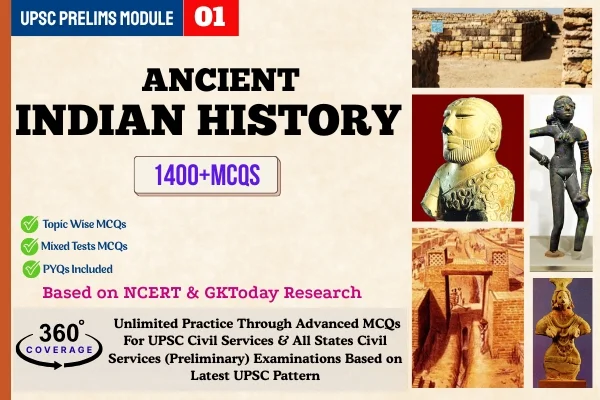
- Core Collections: Houses over 2,00,000 works of art spanning 5,000 years. Key high-yield artifacts include the Dancing Girl of Mohenjo-daro (lost-wax bronze casting technique), prehistoric terracotta Mother Goddess figurines, the Relics of Gautama Buddha (from Piprahwa), and an extensive collection of Tanjore, Deccan, and Mughal miniature paintings.
Indian Museum, Kolkata
- Historical Significance: Founded in 1814 by the Asiatic Society of Bengal under the guidance of Danish botanist Dr. Nathaniel Wallich. It is the oldest and largest multidisciplinary museum in the Asia-Pacific region.
- Key Galleries: Renowned for its Bharhut Gallery (housing the original sandstone railings and gateway from the 2nd century BCE Bharhut Stupa), the Egyptian Gallery (featuring a 4,000-year-old mummy), and unique collections of Mauryan and Shunga architectural fragments.
Salar Jung Museum, Hyderabad
- Origin: A unique monolithic collection built by the Salar Jung family, primarily Nawab Mir Yousuf Ali Khan (Salar Jung III), who served as Prime Minister to the Nizam of Hyderabad. It was nationalized via the Salar Jung Museum Act, 1961.
- Notable Artifacts: Houses the famous Veiled Rebecca (a marble sculpture by Giovanni Maria Benzoni), the double-statue of Mephistopheles and Margaretta chiseled from a single block of wood, and an extensive collection of daggers belonging to Mughal Emperor Shah Jahan and Empress Nur Jahan.
National Council of Science Museums (NCSM)
- Structure: An autonomous society under the Ministry of Culture, functioning as the largest network of science centers and museums globally under a single administrative umbrella.
- Flagship Units: Operates Science City (Kolkata), National Science Centre (New Delhi), and Nehru Science Centre (Mumbai).
Specialized Cultural and Research Institutions
Apart from multi-disciplinary museums, specialized central institutions focus on specific domains such as anthropology, manuscripts, performing arts, and visual arts.
| Institution Name | Location | Year of Establishment | Core Administrative Mandate and High-Yield Facts |
| Anthropological Survey of India (AnSI) | Kolkata (HQ) | 1945 | Apex research organization for bio-cultural studies on Indian populations; extensively maps the indigenous tribal communities of Andaman and Nicobar Islands. |
| National Archives of India (NAI) | New Delhi | 1891 | Originally established as the Imperial Record Department in Calcutta; functions as the central repository of non-current permanent records of the Government of India. |
| National Gallery of Modern Art (NGMA) | New Delhi | 1954 | Principal repository of modern visual arts; houses definitive collections of the Navaratnas of Indian Art (including Raja Ravi Varma, Amrita Sher-Gil, Abanindranath Tagore, and Nandalal Bose). |
| Indira Gandhi National Centre for the Arts (IGNCA) | New Delhi | 1987 | Autonomous trust that visualizes major multidisciplinary research projects like the National Mission for Manuscripts and documentation of Vedic chanting traditions. |
| National Museum of Natural History (NMNH) | New Delhi | 1978 | Functions under the Ministry of Environment, Forest and Climate Change; focuses on environmental education and houses fossil collections, including dinosaur remains from the Deccan traps. |
The Three National Academies of Culture
The Government of India established three specialized national academies (Akademis) in the 1950s to promote, preserve, and provide institutional support to performing arts, literary traditions, and fine arts.
Sangeet Natak Akademi (National Academy of Music, Dance and Drama)
- Establishment: Instituted by a resolution of the Ministry of Education in 1952 and formally inaugurated in 1953.
- Core Functions: It is the apex body for performing arts. It designates the formal status of Indian Classical Dances (currently recognizing eight forms: Kathak, Bharatanatyam, Kathakali, Manipuri, Kuchipudi, Odissi, Sattriya, and Mohiniyattam).
- Intangible Cultural Heritage: Functions as the nodal agency for documenting traditions nominated for the UNESCO Representative List of the Intangible Cultural Heritage of Humanity (e.g., Kutiyattam, Ramlila, Vedic Chanting, Chhau dance, and Kumbh Mela).
Sahitya Akademi (National Academy of Letters)
- Establishment: Formally inaugurated on March 12, 1954.
- Linguistic Jurisdiction: Recognizes 24 languages for its annual Sahitya Akademi Awards. This includes the 22 languages scheduled under the Eighth Schedule of the Constitution of India, alongside English and Rajasthani.
- Major Projects: Compiles encyclopedias of Indian literature and executes the Samvatsar Lectures to promote inter-linguistic translations.
Lalit Kala Akademi (National Academy of Art)
- Establishment: Inaugurated on August 5, 1954, by the then Minister of Education, Maulana Abul Kalam Azad.
- Mandate: Focuses on contemporary and traditional visual arts including sculpture, painting, graphic arts, and photography. It organizes the Triennale-India, an international exhibition of contemporary art.
Historical Trivia and Civil Services High-Yield Facts
The Asiatic Society of Bengal
Founded by Sir William Jones in 1784 in Calcutta, this institution served as the foundational pillar for the systematic study of Indian history, paleography, and numismatics. It was responsible for the initial excavations and translations that led to James Prinsep deciphering the Brahmi script in 1837, unlocking the edicts of Emperor Ashoka.
National Mission for Manuscripts (NMM)
Launched in February 2003 by the Ministry of Tourism and Culture, the NMM is mandated to locate, document, preserve, and digitize India’s vast manuscript wealth. India possesses an estimated five million manuscripts written in various scripts like Sharada, Grantha, Nevari, and Devanagari on materials like palm leaf, birch bark (Bhurjapatra), and handmade paper.
The Central Cultural University Transitions
The Nava Nalanda Mahavihara (Bihar) and the Central Institute of Higher Tibetan Studies (Sarnath) function as deemed universities under the Ministry of Culture, preserving ancient Pali, Sanskrit, and Tibetan Buddhist canonical texts through computational linguistics and modern archival methods.