Major Zoonotic Diseases and Their Modes of Transmission
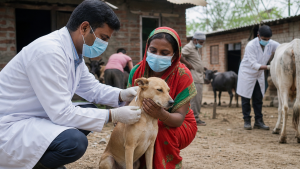
Zoonotic diseases are infections that pass naturally between vertebrate animals and humans. Their prevention depends on understanding how pathogens move between animals, people and the environment, and on coordinating public-health and veterinary responses.
Understanding Zoonotic Diseases
Zoonoses are caused by viruses, bacteria, parasites or fungi originating in animals. They range from mild illnesses to life-threatening disease. More than 60% of known human infectious diseases can spread from animals, while about 75% of new or emerging human infectious diseases are estimated to originate in animals. The One Health approach recognises the close links between human, animal and environmental health. It brings together human medicine, veterinary science and environmental expertise to address risks at the human-animal health interface. This coordination supports outbreak prevention, surveillance and timely responses to threats affecting both people and animals.
Modes of Transmission
The route of transmission varies by pathogen and exposure. Important routes include:
- Direct contact: Contact with an infected animal’s saliva, blood, urine, mucus, faeces or other bodily fluids; bites and scratches can also transmit infection.
- Indirect contact: Contact with contaminated places or objects, including animal habitats, barns, soil and aquarium water.
- Vector-borne transmission: Bites from infected arthropods, including mosquitoes, ticks and fleas, can carry pathogens to humans.
- Foodborne transmission: Infection may follow consumption of contaminated or inadequately cooked animal products, such as unpasteurised milk or undercooked meat. Produce contaminated with animal faeces can also be a source.
- Waterborne transmission: Drinking water contaminated with the faeces of infected animals can spread disease.
- Airborne transmission: People may become infected by inhaling aerosolised particles containing pathogens, including particles from infected animal excreta.
Key Viral Zoonoses
- Rabies: A fatal viral disease that affects the central nervous system. It is usually transmitted through the bite of an infected mammal, commonly a dog, bat or wild carnivore.
- Nipah virus infection: Fruit bats are the natural reservoir. Infection can follow contact with infected bats or pigs, or consumption of contaminated fruit; human-to-human transmission has also been documented.
- Ebola virus disease: Bats are considered a likely natural reservoir. The disease spreads through direct contact with the blood or bodily fluids of infected animals or people.
- Other viral examples: Dengue, chikungunya and Zika are arboviral diseases primarily transmitted by Aedes mosquitoes. Hantavirus pulmonary syndrome is associated with rodents and can result from inhaling aerosolised urine, droppings or saliva.
Key Bacterial and Parasitic Zoonoses
- Anthrax: Caused by Bacillus anthracis, with livestock, wild animals and the environment serving as reservoirs. Exposure can occur through contact, ingestion or inhalation of spores.
- Brucellosis: Caused by Brucella bacteria, which commonly affect cattle, goats, sheep and pigs. People can be infected through contact with animals or by consuming unpasteurised dairy products.
- Leptospirosis: Caused by Leptospira bacteria. Rodents and other animals can carry the pathogen; transmission occurs through urine-contaminated water or direct contact with infected animals.
- Plague: Caused by Yersinia pestis and maintained in rodent populations. Infected fleas are the main route of transmission to humans.
- Salmonellosis: Salmonella bacteria occur in poultry, livestock and reptiles. Infection commonly follows consumption of contaminated food, particularly undercooked meat or eggs, and can also follow contact with infected animals.
- Toxoplasmosis and Lyme disease: Cats are the primary definitive host of the parasite Toxoplasma gondii; people are typically exposed through contaminated food or water, or cat faeces. Lyme disease is caused by Borrelia burgdorferi and transmitted by infected black-legged ticks, with rodents and deer important in its life cycle.
Global Response and One Health Initiatives
The World Health Organization (WHO), the World Organisation for Animal Health (WOAH, formerly OIE) and the Food and Agriculture Organization (FAO) work together through a Tripartite Alliance to advance the One Health approach.
- Tripartite Zoonoses Guide (TZG): Developed by FAO, WOAH and WHO, it sets out principles and good practices for sustainable multisectoral collaboration at the human-animal-environment interface.
- Global Early Warning System (GLEWS): A joint FAO, WOAH and WHO initiative that combines and coordinates alert mechanisms to track and respond to animal disease threats, including zoonoses.
These efforts support national capacity for surveillance, early detection, rapid response, risk assessment and information sharing. Strong health-system coordination is central to preventing outbreaks and managing threats that cross the human-animal interface.
Key Prelims Takeaways
- Zoonoses are infectious diseases naturally transmissible between vertebrate animals and humans.
- More than 60% of known human infectious diseases can spread from animals; about 75% of new or emerging human infectious diseases are estimated to originate in animals.
- Transmission routes include direct and indirect contact, vectors, contaminated food or water, and airborne particles.
- Rabies is usually transmitted by infected animal bites; fruit bats are the natural reservoir of Nipah virus.
- Brucellosis can spread through unpasteurised dairy, while leptospirosis can spread through urine-contaminated water.
- One Health links human, animal and environmental health; WHO, WOAH and FAO collaborate through the Tripartite Alliance.
Recent Context
France confirmed its first human Shamonda virus case on October 22, 2026; the patient died. The virus is an arthropod-borne Orthobunyavirus, transmitted by biting midges and associated mainly with livestock. Authorities assessed no general-population risk at that time; animal circulation had been reported in eastern France during spring and summer 2026.
| Related | |
|---|---|