Madan Lal Dhingra
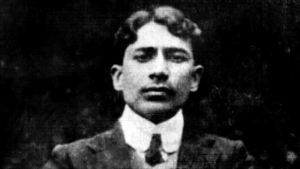
Madan Lal Dhingra was a prominent Indian revolutionary who played a key role in the early phase of the Indian independence movement in Europe. Born on September 18, 1883, in Amritsar, Punjab, he belonged to an affluent and pro-British Punjabi Khatri family. His father, Dr. Gitta Mall, was a civil surgeon who maintained close ties with British officials. Dhingra pursued his early education at the Municipal Board School in Amritsar and later joined the Government College in Lahore. In Lahore, he developed a deep interest in the nationalist movement. His political activities led to his expulsion from college. After brief stints working as a clerk and a laborer, his family sent him to England in 1906 to pursue higher studies. He enrolled at University College, London, to study mechanical engineering.
Association with India House and Revolutionary Radicalization
In London, Dhingra came into contact with leading Indian nationalists and revolutionaries. This exposure transformed his political outlook.
- India House: He became an active member of India House, a residence for Indian students in North London founded by Shyamji Krishna Varma. This institution served as a major hub for political activism and anti-colonial revolutionary ideas.
- Abhinav Bharat Society: Dhingra joined the Abhinav Bharat Society, a secret revolutionary organization founded by Vinayak Damodar Savarkar (Veer Savarkar).
- Ideological Transformation: Under the mentorship of Savarkar and Shyamji Krishna Varma, Dhingra became convinced that political violence was an acceptable means to end British rule in India. He received firearms training and practiced shooting at a range in London to prepare for revolutionary actions.
Assassination of Curzon Wyllie
The intensification of British repression in India, including the execution of young revolutionaries like Khudiram Bose and the deportation of Lala Lajpat Rai, deeply affected Dhingra. He decided to target a high-profile British official in London.
- The Target: Sir William Hutt Curzon Wyllie was a retired officer of the British Indian Army and a political aide-de-camp to the Secretary of State for India. He was also in charge of monitoring the activities of Indian students in London through the National Indian Association.
- The Event: On July 1, 1909, Curzon Wyllie attended an evening function organized by the National Indian Association at the Imperial Institute in London.
- The Attack: As Wyllie was leaving the hall, Dhingra approached him and fired five shots at close range, killing him instantly. A Parsi doctor, Cawas Lalcaca, attempted to save Wyllie and was also killed in the altercation. Dhingra did not attempt to escape and was arrested immediately by the police.
Trial, Statement, and Execution
Dhingra’s trial was brief, conducted at the Old Bailey court in London. He refused legal counsel and used the courtroom as a platform to voice his nationalist ideals.
Political Statement
Dhingra carried a written statement in his pocket at the time of his arrest, which the British authorities initially suppressed. The statement argued that a nation held down by foreign bayonets exists in a perpetual state of war. He declared that it was the duty of every Indian to resist British rule. He stated that his action was a sacrifice for his motherland and that his only wish was to be reborn to die again for India.
Response from Leaders
The assassination polarized public opinion. While moderate leaders like Gopal Krishna Gokhale and Mahatma Gandhi condemned the act of violence, revolutionaries and radical nationalists praised Dhingra’s courage. Vladimir Lenin publicly defended the assassination, and Guy Aldred, a British socialist, published Dhingra’s final statement in his newspaper The Justice.
Execution
Madan Lal Dhingra was sentenced to death for murder. He was hanged on August 17, 1909, at Pentonville Prison in London. He was 25 years old. His family disowned him publicly, and his body was buried in an unmarked grave inside the prison premises.
Repatriation of Remains
For decades, the final resting place of Dhingra remained hidden within Pentonville Prison. In 1976, his remains were accidentally discovered during excavation work. Through the efforts of the Indian government and local groups, his remains were exhumed and repatriated to India on December 13, 1976. His ashes were received with state honors in Delhi and later taken to Amritsar, his birthplace.
GKToday Star Facts for UPSC
- The Challenge: Before his death, Dhingra stated that the only lesson required in India was to learn how to die, and the only way to teach it was by dying ourselves.
- Savarkar’s Tribute: Veer Savarkar wrote an article titled Madan’s Martyrdom in his journal Bande Mataram to honor Dhingra’s sacrifice.
- Wyllie’s Intelligence Role: Curzon Wyllie served as the head of the British Secret Police in London, specifically tasked with spying on Indian student revolutionaries at India House.
- The Weapon: Dhingra used a Colt automatic revolver to assassinate Curzon Wyllie, which was arranged for him by members of the Abhinav Bharat Society.
- Churchill’s Remark: Winston Churchill, who was the Home Secretary at the time, reportedly described Dhingra’s final courtroom statement to David Lloyd George as the finest ever made in the name of patriotism.
Madan Lal Dhingra Recently in News
- Madan Lal Dhingra Memorial (2023): In August 2023, the Punjab Government inaugurated a newly renovated Madan Lal Dhingra Memorial in Amritsar on his 114th death anniversary to display historical artifacts related to his life.
- Commemorative Events (2024): In December 2024, the Ministry of Culture organized a special exhibition in New Delhi celebrating the contribution of overseas Indian revolutionaries, highlighting Dhingra’s role at India House.
- Statue Unveiling (2025): A bronze statue of Madan Lal Dhingra was unveiled in his ancestral town in Punjab in March 2025 as part of the Azadi Ka Amrit Mahotsav follow-up initiatives.
| Related | |
|---|---|