Joint Parliamentary Committee Backs One Nation, One Election Framework
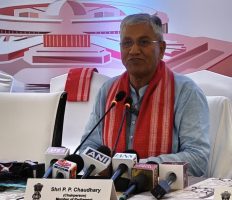
The Joint Parliamentary Committee on the One Nation, One Election proposal stated on 11 July 2026 that the framework conforms to the Constitution of India. The committee examined the Constitution (129th Amendment) Bill, 2024, which was introduced in the Lok Sabha on 17 December 2024 and referred to the committee on 19 December 2024.
One Nation, One Election Framework
One Nation, One Election refers to the proposal for synchronised elections to the Lok Sabha and State Legislative Assemblies. The proposal seeks to align electoral cycles so that national and state polls are held together in a fixed schedule.
Joint Parliamentary Committee and Consultation Process
The 41-member Joint Parliamentary Committee is chaired by BJP MP P.P. Chaudhary. The committee has held about 16 meetings, including sittings at the Parliament House Annexe and in several states such as Goa, Maharashtra, Uttarakhand, Punjab, Himachal Pradesh, Haryana, Karnataka, and Gujarat. The committee has consulted legal experts, including six former Chief Justices of India, on constitutional questions related to the proposal. It has also met civil society stakeholders, with about 99% of those consulted supporting simultaneous elections.
Constitutional and Federal Structure Questions
The Constitution of India provides for a federal system with the Union and the States sharing legislative and executive powers. The JPC stated that the proposed framework does not violate the federal structure or democratic principles, and constitutional experts have described simultaneous elections as consistent with the Constitution. The Constitution (129th Amendment) Bill, 2024 is the legislative proposal linked to the ONOE plan. Constitutional amendment bills in India require a special majority in Parliament under Article 368 of the Constitution.
Important Facts for Exams
- The Lok Sabha is the lower house of Parliament under Article 79 of the Constitution.
- State Legislative Assemblies are elected bodies under Part VI of the Constitution.
- Article 368 lays down the procedure for constitutional amendments in India.
- The Joint Parliamentary Committee is a parliamentary mechanism used to examine bills in detail.
Economic and Administrative Context
The committee consulted economists who estimated that synchronised Lok Sabha and Assembly elections could add nearly Rs 7 lakh crore to the economy. The estimate was linked to reduced election-related disruptions and smoother governance cycles. The JPC chairperson indicated on 10 July 2026 that the proposal could become fully operational by the 2029 general election.
| Related | |
|---|---|