JAXA Launches and Lands Reusable Rocket
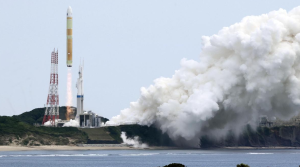
Japan Aerospace Exploration Agency (JAXA) conducted the first test flight of its experimental reusable rocket, Reusable Vehicle eXperiment (RV-X), on 11 July 2026 at the Noshiro Testing Center in Noshiro, Akita Prefecture, Japan. The rocket lifted off, hovered, moved horizontally, and landed safely during a flight of less than one minute.
Reusable Rocket Technology
Reusable rockets are launch vehicles designed to return to Earth and be used again after flight. The RV-X is 1.8 metres in diameter and 7.3 metres long, and it uses an engine built for enhanced durability. The vehicle also has four shock-absorption landing gear units for vertical landing tests.
RV-X Test Flight Profile
During the test, the RV-X reached an altitude of about 11 metres and moved horizontally for about 16 metres while remaining upright. The flight combined lift-off, hovering, lateral movement, and landing in a single test sequence. JAXA and Mitsubishi Heavy Industries co-developed the rocket for reusable launch demonstrations.
Development Timeline and Launch Vehicle Plans
RV-X development began in 2016, and its engine has undergone more than 160 combustion tests. JAXA plans to use lower-cost reusable rockets by the early 2030s. The agency intends such rockets to replace the H3 rocket as Japan’s main launch vehicle.
Important Facts for Exams
- JAXA stands for Japan Aerospace Exploration Agency.
- Noshiro Testing Center is located in Akita Prefecture in northeastern Japan.
- SpaceX is a private aerospace company known for reusable rocket systems.
- The H3 rocket is Japan’s current main launch vehicle.
| Related | |
|---|---|