ISRO Tests Upgraded PSLV Third Stage After Two Mission Anomalies
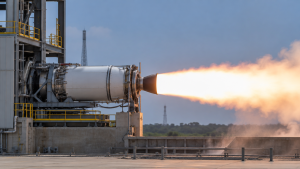
The Indian Space Research Organisation (ISRO) successfully conducted a ground static test of the upgraded third stage (PS3) of its Polar Satellite Launch Vehicle (PSLV) on 12 November 2026. The test was held at the Static Test Facility of the Satish Dhawan Space Centre in Sriharikota, Andhra Pradesh.
Upgrades to the PS3 stage
ISRO revised the PS3 configuration after anomalies in two missions. The changes include nozzle-design improvements to increase design margins, strengthened mechanical interfaces and redundancy in sealing systems. The review also covered raw-material acceptance criteria, assembly procedures and quality checks. Updated Non-Destructive Testing measures were introduced during integration and transportation, and the adequacy of design margins was verified. ISRO plans further tests after analysing the static-test data.
Earlier mission anomalies
In May 2025, PSLV-C61 experienced a drop in chamber pressure during the third-stage burn. The 1,696-kg EOS-09 Earth observation satellite could not complete its mission. On 12 January 2026, PSLV-C62 encountered an anomaly towards the end of its third stage, with disturbed roll rates and a flight-path deviation. The mission lost the EOS-N1 satellite and 15 co-passenger payloads.
Important Facts for Exams
- Static-fire measurements: A static-fire test holds the launch vehicle in place while firing its engines, measuring startup behaviour, pressure, temperature and propellant-flow gradients.
- Chamber pressure: In a solid rocket motor, chamber pressure is determined by the nozzle-throat diameter and the propellant grain’s burn rate.
- Ignition constraint: A simple solid rocket motor cannot be shut down after ignition because its combustion ingredients are already together inside the chamber.
- NDT methods: Common non-destructive testing methods include eddy-current, magnetic-particle, liquid-penetrant, radiographic, ultrasonic and visual testing.
| Related | |
|---|---|