SpaceX Plans $74 Billion Supercomputing Campuses in Texas and Arizona
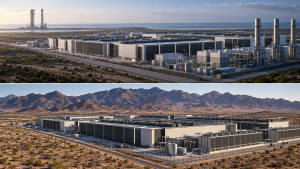
SpaceX announced on November 13, 2026, plans to invest more than 74 billion in two artificial intelligence supercomputing campuses in Texas and Arizona. The company outlined more than 24 billion for a facility at Starbase in Texas’s Rio Grande Valley and roughly $50 billion for a campus in Cochise County, Arizona.
Campus plans and infrastructure
The Texas project covers about 444 acres between Boca Chica Boulevard and the Port of Brownsville, near the city’s landfill. Its gas-fired power plant is planned to generate electricity independently of the public grid. The investment estimate covers initial phases, with scope for future expansion. The project has generated more than 3,000 construction jobs and is expected to support over 500 permanent positions.
SpaceX has committed $220 million in private capital to expand Brownsville’s water and wastewater infrastructure, adding 20 million gallons of daily capacity. The Starbase City Commission is scheduled to consider a property tax abatement and economic development agreement on December 9, 2026.
The proposed Arizona campus could reach six gigawatts at full build-out and would work with local electric cooperatives. It is planned to use dry cooling, with no industrial groundwater consumption. The project is projected to create about 5,500 construction jobs and 1,000 permanent roles. It remains subject to county approvals; a public hearing is scheduled for December 2026.
Important Facts for Exams
- Performance metric: Supercomputer performance is commonly measured in floating-point operations per second (FLOPS), rather than million instructions per second (MIPS).
- Parallel processing: Massively parallel computing divides a larger problem among processors, which handle separate portions of the data before their results are recombined.
- GPU-accelerated AI: AI funding and interest rose substantially after 2012, as GPUs began accelerating neural networks and deep learning outperformed earlier techniques.
| Related | |
|---|---|