Indian Coast Guard Holds ACV Girder-Laying Ceremony in Goa
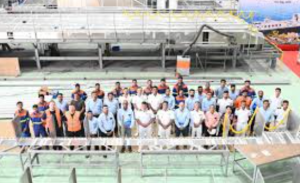
The Indian Coast Guard held the girder-laying ceremony for the 4th, 5th and 6th Air Cushion Vehicles at the Rassaim Yard of Chowgule Shipyard in Goa on 11 May 2026. The project covers six indigenously fabricated Air Cushion Vehicles under a contract signed with Chowgule & Company Private Limited, Goa, on 24 October 2024.
Air Cushion Vehicle
An Air Cushion Vehicle, also called a hovercraft, moves on a cushion of air created by lift fans and skirt systems. It can operate over water, mudflats, marshy terrain and other low-friction surfaces.
Indigenous Construction Programme
The six ACVs are being built in India with about 50% indigenous material. The design basis for the project comes from Griffon Hoverwork in the United Kingdom, while construction is taking place at Chowgule Shipyard in Goa.
Operational Roles of ACVs
The Indian Coast Guard plans to use these ACVs for high-speed coastal patrolling, reconnaissance in shallow waters, operations in marshy areas, deep-sea tasks and search and rescue missions. The first ACV under the project is expected to be delivered shortly.
Important Facts for Exams
- The Indian Coast Guard is a maritime armed force under the Ministry of Defence.
- Goa has major shipbuilding facilities, including Chowgule Shipyard at Rassaim Yard.
- Hovercraft use air cushion technology and do not require conventional hull contact with the surface.
- Search and rescue is one of the standard operational roles of the Indian Coast Guard.
Earlier Milestones
The girder-laying ceremonies for the second and third indigenously built ACVs were held in Goa on 30 October 2025. The construction of the first indigenously built ACV began with a girder-laying and commencement of erection ceremony on 30 July 2025.
| Related | |
|---|---|