How Did Himachal Pradesh Increase Cheer Pheasant Survival?
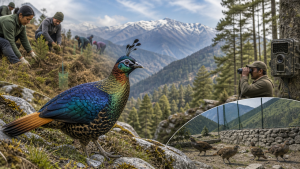
Himachal Pradesh’s Cheer pheasant conservation programme recorded a rise in the survival rate of released birds from 11.11% in 2019–20 to 100% in 2024–25. During Wildlife Week in October 2026, 12 captive-bred birds were soft-released near Koti in Shimla district.
Cheer Pheasant: Classification and Legal Status
The Cheer pheasant, locally called Chir Tittar, is a pheasant species of the western Himalaya. It is classified as Vulnerable on the International Union for Conservation of Nature (IUCN) Red List and is listed in Schedule I of the Wildlife Protection Act, 1972. Schedule I provides the species with the Act’s highest level of protection against hunting and other prohibited activities.
Captive Breeding and Release Methods
The Khadiyun Cheer Pheasant Breeding Centre at Chail in Solan district is one of the few Indian facilities dedicated to conservation breeding of the species. The Himachal Pradesh Zoo Conservation and Breeding Society maintains the centre, which has released 77 captive-bred birds into the wild. The programme uses parent-rearing, in which chicks are raised by their parents, followed by gradual soft-release into natural habitat. Post-release monitoring uses radio transmitters and camera traps. In October 2026, the released group comprised two males, two females and eight chicks. No birds were released in 2025–26, a year designated for population consolidation.
Habitat and Conservation Threats
The Cheer pheasant depends on grassland habitat in the Himalayan region. Habitat degradation associated with increasing fire incidents is among the reported threats to its survival. Hunting, grazing and fodder collection also place pressure on the species and its habitat.
Important Facts for Exams
:
- The Cheer pheasant is locally known as Chir Tittar.
- The IUCN Red List classifies the Cheer pheasant as Vulnerable.
- The Wildlife Protection Act, 1972, places the Cheer pheasant in Schedule I.
- Radio transmitters and camera traps are used to monitor released birds.
The Khadiyun centre is located at Chail in Solan district, while the 2026 release site was near Koti in Shimla district. The 2024–25 recorded survival rate was 100%, compared with 11.11% in 2019–20.
| Related | |
|---|---|