Constitutional Role of the Emperor in Japan
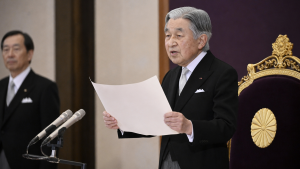
The Emperor of Japan is the constitutional symbol of the state and the unity of its people, not an executive ruler. The post-war Constitution places sovereignty with the people and confines the Emperor to prescribed acts of state performed on the advice and approval of the Cabinet.
Evolution of the Imperial Role
Before the post-war constitutional settlement, the Emperor occupied a substantially different formal position. The 1889 Meiji Constitution described him as the head of the Empire and vested sovereignty in him. It assigned him powers that included sanctioning laws, commanding the armed forces and appointing civil and military officers. In practice, ministers, military leaders and bureaucrats often conducted government in his name. Japan’s defeat in the Second World War led to a fundamental change in this system. The Constitution promulgated in 1946 and effective from 1947 replaced imperial sovereignty with popular sovereignty. The contrast is important: the modern Emperor remains central to national symbolism, but does not exercise the governing authority associated with the earlier constitutional order.
Popular Sovereignty and Constitutional Position
Article 1 of the Constitution describes the Emperor as “the symbol of the State and of the unity of the People”, deriving his position from the will of the people, in whom sovereign power resides. The Emperor’s status therefore rests on the constitutional order and popular sovereignty, rather than a personal claim to govern. Article 4 limits the Emperor to acts in matters of state provided for by the Constitution and states that he has no powers related to government. Article 3 requires the advice and approval of the Cabinet for all acts of state; the Cabinet is responsible for those acts. The Emperor cannot independently initiate or direct government policy. Japan is thus a constitutional monarchy in which the Emperor has symbolic state authority, while elected institutions and the Cabinet exercise political power. The distinction between the performance of a constitutional act and the exercise of governmental discretion is central to understanding the office.
Acts in Matters of State
The Constitution specifies the Emperor’s formal duties. These acts are carried out on Cabinet advice and approval; they do not give the Emperor discretion to decide government policy.
- Appointment of the Prime Minister: The Emperor appoints the person designated by the Diet. The appointment is constitutionally required; the Emperor has no power to reject the Diet’s designation.
- Appointment of the Chief Judge: The Emperor appoints the Chief Judge of the Supreme Court as designated by the Cabinet.
- Promulgation: The Emperor promulgates amendments to the Constitution, laws, Cabinet orders and treaties.
- Convocation of the Diet: The Emperor convokes the National Diet, Japan’s legislature, which consists of the House of Representatives and the House of Councillors.
- Dissolution: The Emperor dissolves the House of Representatives on the advice and approval of the Cabinet.
- Election proclamation: The Emperor proclaims general elections for members of the Diet.
- State honours: The Emperor awards orders and other honours.
- Foreign representatives: The Emperor receives foreign ambassadors and ministers.
- Diplomatic documents: The Emperor attests instruments of ratification and other documents relating to diplomatic matters.
Where the two Diet chambers disagree on a Prime Minister candidate, the designation by the House of Representatives prevails under the constitutional process. The Emperor’s subsequent appointment gives formal effect to that designation; it does not transfer the choice of Prime Minister to the Emperor.
Constitutional Monarchy and Conventions
The Japanese system separates symbolic state authority from political decision-making. The Emperor performs visible public and constitutional functions, while the Cabinet conducts government and remains accountable for acts of state requiring its advice and approval. This arrangement is a defining feature of Japan’s constitutional monarchy. Constitutional conventions and established procedures reinforce the limits set by the written Constitution. The Emperor’s formal role should not be confused with an independent power to select office-holders, approve policy or intervene in the work of the Diet and Cabinet. In exam answers, it is useful to distinguish the symbolic function of the office from the exercise of sovereign power, which belongs to the people.
Imperial Succession
Succession to the Imperial Throne is dynastic and governed by the Imperial House Law, enacted by the Diet. Under the rules described in the source, succession is restricted to male descendants in the male line. The law sets the order of succession among eligible male-line heirs, including the Emperor’s eldest son and other male descendants. This hereditary succession operates within the constitutional framework; it does not alter the principle that sovereignty resides with the people. The Imperial House Law governs succession to the throne, while the Constitution defines the Emperor’s public and constitutional role.
Key Prelims Takeaways
- Article 1 makes the Emperor the symbol of the state and the unity of the people.
- Sovereignty resides with the people, not the Emperor.
- The Emperor has no powers related to government and performs only constitutionally prescribed acts of state.
- All acts of state require Cabinet advice and approval; the Cabinet bears responsibility.
- The Emperor appoints the Prime Minister designated by the Diet and the Chief Judge designated by the Cabinet.
- The Diet has two chambers: the House of Representatives and the House of Councillors.
- The Imperial House Law governs dynastic succession, which is restricted to male descendants in the male line under the rules described above.
| Related | |
|---|---|