Digital India Schemes, Platforms and Citizen‑Centric Applications
Digital India is the Union Government’s flagship programme to expand internet access, promote digital literacy and enable a digitally empowered society and knowledge economy. For Prelims revision, the key focus is on India’s digital public infrastructure, major citizen-service platforms, and the legal and regulatory ecosystem supporting them.
Digital Public Infrastructure and Identity Systems
- Digital Public Infrastructure (DPI): Forms the foundational layer of India’s e-governance architecture and supports Aadhaar authentication, real-time payments and digital document verification.
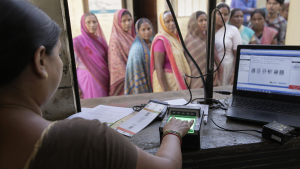
- Aadhaar: A 12-digit biometric identity number issued by the Unique Identification Authority of India to residents on the basis of demographic and biometric data.
- Unique Identification Authority of India (UIDAI): A statutory authority under the Ministry of Electronics and Information Technology.
- Aadhaar-enabled authentication: Used for instant online verification in welfare delivery, banking and mobile connections.
- India Stack: The open-source modular framework underlying India’s digital public infrastructure.
Financial Inclusion and Digital Payments
- Unified Payments Interface (UPI): A real-time retail payment system developed by the National Payments Corporation of India for instant fund transfers.
- BHIM: A mobile payment application built on the UPI platform.
- JAM Trinity: Links Jan Dhan bank accounts, Aadhaar digital identities and mobile numbers to reduce leakages in direct benefit transfers.
- Global scale: India accounts for the largest share of real-time digital payment transactions globally through the UPI ecosystem.
E-Governance and Citizen Service Platforms
- DigiLocker: A cloud-based digital document wallet for storing, accessing and sharing authentic electronic copies of certificates.
- UMANG: A unified mobile application that provides access to central and state government services through a single interface.
- Open Network for Digital Commerce (ONDC): Promotes open digital infrastructure to help small merchants access buyers online without depending on private monopolies.
- Common Service Centres (CSCs): Physical access points in rural areas that deliver digital public services to citizens without personal internet access.
- Administrative purpose: These platforms reduce paperwork, improve transparency and streamline public service delivery.
Sectoral Digital Applications
- Co-WIN: The digital platform used for vaccination registration and certificate issuance during immunisation drives.
- DigiYatra: Uses facial recognition technology to enable paperless and contactless processing of air passengers at airports.
- PM-Kisan portal: Handles registration and direct financial transfer administration for landholding farmer families.
- National Digital Health Mission: Creates a unique health ID to help citizens securely access interoperable medical records across hospitals.
Legal and Institutional Framework
- Digital Personal Data Protection Act: Lays down compliance rules for processing digital personal data, including rights of data principals and penalties for breaches.
- Information Technology Act: Provides the main legal framework for electronic transactions, digital signatures and cybercrime prosecution.
- Data Protection Board of India: An independent statutory adjudicatory body to investigate personal data breaches and enforce data protection rules.
- Indian Computer Emergency Response Team (CERT-In): The national nodal agency for tracking cyber threats and coordinating emergency response to incidents.
- National Data Governance Framework Policy: Aims to streamline the sharing and use of non-personal government datasets for research and innovation.
Comparative Snapshot of Major Digital Platforms
| Platform/System | Nodal/Implementing Agency | Core Function |
| Aadhaar | Unique Identification Authority of India | Resident biometric authentication |
| UPI | National Payments Corporation of India | Real-time interoperable retail payments |
| DigiLocker | Ministry of Electronics and Information Technology | Secure cloud-based document repository |
| UMANG | Ministry of Electronics and Information Technology | Unified delivery of central and state e-services |
Key Prelims Takeaways
- Digital India: A flagship Union Government programme to promote digital governance, connectivity and literacy.
- UIDAI: A statutory authority under the Ministry of Electronics and Information Technology.
- UPI: Developed by the National Payments Corporation of India for instant fund transfers.
- JAM Trinity: Jan Dhan + Aadhaar + mobile numbers, used to support direct benefit transfers.
- DigiLocker and UMANG: Key citizen-centric platforms for documents and services.
- CERT-In: The national agency for cyber threat tracking and incident response coordination.
- Data Protection Board of India: The statutory body for enforcing data protection rules.
Current General Studies comprises current-affairs-based, General Studies-rich study material on policies, laws, institutions, economy, science, environment, governance, international relations, and other varied but important topics for UPSC and State PSC Prelims examinations.
Fortnightly PDF compilations: Available here
Originally written on
May 29, 2026
and last modified on
September 6, 2026.
| Related | |
|---|---|