Indian Government Digital Infrastructure and Data Governance Initiatives
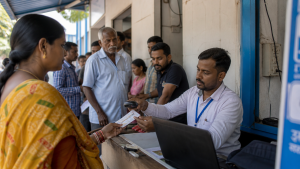
India’s digital governance model is built on public digital infrastructure, secure identity systems, interoperable payments, and evolving data protection rules. These platforms have expanded access to welfare, financial services, and online public services while creating a legal framework for privacy and cyber governance.
Core Pillars of Digital Public Infrastructure
- Aadhaar: A biometric-based digital identity system that assigns a unique number to residents for online verification and authentication.
- JAM Trinity: Links Jan Dhan bank accounts, Aadhaar identities, and mobile connections to improve welfare delivery and reduce leakage.
- Unified Payments Interface (UPI): A real-time retail payment system that enables instant fund transfers across mobile applications and participating banking networks.
- India Stack: The open-source modular framework that underpins India’s digital public infrastructure.
- Common Service Centres: Physical access points in rural areas that deliver digital public services to citizens without personal internet access.
Citizen Service and Commerce Platforms
- DigiLocker: A cloud-based document wallet for paperless issuance, storage, and verification of official certificates and records.
- UMANG: A unified mobile application that provides access to central and state government e-services through a single platform.
- Open Network for Digital Commerce (ONDC): Promotes open digital commerce infrastructure to help small retail merchants access buyers online without dependence on single-vendor e-commerce monopolies.
Data Protection and Governance Framework
- Digital Personal Data Protection Act: Regulates processing of digital personal data by defining obligations for data fiduciaries, rights of data principals, and penalties for security breaches.
- Information Technology Act: Provides the legal framework for electronic transactions, cybercrime penalties, and intermediary liability guidelines.
- National Data Governance Framework Policy: Aims to streamline sharing and use of non-personal and anonymized government datasets for research and innovation.
Institutional Regulators
- Data Protection Board of India: An independent statutory body that investigates personal data breaches and enforces compliance under the data protection framework.
- Indian Computer Emergency Response Team (CERT-In): The national nodal agency for tracking cyber threats, issuing security advisories, and coordinating responses to digital emergencies.
- Unique Identification Authority of India (UIDAI): Nodal authority for Aadhaar-based resident biometric authentication and identity verification.
- National Payments Corporation of India (NPCI): Manages UPI as the core infrastructure for interoperable retail digital payments.
- Ministry of Electronics and Information Technology: Associated with DigiLocker and the DPDP Act in the digital governance framework.
| Platform or Act | Nodal Agency or Ministry | Core Operational Function |
| Aadhaar | Unique Identification Authority of India | Resident biometric authentication and identity verification |
| UPI | National Payments Corporation of India | Instant interoperable retail digital payments |
| DigiLocker | Ministry of Electronics and Information Technology | Secure cloud-based digital document repository |
| DPDP Act | Ministry of Electronics and Information Technology | Personal data privacy and digital consent management |
Why These Platforms Matter
- Financial inclusion: Aadhaar, Jan Dhan, and mobile connectivity have made targeted benefit delivery easier.
- Paperless governance: DigiLocker and digital authentication reduce dependence on physical documents.
- Interoperability: UPI enables seamless payments across apps and banks.
- Access to services: UMANG and Common Service Centres widen reach for citizens across locations.
- Data governance: The DPDP Act and the Information Technology Act provide the legal basis for privacy, security, and digital transactions.
- Innovation and research: The National Data Governance Framework Policy supports use of anonymized public datasets.
Key Prelims Takeaways
- India Stack refers to the modular digital public infrastructure framework supporting identity, payments, and service delivery.
- Aadhaar is used for biometric-based identity verification and is managed by UIDAI.
- JAM Trinity connects Jan Dhan, Aadhaar, and mobile numbers for welfare targeting.
- UPI is India’s flagship real-time digital payment system and is operated through NPCI.
- DigiLocker supports paperless storage and verification of official documents.
- UMANG provides access to multiple government services through one mobile application.
- DPDP Act is the principal law for digital personal data processing and consent-based governance.
Current General Studies comprises current-affairs-based, General Studies-rich study material on policies, laws, institutions, economy, science, environment, governance, international relations, and other varied but important topics for UPSC and State PSC Prelims examinations.
Fortnightly PDF compilations: Available here
Originally written on
May 29, 2026
and last modified on
September 6, 2026.
| Related | |
|---|---|